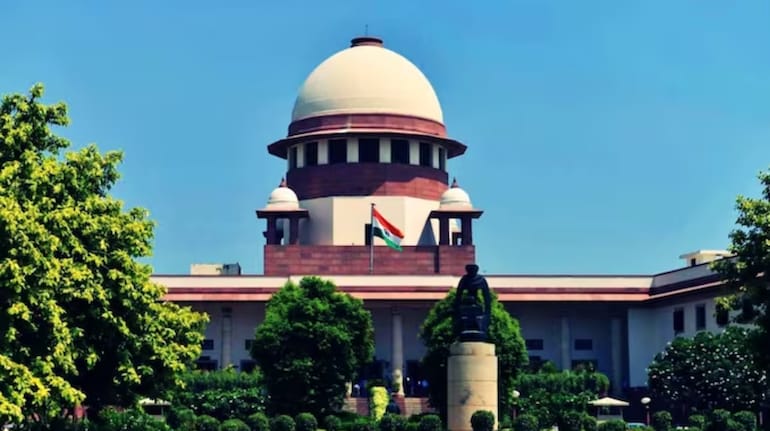
The Supreme Court on Tuesday voiced concern over the misuse of the Protection of Children from Sexual Offences (POCSO) Act, noting that it is often being applied in situations involving marital disputes and consensual adolescent relationships.
A bench comprising Justices BV Nagarathna and R Mahadevan observed, “The POCSO Act is being misused in cases of marital discord and matters pertaining to consensual relationships between adolescents. The law is being thrust upon boys. We should spread awareness among boys and men about the legal provisions.”
The remarks came during the hearing of a public interest litigation seeking directions to spread awareness about rape laws and the POCSO Act to create a safer environment for girls and women. The court adjourned the matter to December 2, noting that several states and union territories had not yet submitted their responses.
Earlier, the top court had issued notices to the Centre, the Ministries of Education and Information & Broadcasting, and the Central Board of Film Certification (CBFC) following a plea filed by senior advocate Aabad Harshad Ponda. The petition urges the government to inform citizens about legal provisions relating to rape and amendments made post the Nirbhaya case.
The plea also calls for the Education Ministry to ensure that all institutions providing free and compulsory education up to the age of 14 include lessons on offences against women and children, alongside moral education promoting gender equality and respect for women. “Particularly, endeavours are required to be made to change the mindset of the boys in this country, an exercise that must start at the level of school,” the petition notes.
Advocate Sandeep Sudhakar Deshmukh, representing the petitioner, argued that India continues to witness a “disturbing surge of rapes and crimes against women and girls,” and that awareness must begin early. “It must be made mandatory in all schools whether aided or unaided, whether they have classes on sex education or not, to educate the children about the folly and drastic consequences of rape,” the plea said.
The petition further added that students should be informed about “the consequences of committing such offences, including different kinds of rape as per the amended definition under Section 375 IPC,” and that they should learn that “violating the privacy of the other sex would be considered wrong and derogatory and that it amounts to a crime.”
The Supreme Court has on several occasions flagged concerns about the criminalisation of consensual adolescent romantic relationships under POCSO. Only last week, exercising its powers under Article 142 of the Constitution, the court acquitted a man charged under the Act after noting that he and the woman were now happily married. Observing that “the crime was not the result of lust but love,” the bench said, “We are, thus, persuaded to hold that this is a case where the law must yield to the cause of justice.”
As the matter awaits further hearing, the bench hinted that it may issue directions to increase awareness among students, stating that efforts should focus on educating young boys and men about the spirit and purpose of laws meant to protect children and women.
Also read: Should India lower age of consent to 16? Inside the heated debate and global practices

Discover the latest Business News, Sensex, and Nifty updates. Obtain Personal Finance insights, tax queries, and expert opinions on Moneycontrol or download the Moneycontrol App to stay updated!
Find the best of Al News in one place, specially curated for you every weekend.
Stay on top of the latest tech trends and biggest startup news.