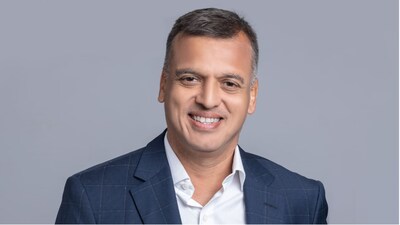
'I don't think building a financial services business without technology is even feasible from a resilience, sustainability, scalability, and growth perspective,' the Bajaj Finance managing director tells Moneycontrol
Net profit up 22 percent, driven by strong asset growth even as provisions remained elevated
Karnataka accounted for 11 percent of the company’s balance sheet, making this a significant recalibration
Brokerages raised their target price on Bajaj Finance shares as recent developments have addressed a key overhang, and the succession plan is "well executed".
The development confirms Moneycontrol's newsbreak that said both Jain and Saha are set to receive promotions as part of the group's succession planning exercise
Anup Saha, who joined Bajaj Finance in 2017 from ICICI Bank and was elevated to the role of deputy MD recently, may take over the reins of the NBFC from Jain.
The move follows Bajaj Auto’s decision to create its captive financing unit – Bajaj Auto Credit Limited, which started its operations in March 2024
Meanwhile, the company is leaving no stone unturned to lay a concrete foundation for its banking forays. The non-banking finance company (NBFC) owned by the renowned Bajaj group is so far known for serving affluent customers.
India's largest white-good financing company - Bajaj Finance's first (April-June) first quarter net profit grew at a slower pace by 27 percent year-on-year to around Rs 176 crore, dented by spike in loan losses and provisions that doubled from Rs 32 crore to Rs 64 crore.
Bajaj Finance has reported profit after tax of 27 percent at Rs 176 crore, which includes a one-time standard asset provisioning to the tune of Rs 18 crore. It's assets under management stood at Rs 19,229 crore.
Since last four quarters Bajaj Finance has been reducing its loan exposure to commercial segement including infra, equipments and vendor financing. It is now bottomed out. It will again start lending to this sector.
Bajaj Finance is seen as one of the major contenders for applying the new banking license. In its third quarter earnings, the company has cautiously reduced its exposure to infrastructure lending while extending credit to the affluent class for buying white goods (viz. fridge, tv, washing machine) and vehicles.
Rajeev Jain, CEO, Bajaj Finance explains on CNBC-TV18 that the company was able to post a growth of 37 percent thanks to the superlative performance by the company‘s consumer businesses- the consumer electronics financing and the two-wheeler financing arms