


co-presented by
ASSOCIATE SPONSORS
co-presented by


ASSOCIATE SPONSORS





India has not offered market access in legal services under the proposed agreement with the EU.
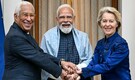
US’ weaponisation of its economic heft to realise its strategic goals nudged both India and EU to the finish line. EU showed that a slow, institutionalised path to talks will deliver results
The deal will also provide tariff cuts on EU’s wines and spirits under a quota system, while chocolates and other processed food items will see significant duty reductions, boosting exports from countries such as France, Italy, Spain and Belgium.
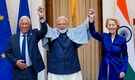
Preferential access for EU exporters could reshape market share in high-value segments such as machinery, metals and medical devices
A more confident but also more cautious India has decided to bring the drawn-out negotiation to a close. The biggest gain of the successful conclusion will lie in greater predictability in the business environment
The relevant question should not be whether India has an economy-wide carbon price matching the EU's €85 per tonne, but whether India's policy mix delivers comparable emissions trajectories adjusted for development stage and capacity
To be sure, the benefits from tariff reductions or eliminations will materialise once the FTA is implemented, which may take at least a year after the deal is signed.
The FTA between the two nations is expected to lower or eliminate tariffs for India’s labour-intensive sectors, while EU may gain greater market access for its high-end cars and wines.
On non-tariff barriers such as the EU’s Carbon Border Adjustment Mechanism (CBAM), Wadhawan said India has been able to meet the bloc’s existing standards for exports and can navigate stricter regulations.
He said concessions can be granted cautiously for EU cars and wines through safeguards such as tariff rate quotas.
Higher tariffs kick in this month, affecting most industrial and apparel exports until the India–EU FTA is implemented
EU's steel safeguard measures and carbon tax have emerged as major sticking points, which, if left unresolved, could limit India's benefits from the FTA despite tariff reductions.

Shifting European sourcing and tighter standards on South American suppliers may boost India’s edge ahead of its own EU trade deal

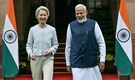
The FTA is expected to be signed on January 27, with EU Commission president Ursula von der Leyen and European Council president António Costa expected in Delhi as the chief guests at the Republic Day parade
Harsh V Pant says Donald Trump’s second term is accelerating a global rebalancing, with countries across regions reassessing security, trade and diplomacy to hedge against an increasingly unreliable United States.
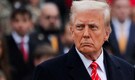
Harsh V Pant says Donald Trump’s second term has heightened uncertainty for US allies, creating more anxiety among partners than adversaries, injecting volatility into global politics and testing long-standing international relationships.
Under the deal, the EU stands to gain easier access for its wines, spirits, and automobiles in the Indian market, while India is expected to expand its exports of labour-intensive goods such as textiles, leather, and marine products.

The comments come amid expectations that European Union leaders, including European Commission President Ursula von der Leyen will visit New Delhi later this month for an India-EU summit.
Commerce and Industry Minister Piyush Goyal will hold discussions with European Union Commissioner for Trade and Economic Security Maros Sefcovic during a two-day official visit.

US tariffs, EU's CBAM, and global headwinds challenge India's merchandise exports, while alternative markets and services exports offer potential support.
The United States, citing discriminatory EU taxes and fines on American tech firms, warned of countermeasures targeting key European companies, signaling heightened trade tensions under President Donald Trump’s administration.
India–EU FTA represents the scaffolding for India’s next industrial leap. It offers the regulatory foundation, external confidence, and investment pipeline needed for Indian industry to move up the value chain and integrate more deeply with the world’s most advanced markets

In addition, Commerce Secretary Rajesh Agrawal said there have been discussions on reviving talks with the Southern African Customs Union (SACU), an issue that was raised during recent G20 engagements with Commerce Minister Piyush Goyal.
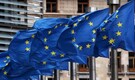
Tensions between the US and EU have escalated after President Donald Trump’s sharp criticisms and reports of a draft strategy seeking to sway Hungary, Poland, Austria, and Italy away from Brussels, deepening fears of European fragmentation.
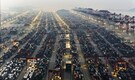
India is ramping up its trade efforts heading into 2026, with a free trade deal with the EU on the horizon and negotiations advancing with the US, Oman, Peru, Chile, New Zealand, Israel and more. These moves aim to diversify export markets, reduce reliance on any single economy, and secure critical minerals amid global supply constraints.


