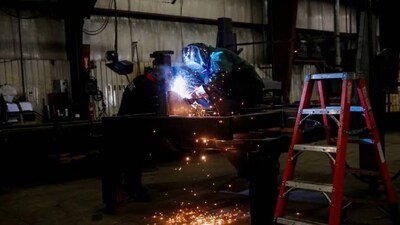
Jyoti CNC Q3 FY26 – Execution strong; financial leverage in focus
Order visibility and margin stability support sustained earnings growth

The Khulna sector fight (1971): Why resistance continued even after Dhaka fell
Even as Pakistan’s Eastern Command surrendered in Dhaka on December 16, 1971, fighting persisted in the southwest — a reminder that wars do not always end the moment a document is signed.
The Tangail airdrop (1971): India’s para jump that accelerated Dhaka’s fall
On December 11, 1971, Indian paratroopers dropped behind Pakistani lines near Tangail, cutting off retreating forces and hastening the collapse of resistance around Dhaka.
From 'Made in India' to 'Owned by India': Govt rewrites defence procurement playbook
The move signals a shift away from reliance on technology transfers towards rewarding firms that develop and own critical technologies.
INS Vikrant in 1971: How the carrier enforced the eastern naval blockade
India’s lone aircraft carrier in 1971 did more than launch air strikes. It sealed off East Pakistan’s coastline, cutting supply lines and tightening the noose around Dhaka.
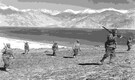
The fall of Tawang (1962): How the eastern sector unravelled
After the Namka Chu disaster, a chain of hurried withdrawals, mixed signals, and collapsing cohesion opened the road from Tawang to Se La and beyond.
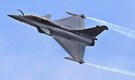
India set to clear Rs 3.25 lakh crore Rafale deal ahead of Macron's visit
The deal, estimated at around Rs 3.25 lakh crore, is set to become the largest defence procurement in India's history
The Sialkot sector offensive, 1965: India’s biggest armoured gamble since World War II
Calling the Sialkot sector offensive India’s largest armoured thrust since World War II is not hyperbole. It reflects the scale of forces committed and the ambition behind the operation.
Se La and Bomdila, 1962: The collapse that forced India to rethink its army
Units moving south found roads clogged, communications failing and Chinese forces already in positions that threatened their lines of retreat. Instead of a controlled fallback, it became a disorganised collapse.
Sweden's defence firm SAAB says Gripen fighter jet has place in IAF
At the core of Saab’s India proposition is to deliver aircraft quickly – as soon as the third year from contract.
Kaynes Technology Q3: Execution delays weigh on growth momentum
The company is making a strategic shift from EMS Vendor to Integrated Electronics Platform
The Sialkot sector offensive, 1965: India’s biggest armoured gamble since World War II
When India opened the Sialkot front in September 1965, it unleashed its largest concentration of armour since independence, aiming to force Pakistan onto the defensive and reshape the war’s momentum.
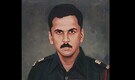
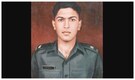
Captain Manoj Kumar Pandey at Batalik, Kargil 1999: The officer who kept attacking when stopping would have been easier
The Kargil officer whose assaults across multiple ridgelines showed how momentum is built, one feature at a time.
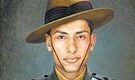
Major Ramaswamy Parameswaran in Sri Lanka, 1987: The patrol commander whose courage defined small-unit leadership in counterinsurgency warfare
The counterinsurgency officer who rallied his patrol after an ambush and set the template for small-team leadership.
Captain Gurbachan Singh Salaria in Congo, 1961: The UN fight that made an Indian officer a legend
A night of roadblocks, ambush fire and a close-quarters charge in Elisabethville turned one young officer’s last battle into one of UN peacekeeping’s most remembered stories.
Squadron Leader Ajjamada B. Devayya, 1965: The MiG-21 pilot whose last mission over Sargodha became legend
He was part of the Indian Air Force’s early MiG-21 cadre, pilots tasked with mastering a cutting-edge aircraft that had arrived with promise but limited operational experience.
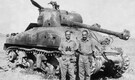
Second Lieutenant Arun Khetarpal at Basantar, 1971: The tank troop leader who fought on
In the fog and minefields of the Shakargarh sector, a 21-year-old tank troop leader refused to step back even after his Centurion was hit, helping blunt a Pakistani armoured thrust and earning India’s youngest Param Vir Chakra.
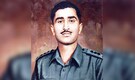
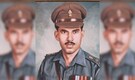
Major Hoshiar Singh at Jarpal, 1971: The night infantry battle that turned grit and leadership into a decisive breakthrough
In the closing days of the 1971 war, a company commander’s decision to keep moving forward, even after being hit, helped hold a hard-won Pakistani position through repeated counterattacks.
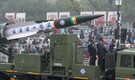
India's LR-AShM missile debuts on Republic Day: Hypersonic glide, low radar visibility, a naval game-changer
The LR-AShM is a hypersonic glide missile developed indigenously to meet the Indian Navy’s coastal defence and blue-water warfare requirements.
Flying Officer Nirmal Jit Singh Sekhon at Srinagar, 1971: The lone Gnat pilot who defended an airfield under attack
On the opening day of the 1971 war, a single Indian Air Force fighter took off into overwhelming odds over Srinagar. Flying Officer Nirmal Jit Singh Sekhon’s brief, ferocious dogfight became one of the IAF’s defining moments.
This Republic Day, Delhi skies to blaze with Indian Air Force's ‘Sindoor’ strike formation
In total, 26 aircraft will take part in this year's flypast, made up of 16 fighter jets, four transport aircraft and nine helicopters.
Amid strains with Trump, European Union eyes India as arms supplier under new defence partnership
Europe is increasingly viewing India as a potential supplier of arms and defence equipment in select segments, reflecting a shift in long-term strategic thinking.
US Army displays new version of Abrams Tank at Detroit Auto Show
The new variant’s design began with a digital backbone.
'They poisoned us': Nuclear weapons testing affected every single human on Earth, caused 4 million premature deaths
More than 2,400 nuclear devices were detonated in tests conducted worldwide between 1945 and 2017.
Amid geopolitical upheaval, IAF chief's stark warning with a Venezuela, Iran example
Amid geopolitical upheaval, IAF chief's stark warning with a Venezuela, Iran example