






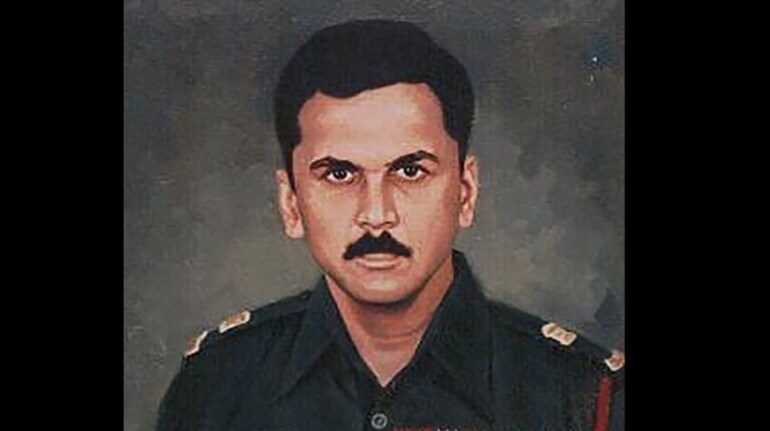

In the long and complicated history of India’s military deployment in Sri Lanka, the last battle of Major Ramaswamy Parameswaran captures the realities of counterinsurgency starkly. Fought not on a conventional battlefield but in a narrow village street under sudden ambush, his actions in November 1987 represent a kind of leadership that armies value deeply but rarely see so clearly: calm command at the moment when a small unit is most vulnerable.
Why Indian troops were in Sri Lanka
India’s military presence in Sri Lanka began with the signing of the Indo-Sri Lanka Accord in July 1987. Under its terms, the Indian Peace Keeping Force was deployed to help enforce a ceasefire, oversee the disarming of militant groups, and stabilise the island after years of civil war.
What followed was not peacekeeping in the textbook sense. The Liberation Tigers of Tamil Eelam soon turned hostile to the IPKF, and Indian soldiers found themselves fighting a determined insurgent force in dense towns, villages, and jungles. By late 1987, the IPKF was deeply engaged in counterinsurgency operations across northern Sri Lanka, often at the section and platoon level, where individual leadership mattered as much as firepower.
The officer and the unit
Major Ramaswamy Parameswaran served with 8 Mahar Regiment, a unit that saw sustained action during the IPKF’s early operations. Major Parameswaran was a seasoned officer familiar with the rhythms and risks of small-unit patrols in hostile territory.
Counterinsurgency patrols in Sri Lanka were tense, repetitive, and dangerous. Soldiers moved through civilian areas where an ambush could erupt without warning, often at close range. There were no clear front lines, and no guarantee that a quiet stretch of road would remain quiet for long.
The patrol at Jaffna
On November 25, 1987, Major Parameswaran was leading a routine search-and-cordon patrol in the Jaffna area. Such patrols were designed to assert presence, gather information, and deny insurgents freedom of movement. They were also among the most vulnerable tasks an IPKF unit undertook.
As the patrol moved through a village street, it walked straight into an ambush. Militant fire erupted at close range, killing the leading soldier instantly. In counterinsurgency terms, this is the moment that often decides the outcome. A patrol that freezes or scatters under sudden fire can quickly suffer heavy casualties.
Rallying under fire
Major Parameswaran was hit early in the ambush and wounded. But he immediately took control of the situation. Instead of seeking cover and attempting to command from the rear, he moved forward into the kill zone, shouting orders and physically rallying his men.
Accounts of the action consistently emphasise two things. First, his refusal to disengage from the centre of the fight despite being wounded. Second, his decision to lead the counter-ambush personally, directing fire and movement to break the militants’ advantage.
At close quarters, leadership is often less about elaborate tactics and more about clarity. Soldiers need to know where to move, where to fire, and that someone is in charge. Parameswaran provided exactly that.
Turning the ambush
Under his direction, the patrol returned fire aggressively and pushed toward the source of the attack. The militants, who had expected shock and confusion, instead faced a coordinated response. In the exchange that followed, Major Parameswaran shot and killed one of the attackers.
As he moved to secure the area, he attempted to seize the militant’s rifle. In that moment, the wounded attacker detonated a grenade, killing Major Parameswaran instantly.
The patrol, however, did not collapse. Having been steadied and reorganised under his leadership, the soldiers continued the engagement, neutralised the remaining attackers, and secured the area.
Why this action mattered
From a purely tactical perspective, the engagement was small. There were no sweeping manoeuvres or large formations involved. Yet within the Indian Army, Major Parameswaran’s action are remembered precisely because it reflected the realities of modern counterinsurgency warfare.
Ambushes are designed to create panic. The side that recovers first usually wins. By moving into the open while wounded and asserting control, Parameswaran denied the militants the psychological advantage they sought. His presence prevented hesitation from spreading through the patrol.
Equally important was what happened after his death. The patrol continued to fight coherently. That is often the ultimate test of leadership in small-unit combat: whether discipline and purpose endure even when the commander falls.
The Param Vir Chakra
Major Ramaswamy Parameswaran was posthumously awarded the Param Vir Chakra, India’s highest gallantry award, highlighting his courage under fire, his refusal to withdraw despite wounds, and his decisive role in breaking the ambush.
The award placed him among a very small group of soldiers whose actions in counterinsurgency operations met the highest standard of battlefield gallantry. Unlike conventional battles, where heroism can be measured against clear objectives and lines, counterinsurgency often offers no such clarity. The recognition of Parameswaran’s actions reflected an understanding that leadership in these environments is no less deserving of honour.
A template for small-team leadership
Within the Indian Army, Parameswaran’s final action is often discussed not as a dramatic last stand, but as a lesson in patrol leadership. Several principles stand out.
First is visibility. In moments of crisis, soldiers respond to leaders they can see. Parameswaran did not command from cover; he placed himself where his presence mattered most.
Second is decisiveness. He did not wait to assess the situation from a distance. By immediately counterattacking, he shifted the engagement from defence to initiative.
Third is example. Even after being wounded, he continued to lead by action, reinforcing discipline through personal courage rather than words alone.
These qualities are particularly relevant in counterinsurgency operations, where junior leaders often operate far from higher headquarters and must make split-second decisions with incomplete information.
Remembering the IPKF context
Major Parameswaran’s story is also a reminder of the broader IPKF experience. Indian soldiers were operating in an unfamiliar environment, among a civilian population caught between multiple armed actors. The mission’s political complexity often contrasted sharply with the clarity of danger faced by troops on the ground.
For many veterans, his action symbolises the professionalism and restraint with which Indian units tried to operate under extraordinarily difficult circumstances. It also underscores the human cost of a mission that was never meant to become a full-scale counterinsurgency campaign.
Legacy beyond the citation
Today, Major Ramaswamy Parameswaran’s name is remembered not only through memorials and regimental history, but also through the way his actions continue to be referenced in training and discussion. His final patrol is taught as an example of how a small team can survive and prevail when leadership holds under pressure.
In that sense, his legacy extends beyond the ambush that took his life. It lives on in the countless patrols led by officers who understand that in close, chaotic combat, leadership is often measured not by rank or orders, but by the willingness to step forward when everything threatens to fall apart.
That is why, decades later, his story still resonates. Not as a tale of distant heroics, but as a clear, human example of what effective leadership looks like at the moment it matters most.
Discover the latest Business News, Sensex, and Nifty updates. Obtain Personal Finance insights, tax queries, and expert opinions on Moneycontrol or download the Moneycontrol App to stay updated!
Find the best of Al News in one place, specially curated for you every weekend.
Stay on top of the latest tech trends and biggest startup news.





