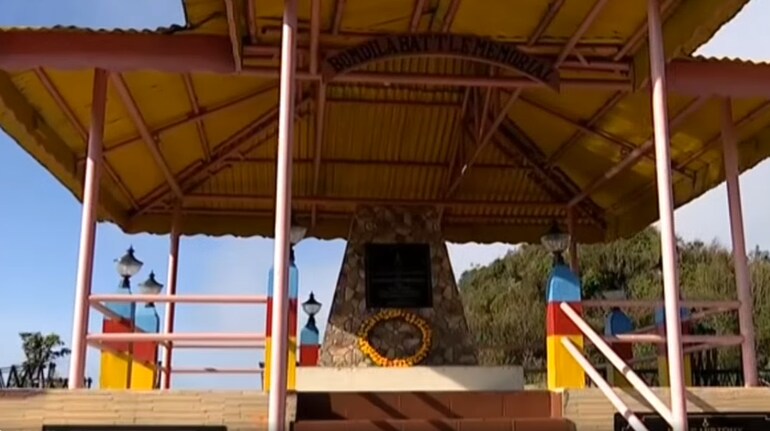

In the mountains of NEFA, a chain of decisions, withdrawals and missed signals turned Se La and Bomdila into symbols of how unprepared India was for high-altitude war.
When people remember the 1962 war with China, they often think of the heroic last stand at Rezang La or the shock of Tawang falling early in the campaign. But if there is one episode that truly shook India’s military establishment and political leadership, it was the collapse of defences at Se La and Bomdila in November 1962.
The fighting in what was then the North East Frontier Agency, now Arunachal Pradesh, did not simply represent a tactical defeat. It exposed structural weaknesses in planning, logistics, command and intelligence assessment. The events around Se La and Bomdila forced India to confront hard truths about how it had prepared for war in the Himalayas.
The road to Se La
After the Chinese attack began on 20 October 1962, Indian forces in the Kameng sector were pushed back from forward positions including Tawang. According to official histories and reporting in The Hindu and The Indian Express drawing on military archives, the initial withdrawals were meant to consolidate at stronger defensive lines further south.
Se La, a high mountain pass at over 13,000 feet, was identified as a key defensive position. The idea was straightforward on paper: hold Se La strongly, block Chinese advance southward, and stabilise the front. Bomdila, further south, was to act as a secondary defensive position and logistical node.
But the plan suffered from contradictions. India’s “Forward Policy” had earlier stretched troops thin along isolated posts. Once large-scale Chinese offensives began, many of these positions were either overrun or forced to withdraw hurriedly. Units regrouping at Se La were already under strain, short of supplies and operating in extreme terrain.
Military historians writing in The Print and Indian Express have noted that communication gaps and confusion at higher command levels compounded the stress on troops on the ground. Orders to hold, withdraw or reposition were sometimes unclear or changed quickly, creating uncertainty in already difficult conditions.
Se La: Strong position, fragile execution
On paper, Se La was defensible. It offered commanding heights and natural defensive advantages. But effective defence requires more than terrain. It needs secure supply lines, coherent command, and clarity of mission.
As Chinese forces resumed their offensive in mid-November 1962, they did not simply assault Se La frontally. Instead, they manoeuvred to outflank and bypass Indian positions. Reports in The Hindu and Indian Express, referencing official accounts, describe how Chinese troops cut off supply routes and infiltrated through mountain tracks that Indian planners had underestimated.
This created panic about encirclement.
There were conflicting instructions at higher levels about whether Se La should be held at all costs or whether a withdrawal to Bomdila was prudent. Eventually, a decision to withdraw was taken, but by then the situation had deteriorated. The withdrawal was neither orderly nor properly coordinated.
Units moving south found roads clogged, communications failing and Chinese forces already in positions that threatened their lines of retreat. Instead of a controlled fallback, it became a disorganised collapse.
Bomdila: The second line that did not hold
Bomdila was intended to serve as a fallback defensive line and a stabilising point. But by the time retreating troops reached the area, cohesion had broken down. Chinese forces, moving rapidly through mountain routes, struck at vulnerable points.
According to analyses published in Indian Express retrospectives and military commentaries cited by The Print, the fall of Bomdila symbolised not just tactical defeat but the breakdown of command structure in the sector. Senior officers struggled to maintain control over scattered units. Supplies were inadequate. Morale suffered under the weight of repeated setbacks.
The speed of Chinese manoeuvre shocked Indian commanders. Many positions were bypassed rather than assaulted directly. This method of infiltration and encirclement exposed how dependent Indian planning had been on linear defensive concepts rather than flexible mountain warfare tactics.
By late November, Chinese forces had advanced deep into the Kameng sector. Then, unexpectedly, Beijing announced a unilateral ceasefire and withdrawal to positions north of the McMahon Line.
But the psychological damage had been done.
Why Se La and Bomdila mattered beyond the battlefield
The immediate consequence of the collapse was a national crisis. Public confidence in the government’s assessment of China suffered sharply. Prime Minister Jawaharlal Nehru, who had earlier expressed confidence in India’s preparedness, faced intense criticism. Defence Minister V K Krishna Menon resigned.
More importantly, the military underwent serious introspection.
The Henderson Brooks-Bhagat Report, an internal operational review, examined the failures of planning and execution in 1962. Though not fully public, its existence and partial disclosures have been discussed in The Hindu and other mainstream outlets over the years. The broad conclusions pointed to overextended forward deployments, inadequate intelligence assessment and unrealistic political directives.
After 1962, India began a major military expansion. New mountain divisions were raised. Infrastructure in the northeast received greater attention. Training for high-altitude warfare improved. Intelligence and logistics planning were strengthened.
The Indian Army’s later performance in 1965 and 1971 was shaped in part by the lessons learned from the Himalayan debacle. Se La and Bomdila became cautionary case studies in staff colleges.
A collapse, but not a simple story
It is tempting to reduce Se La and Bomdila to a narrative of panic and failure. But the reality is more complex. Individual units fought hard in extremely difficult conditions. Many soldiers endured freezing weather, limited supplies and confusing orders.
What failed was not courage at the platoon level. It was clarity at the top, preparedness in logistics, and realistic assessment of the adversary’s capabilities.
The events of November 1962 forced India to confront a painful gap between political aspiration and military capacity. In that sense, Se La and Bomdila reshaped India’s defence thinking more than any single heroic stand could have.
They remain reminders that in mountain warfare, terrain is unforgiving, but misjudgement is even more so.
Discover the latest Business News, Sensex, and Nifty updates. Obtain Personal Finance insights, tax queries, and expert opinions on Moneycontrol or download the Moneycontrol App to stay updated!
Find the best of Al News in one place, specially curated for you every weekend.
Stay on top of the latest tech trends and biggest startup news.