
When the Congo won independence from Belgium in 1960, the country quickly slid into a violent, fast-moving crisis involving mutinies, outside interference, and secessionist breakaways. The United Nations set up the UN Operation in the Congo, known as ONUC, to stabilise the situation, support the Congolese state, and help restore order.
India was one of the major troop contributors, and Indian units found themselves operating in a situation that was neither a conventional war nor a “keep the peace and stand aside” deployment. By late 1961, the most volatile flashpoint was Katanga, where secessionist forces and foreign-backed armed groups clashed repeatedly with UN troops. ONUC’s mission had, by necessity, hardened into a form of peace enforcement, with UN troops sometimes required to fight their way through roadblocks and organised resistance.
The man behind the story
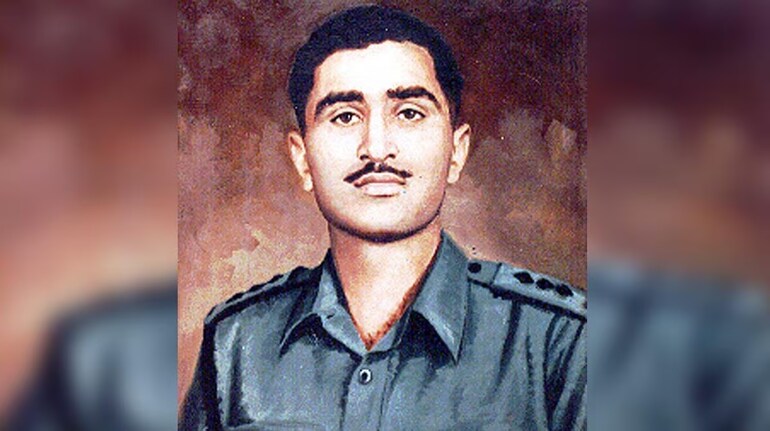
Captain Gurbachan Singh Salaria was an Indian Army officer serving with 3/1 Gorkha Rifles on the UN mission in Katanga. His story gets described as “a battle away from home” for a reason: he was fighting thousands of kilometres from India, under a blue-helmet mandate, in conditions where rules, threats, and front lines could change in minutes.
Salaria’s legacy is also tied to a rare distinction: official Indian government communication has noted him as the only Param Vir Chakra awardee whose gallantry came during an overseas UN mission.
The day the roadblocks turned into a firefight
The action most associated with Salaria unfolded on December 5, 1961, in Elisabethville (now Lubumbashi), Katanga. According to the official gallantry award narrative, 3/1 Gorkha Rifles was ordered to clear a gendarmerie roadblock at a strategic roundabout, with a plan that combined a frontal move supported by Swedish armoured vehicles and a “cutting-off” element advancing from the airfield.
Salaria was leading the element meant to move up from the airfield. As his small force neared the objective, they were hit by heavy automatic and small-arms fire from an enemy position dug in on the right flank, essentially a subsidiary roadblock and ambush that could have reinforced the main fight and endangered the larger operation. The same account describes the opposing force as significantly larger and supported by armoured cars.
This is the hinge point in the story. In a situation like that, a junior officer can do the “correct” cautious thing and still lose the initiative, because hesitation lets an ambush settle in and spread. Salaria instead chose to remove the threat immediately, even though he was outnumbered and under fire.
The charge that broke the ambush
What followed is remembered because it was brutally close-range and intensely physical. The official citation describes Salaria leading a charge with bayonets, khukris and grenades, pushing directly into the ambush position rather than trying to trade fire from exposed ground.
The point was not just courage for its own sake. It was tactical. A fast, aggressive assault can collapse a dug-in position’s advantage by forcing defenders into confusion, compressing their time to aim, and breaking their firing rhythm. In an ambush, the attacker’s biggest enemy is often the first 30 seconds of shock and indecision. Salaria’s decision was to deny the ambush that advantage.
The same official narrative credits his action with preventing the enemy force from moving toward the main battle scene and contributing substantially to the success of the battalion’s operation, including preventing an encirclement of UN headquarters in Elisabethville.
Wounded, but still leading
Salaria was hit in the neck by automatic fire during the fight, and the citation records that he continued to fight until he collapsed from profuse bleeding. That detail matters because it explains why the event has such staying power inside the army and among peacekeeping historians: it is not only that he attacked an ambush, but that he kept command presence even after being gravely wounded, long enough to stabilise his small force and finish the immediate task.
Why this became a defining UN peacekeeping story
Peacekeeping is often discussed as restraint, rules of engagement, and diplomacy backed by force. But Congo was one of those missions that exposed how quickly peacekeeping can slide into combat when armed groups decide the UN is an obstacle rather than a referee. Salaria’s action sits right on that fault line: he was not fighting for conquest, and he was not fighting “for India” in the usual territorial sense. He was fighting to keep a mandate alive in the middle of a collapsing security environment.
It also became a story about credibility. ONUC’s ability to function depended on whether UN troops could move, supply themselves, and protect key nodes without being strangled by roadblocks and intimidation. A single roadblock at the wrong intersection can paralyse an entire area of operations. That is why the citation’s emphasis is so specific about what was at stake: reinforcement of the main opposition, the risk to the battalion’s plan, and the potential encirclement of a UN headquarters.
The PARAM VIR CHAKRA, and what it signalled
India awarded Captain Salaria the Param Vir Chakra posthumously, linking his last action to the highest standard of battlefield gallantry in Indian military tradition. And because this happened on a UN mission, the award also carried a quieter message: that India’s peacekeeping role was not symbolic or passive. Indian troops were taking real risks in conflicts that many countries preferred to watch from a distance.
What to remember if you strip away the mythmaking
If you take away the “last charge” framing and the memorial language, what remains is still stark and impressive: a small force walking into a prepared ambush, a commander quickly understanding that the ambush could unravel the larger plan, and a decision to close the distance and break the enemy’s advantage at the cost of his own life.
That is why Captain Gurbachan Singh Salaria’s Congo story endures. It is not only a tale of bravery. It is a clean example of battlefield judgment under pressure, in a war that was not
supposed to look like a war, fought in a place that was never meant to become part of India’s military folklore, but did anyway.
Discover the latest Business News, Sensex, and Nifty updates. Obtain Personal Finance insights, tax queries, and expert opinions on Moneycontrol or download the Moneycontrol App to stay updated!
Find the best of Al News in one place, specially curated for you every weekend.
Stay on top of the latest tech trends and biggest startup news.