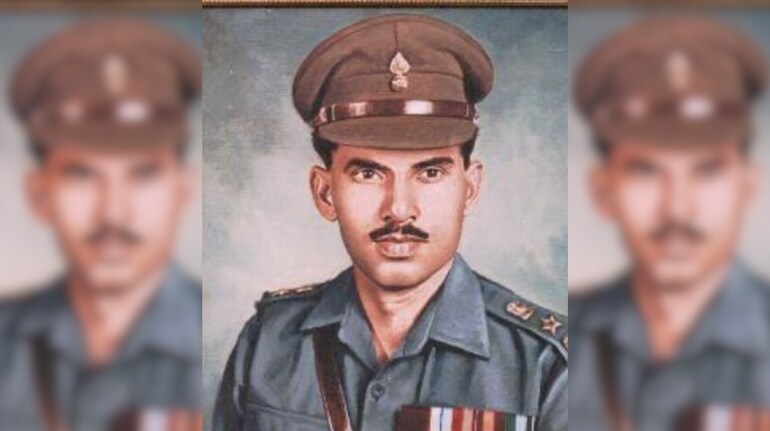

If you picture a textbook assault, you imagine clean lines, timed fire support, and objectives that fall on schedule. Jarpal wasn’t that. It was closer, messier, and far more personal.
In December 1971, in the Shakargarh sector on the western front, 3 Grenadiers was part of the Indian push that aimed to seize and hold key localities, punch openings for follow-on movement, and deny the Pakistan Army the ability to mount effective counterattacks in that belt. Major Hoshiar Singh Dahiya was commanding a company during these operations, and his action at Jarpal became one of the defining infantry stories of the war.
Where Jarpal fits in the 1971 campaign
The Shakargarh sector mattered because it sat on approaches and junctions that both sides understood could shape the tempo of operations. Fighting here was not just about “taking a village.” It was about holding a tactically useful piece of ground long enough for the larger plan to breathe.
Accounts of 3 Grenadiers’ advance in the sector describe a fast-moving early phase, followed by brutal local fights once the Pakistan Army began reacting with prepared defences and counterattacks. That pattern set the stage for what happened at Jarpal: an assault that turned quickly into close-quarter fighting in and around trenches, and then a grind to keep the locality from being clawed back.
The assault at Jarpal: Trench-to-trench, not “from a distance”
By mid-December, Major Hoshiar Singh’s company was tasked with capturing a well-defended enemy position at Jarpal. What stands out in the better-known retellings is not just that the position was taken, but how it was taken: by closing the distance, getting into the trench system, and fighting the kind of short-range battle where leadership becomes visible to everyone around you.
The Indian Army’s public remembrance notes him as the “Hero of the Battle of Basantar” and ties his recognition to the fighting around this phase of the campaign; the same remembrance also carries the core claim that he pressed the attack through intense resistance and then stayed in the fight to consolidate despite wounds.
In practical infantry terms, that combination matters. Capturing a trench line is one problem. Making it “stick” is another. The moment you take a position, the defender’s most instinctive response is to hit it back before you reorganise, redistribute ammunition, and re-establish arcs of fire.
Holding after the capture: The part that breaks units
This is where Jarpal becomes a story about endurance, not just daring.
Accounts emphasise repeated counterattacks and the strain of defending a newly taken locality. In that window, a company can unravel fast: casualties mount, communications get patchy, and the enemy starts probing for the weak point. The accounts of Major Hoshiar Singh’s conduct focus on two linked decisions: staying forward where his men could see him, and refusing to be evacuated even after serious wounds.
This isn’t romantic fluff. A wounded commander being physically present changes how a company behaves in the minutes that matter. It keeps sections from drifting, slows panic from spreading, and signals that the position is not optional. If you’re an infantryman in a trench at night and you can still hear your officer directing fire and movement, you’re far less likely to believe you’re about to be overrun.
Bharat Rakshak’s summary of his wartime record in the sector underlines that his “dogged resistance,” “cool courage,” and refusal to leave the battlefield inspired the men holding the locality through repeated enemy attempts to retake it.
Why the word “grit” is actually accurate here
“Grit” can sound like a lazy adjective until you map it to what was required.
At Jarpal, grit meant closing into a defended trench system under fire, dealing with the chaos of a night fight, reorganising immediately after capture, and then absorbing counterattacks when fatigue and shock would normally blunt decision-making. It also meant making sure the defence didn’t turn into isolated pockets. The battle, as it is remembered, isn’t a single heroic moment. It’s a chain of choices taken under pressure, including the choice to keep command intact despite injury.
The Param Vir Chakra and what made it stand out
Major Hoshiar Singh was awarded the Param Vir Chakra for his actions in the 1971 war. One reason the award continues to be discussed is that he survived the battle, and is widely described as the first living officer to receive the Param Vir Chakra.
That detail matters culturally because so many stories of the highest gallantry awards are also stories of last stands. In this case, the narrative became not only about extraordinary leadership under fire, but also about living with what happened and carrying that legacy forward.
The soldier behind the citation
Biographical summaries generally note that he was born on 5 May 1936 (in what is now Haryana) and was commissioned into 3 Grenadiers in 1963.
Those bare facts don’t explain Jarpal, but they do explain the professional foundation behind it. By 1971, he was not an inexperienced leader improvising in a crisis; he was a trained infantry officer leading men in a regiment with a strong combat tradition, in a sector where the fight demanded both aggression and the ability to consolidate under pressure.
What Jarpal leaves behind as a lesson
For readers who want a takeaway beyond the medal, Jarpal is a reminder of what infantry battles often look like when armour and artillery can’t instantly “solve” the problem.
It comes down to small groups of men taking ground at close range, then refusing to yield it when the enemy comes back hard. It comes down to leadership that is visible, not managerial. And it comes down to the unglamorous work after the objective is taken: ammunition, casualty evacuation, re-siting weapons, restoring order, and preparing for the next push.
That is why the phrase “trench-to-trench” is not just dramatic wording. It describes a fight where the margin between success and failure is measured in metres, seconds, and whether the person leading you is still directing the battle when it would be easiest to step back.
Discover the latest Business News, Sensex, and Nifty updates. Obtain Personal Finance insights, tax queries, and expert opinions on Moneycontrol or download the Moneycontrol App to stay updated!
Find the best of Al News in one place, specially curated for you every weekend.
Stay on top of the latest tech trends and biggest startup news.