The 1971 war is often remembered for the lightning campaign in the east that ended with Pakistan’s surrender in Dhaka. But the western front mattered just as much because Pakistan’s strategy relied on gaining leverage in the west to offset losses in the east. One of the most dangerous pressure points was the Shakargarh Bulge, a protruding slice of Pakistani territory that offered armour-friendly terrain and direct approaches that could threaten Indian lines of communication towards Jammu. Indian planners knew that if Pakistan could push through here, it could create a crisis far beyond a local tactical setback.
That is why the fighting around the Basantar river and its adjoining villages became so intense. Over days of combat, Indian forces pushed into the bulge, fought through dense minefields, and then held on against repeated counter-attacks by Pakistani armour. By the time the ceasefire came on December 16, 1971, India had seized significant ground in the sector and destroyed large numbers of Pakistani tanks, leaving Pakistan’s western options sharply reduced.
The Poona Horse, the minefields, and the bridgehead problem
Armour does not “flow” across a battlefield unless someone has first opened the gates. At Basantar, those gates were minefields laid thickly enough to stall tanks, channel movement, and buy time for Pakistani armour to strike bridgeheads before Indian Centurions could fully deploy. ThePrint’s reconstruction of the operation underlines how formidable the Basantar minefield was and why engineers were forced into slow, risky manual clearing under artillery fire and pressure from enemy armour.
The tactical problem, in simple terms, was brutal: Indian infantry could secure a lodgment across the Basantar, but if armour could not get through quickly, that bridgehead would be vulnerable to a concentrated armoured punch. As infantry units reported enemy counter-attacks building up and the lane still not fully cleared, the decision was taken to push tanks through in the early hours of December 16.
Into this situation came 17 Horse (Poona Horse), a storied armoured regiment that had long since moved from horses to steel and was now fighting the kind of battle armoured crews dread and train for: short engagement ranges, confusing terrain, heavy dust and smoke, and enemy tanks appearing suddenly through haze, often in overlapping waves.
Who Arun Khetarpal was, and why he stood out
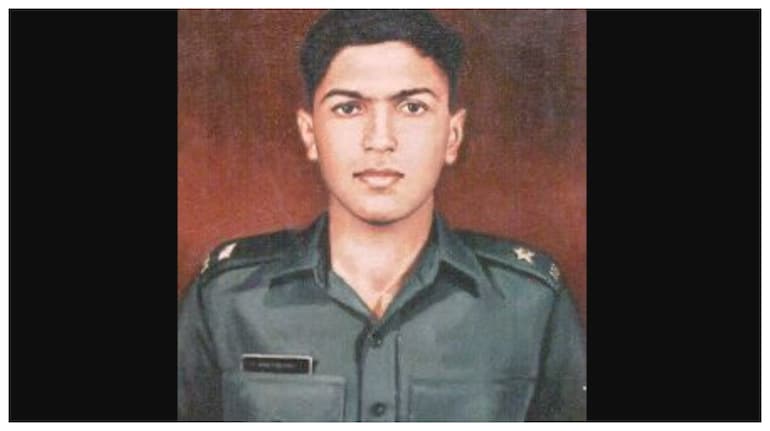
Arun Khetarpal was commissioned into the Poona Horse in June 1971 and was barely six months into service when he found himself in the Shakargarh sector. Accounts in mainstream Indian coverage in recent weeks, prompted by renewed public attention to his life, emphasise the rawness of his youth and the speed with which the war forced him from training to command responsibility.
He was not a lone figure in a cinematic sense. He was a troop leader inside a system that relies on crews, squadron control, infantry protection, artillery, engineers, recovery teams, and signals. But there are moments in war when one officer’s decision under fire changes what happens next. Khetarpal’s last action at Basantar is remembered precisely because it combined tactical aggression, refusal to abandon a critical firing position, and the ability to keep fighting after being hit.
The decisive morning at Jarpal and Barapind
The official citation, preserved in a Government of India gallantry awards PDF, places the key action on December 16, 1971, when Indian positions at Jarpal in the Shakargarh sector came under attack by a Pakistani armoured regiment and Indian troops were heavily outnumbered. Reinforcements were requested, and Khetarpal, hearing the call on the radio, moved with his troop to meet the attack.
On the way, his troop came under fire from enemy strongpoints and recoilless gun nests that were still holding out in the bridgehead area across the Basantar. The citation describes him reacting instantly, assaulting these positions, overrunning them, and capturing enemy infantry and weapon crews at pistol point. It is an unusually vivid detail because it highlights something armoured officers are taught but rarely see described so plainly: sometimes, the tank commander must treat a “tank problem” as an infantry and strongpoint problem first, because the route itself is under fire.
With those strongpoints reduced, he broke through toward the location of his squadron. When enemy tanks began pulling back after probing attacks, he pursued and destroyed one of them. Then came the heavier blow: another Pakistani attack, this time with an armoured squadron, against a sector held by three Indian tanks, one of which was Khetarpal’s. The citation records a fierce battle in which ten enemy tanks were hit and destroyed, and credits Khetarpal with personally destroying four.
This is where popular retellings and the official record often meet, but not always in the same numbers. Some narratives describe a larger tally attributed to the tank “Famagusta” and its crew in the heat of that duel, while the official citation is careful to distinguish between the wider engagement result and Khetarpal’s confirmed personal kills. ThePrint’s reconstruction, for instance, spotlights the tank “Famagusta” and describes the crew’s role, naming the gunner and loader, and portraying the engagement as a grinding duel that halted a Pakistani advance.
Hit, burning, and ordered to abandon the tank
The part of the story that has become etched into India’s military memory is not only the number of enemy tanks knocked out, but what happened after Khetarpal’s own Centurion was hit.
The official citation states that his tank was struck and burst into flames, and that he was severely wounded. He was ordered to abandon the tank. He did not. The citation’s reasoning is cold and tactical: he understood that the enemy was still pressing in that sector, and if he abandoned the tank, the enemy could break through. So he kept engaging despite grievous wounds and a burning vehicle. Before the tank was hit a second time, he destroyed another enemy tank; after that second hit, he was fatally injured.
Indian Express, retelling the episode for a general audience, captures the same moment in more human language: a 21-year-old officer, ordered to get out while his tank was on fire, refusing because his main gun still worked, taking down one more Pakistani tank before being hit again.
The point is not bravado for its own sake. In an armoured battle around a threatened bridgehead, one tank continuing to fire can deny a lane, slow an enemy’s tempo, and buy the minutes that let other tanks shift, infantry dig in, and artillery adjust. Sometimes, that is the difference between a bridgehead holding and collapsing.
How his stand shaped the outcome at a decisive crossing
It is always risky to claim that a single action “won” a battle. Basantar was a combined-arms fight involving infantry lodgments, engineer clearance under fire, artillery concentrations, and multiple armoured engagements across several days. But Khetarpal’s last stand mattered because it came at a moment when the crossing and the bridgehead were still vulnerable and Pakistani armour was attempting to force a decision before India could consolidate.
By the end of the battle, India had not only held the bridgehead but also inflicted significant tank losses and gained territory in the sector, reducing Pakistan’s ability to turn the western front into bargaining leverage.
The long afterlife of a short life
Khetarpal’s death did not end the story for those who lived with it. A striking Times of India account from years later describes a moment when his father, Brigadier ML Khetarpal, met a Pakistani officer who said he had fought the Poona Horse at Basantar and claimed he was the man who killed Arun. Whatever one makes of the claim, the episode illustrates the strange, lingering human residue of mechanised war: decades later, men still trying to put words to what happened in a few minutes of smoke and steel.
Public memory, too, moves in waves. A new generation is currently encountering his story through fresh reportage and popular retellings, but the core of it has never really changed: a very young officer, in a tank battle on a mined river line, refusing to leave a burning vehicle because leaving would open a gap.
What Basantar asks us to remember
If you strip away the legend-making, what remains is still extraordinary, and also deeply professional. Khetarpal’s citation is not written like poetry. It reads like a record of battlefield decisions: move to reinforce, overrun strongpoints, pursue withdrawing armour, fight outnumbered, keep firing after being hit, refuse to abandon a position that cannot be yielded.
That is why his story endures inside the armoured corps and beyond it. Not because it is neat, but because it is the clearest kind of battlefield clarity: knowing exactly what the enemy wants to do next, and deciding, even while your own tank is burning, that it will not happen through your sector.
Discover the latest Business News, Sensex, and Nifty updates. Obtain Personal Finance insights, tax queries, and expert opinions on Moneycontrol or download the Moneycontrol App to stay updated!
Find the best of Al News in one place, specially curated for you every weekend.
Stay on top of the latest tech trends and biggest startup news.