






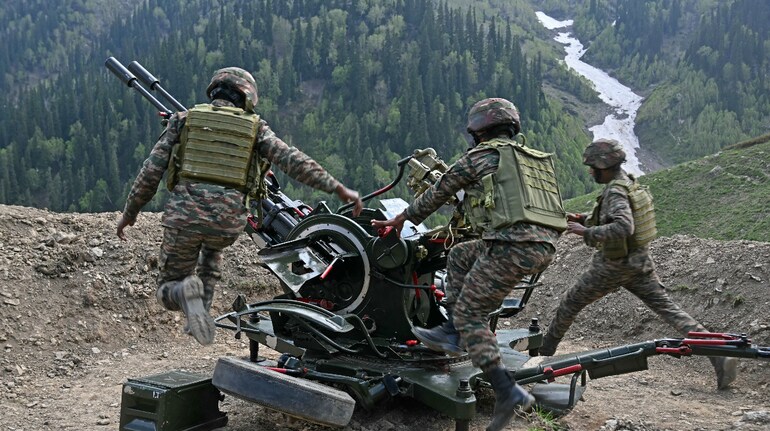

When India opened the Sialkot front in September 1965, it unleashed its largest concentration of armour since independence, aiming to force Pakistan onto the defensive and reshape the war’s momentum.
In the popular memory of the 1965 India-Pakistan war, battles like Asal Uttar and Haji Pir dominate headlines. But in terms of sheer scale, concentration of tanks, and operational ambition, the offensive in the Sialkot sector stands apart. It was India’s largest armoured thrust since World War II, mounted with the intention of striking deep, fixing Pakistan’s elite formations in place, and changing the geometry of the war.
Why Sialkot mattered
By early September 1965, fighting had already escalated across Kashmir and Punjab. Pakistan’s Operation Grand Slam in the Chamb-Akhnoor sector had raised the stakes. India responded by opening new fronts across the international border, a move designed to relieve pressure in Jammu and force Pakistan to redistribute forces.
The Sialkot sector was chosen carefully. It offered relatively open terrain compared to the canal crisscrossed plains around Lahore. That meant room for armour to manoeuvre. More importantly, Sialkot was a strategic hinge. A successful Indian thrust there could threaten vital road and rail links, complicate Pakistan’s logistics, and compel it to divert major formations.
As The Hindu and Indian Express retrospectives have noted, this was not a limited raid. It was an ambitious corps level offensive built around armour and artillery.
The scale of the thrust
India committed I Corps to the operation, including its 1 Armoured Division, supported by infantry divisions and heavy artillery. The concentration of tanks on both sides made the Sialkot battles some of the largest armoured engagements seen in the subcontinent.
Times of India accounts and National War Memorial records describe the fighting in this sector as involving hundreds of tanks across a relatively compressed battlefield. For India, it was the largest armoured concentration fielded since independence, and arguably the biggest since the end of the Second World War.
Pakistan responded with its 6 Armoured Division, equipped with American supplied Patton tanks, widely considered technologically superior at the time. What followed was not a brief clash but a sustained series of engagements stretching from Phillora to Chawinda.
Opening moves and early gains
The offensive began in early September 1965. Indian armour crossed into Pakistani territory, aiming to break through forward defences and force Pakistani armour into battle on ground of India’s choosing.
Early engagements around Phillora saw intense tank battles. Indian accounts, including those reflected in official commemorations, describe heavy fighting that forced Pakistani units to withdraw toward Chawinda. The battle of Phillora became a symbol of the offensive’s early momentum.
Leadership played a critical role. Lieutenant Colonel AB Tarapore of Poona Horse, later awarded the Param Vir Chakra, led from the front during these armoured engagements. His gallantry citation records that he continued directing operations despite being wounded, helping maintain the regiment’s offensive posture under sustained pressure.
The battle shifts to Chawinda
If Phillora represented momentum, Chawinda represented resistance.
As Indian forces advanced, Pakistan consolidated its armour around Chawinda, creating one of the largest tank confrontations of the war. The New Indian Express and The Print have both noted that Chawinda became a grinding battle where neither side achieved a clean breakthrough.
Here, the limitations of armoured warfare became visible. Terrain, anti-tank obstacles, artillery fire and air support all shaped outcomes. The offensive slowed. What had begun as a sweeping armoured thrust evolved into attritional combat.
While Indian forces had pushed forward and forced Pakistan onto the defensive, they were unable to achieve a decisive breakthrough at Chawinda before the ceasefire took hold later in September.
Losses and contested narratives
As with most major battles, casualty and tank loss figures vary across sources. Both India and Pakistan have presented different assessments of destroyed and disabled armour.
What is less disputed is the scale of commitment and intensity. The Sialkot sector saw some of the heaviest tank fighting of the war. It fixed Pakistan’s premier armoured division in a defensive posture and prevented it from being redeployed freely elsewhere.
That alone was strategically significant.
Strategic impact
The Sialkot offensive did not produce a dramatic territorial gain that survived the post war Tashkent Agreement. Much of the captured territory was returned.
But wars are not judged solely by maps.
By launching the largest armoured thrust of the conflict, India forced Pakistan to fight on a broad front. It diluted pressure in other sectors and demonstrated that Indian armoured formations could engage Pakistan’s Patton equipped units head on.
The offensive also shaped military thinking. The 1965 experience, particularly the challenges faced in achieving breakthrough against concentrated armour and defensive depth, informed later doctrinal development on both sides.
A measured conclusion
Calling the Sialkot sector offensive India’s largest armoured thrust since World War II is not hyperbole. It reflects the scale of forces committed and the ambition behind the operation.
It did not deliver a knockout blow. It did, however, alter the balance of pressure, impose costs on Pakistan’s armoured strength, and confirm that the war would not be confined to one sector.
In the larger story of 1965, Sialkot is the chapter where steel met steel in numbers unseen in the subcontinent since the global war two decades earlier. It was a gamble built on armour, and for weeks in September, the plains around Sialkot became the proving ground of that gamble.
Discover the latest Business News, Sensex, and Nifty updates. Obtain Personal Finance insights, tax queries, and expert opinions on Moneycontrol or download the Moneycontrol App to stay updated!
Find the best of Al News in one place, specially curated for you every weekend.
Stay on top of the latest tech trends and biggest startup news.





