LAMF
LAMF
YOU ARE HERE:   Home News Business Personal Finance Personal Loan Amortisation: What It Means For Your Payments

Personal Loan Amortisation: What It Means For Your Payments

21 March, 2025 | 11:00 IST
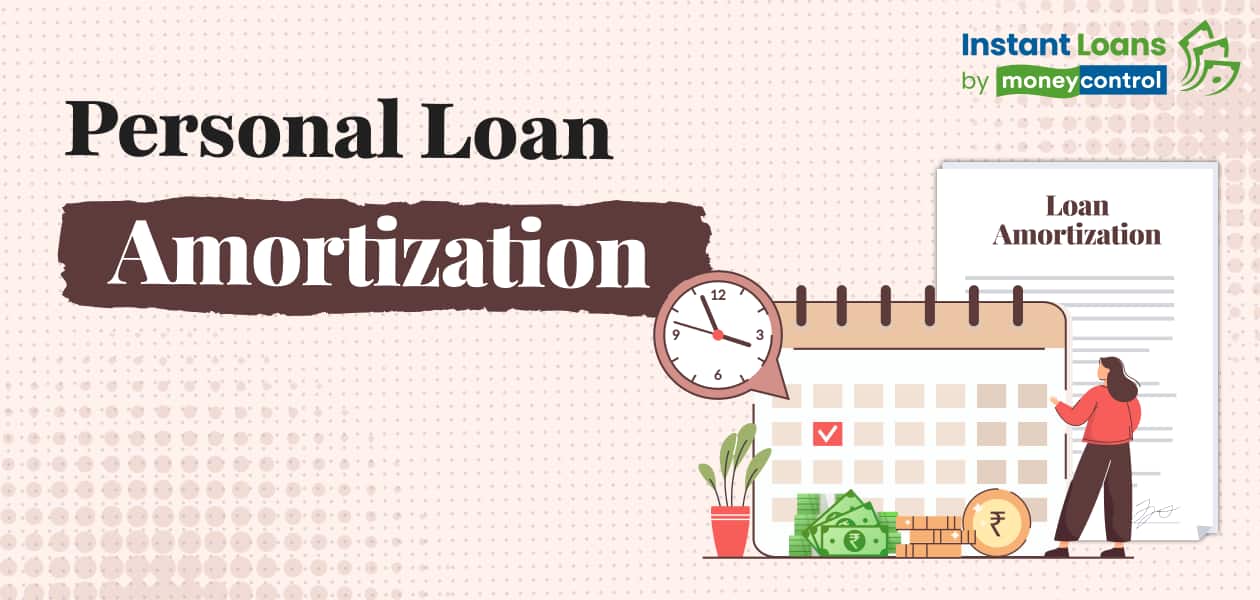
A personal loan can be a lifesaver when you need extra cash for an emergency, a big purchase, or just to clear off some debts. Since most personal loans are amortised, you pay them back in fixed monthly instalments, covering both the interest and the actual loan amount. At first, a bigger chunk goes toward interest, but over time, more of your payment starts reducing the loan balance. It’s a predictable way to repay since you know exactly what you owe each month. Just keep an eye on the interest rates, processing fees, and any extra charges if you plan to pay it off early.

What is an amortised loan?

An amortised loan is a loan that is repaid in fixed instalments over time, with each payment covering both interest and the loan principal. In the early stages, a larger portion of the payment goes toward interest, while later payments focus more on reducing the principal. This structured repayment method makes it easier to manage finances, as the borrower knows exactly how much to pay each month. Home loans, car loans and personal loans are common examples of amortised loans.

How are personal loans amortised?

Personal loans are amortised through fixed monthly payments that cover both the principal and interest over the loan tenure. When you take a personal loan, the total amount is divided into equal instalments using an amortisation schedule. At the start, a larger portion of your payment goes toward interest, while a smaller part reduces the principal. As you continue making payments, the interest portion decreases, and a larger share of your payment starts reducing the loan balance. This structure ensures that the loan is fully repaid by the end of the tenure while keeping monthly payments predictable.

To put it simply, imagine you borrow a big box of chocolates from a friend and promise to return them little by little every month. But your friend wants a few extra chocolates as a “thank you” for lending them to you.

At first, when you start returning, most of what you give back are the extra chocolates (interest), and only a few go toward reducing the number of chocolates you actually borrowed (principal). As time goes on and you keep paying, you start giving fewer extra chocolates and returning more of the original ones. By the end, you have given back all the chocolates you borrowed, plus the extra ones your friend asked for.

That’s how an amortised loan works. In the beginning, you pay more towards interest, but later, more of your payment reduces the actual loan amount.

You can check the amortisation using this calculator.

Difference between amortised loans, balloon loans, revolving debt

  • Amortised loans: You repay these loans in equal monthly instalments, covering both interest and principal. Over time, you gradually pay off the full loan. You can also pay extra to reduce the balance faster. Examples – home loans, car loans, personal loans.
  • Balloon loans: These loans have small payments at first, but at the end of the term, you must pay a large lump sum (balloon payment) to clear the remaining balance. They are riskier because of the big final payment. Example – some short-term business loans.
  • Revolving debt (credit cards): Unlike loans, credit cards don’t have fixed payments or a set loan amount. You can borrow up to a limit, repay some or all of it, and borrow again. Interest is charged on unpaid balances and minimum payments are required each month. Example – credit cards, lines of credit.

Key points about loan amortisation

  • Fixed payments: Your monthly payment (EMI) stays the same.
  • Interest vs principal: In the beginning, a larger part of your payment goes toward interest. Over time, more of it reduces the principal.
  • Balance reduction: Each payment lowers your loan balance until it reaches zero at the end of the term.

ALSO READ: Personal Loan Prepayment: Key points to consider before paying off your loan earlier

Benefits of an amortised loan

  • Predictability: Fixed monthly payments make budgeting easier.
  • Faster repayment options: You can pay extra toward the principal to reduce interest costs and pay off the loan sooner.
  • Equity building: In home loans, paying down the principal helps you build equity over time.

Conclusion

Understanding personal loan amortisation is key to managing your finances efficiently. With fixed monthly payments, you can plan your budget while steadily reducing your loan balance. Through Moneycontrol’s online lending platform, you can explore personal loan offers of up to Rs 50 lakhs from eight lenders, with interest rates starting at 10.5% per annum. The 100% digital application process ensures a seamless and hassle-free experience.

Disclaimer

This piece/article was written by an external partner and does not reflect the work of Moneycontrol's editorial team. It may include references to products and services offered by Moneycontrol.
Fintech

About the Author

Fintech

Stay updated on the latest personal finance trends, with a focus on products like credit cards, credit score, personal loans, fixed deposits, and more

Found the article useful?

Share it in your circle

Related articles

Business

Top Contactless Credit Cards With Tap-To-Pay Features Gaining Traction In 2025

Contactless credit cards let you simply tap to pay—making transactions faster, safer, and more convenient for everyday use. With growing acceptance across India and RBI-backed limits for tap payments, they’ve quickly become a practical essential. Today, most banks offer feature-rich contactless cards with rewards, cashback, and seamless digital applications.

24 March, 2026

Business

Can using credit cards for small UPI payments help build a better credit score?

The ease of a scan-and-pay flow can quietly push a user into overexposure that signals not financial maturity, but credit hunger

19 March, 2026

Business

Best credit cards for digital nomads & remote workers in India

As remote work becomes a lifestyle, credit cards are evolving to offer benefits like low foreign transaction fees, travel perks, and rewards on OTT subscriptions and online spending. From travel-focused premium cards to digital-first, low-fee options, there are choices to suit every remote professional. Picking the right card can help you save more while staying flexible and connected wherever you work.

17 March, 2026

Business

Can students get credit cards in India? Here are the safest ways to start

Students can access credit cards in India, but the safest options usually involve parental support or fixed deposits.

16 March, 2026

Get Instant Loan up to ₹50 Lakhs with Zero Paperwork from Top Lenders

  • 100% Digital100% Digital
  • Quick DisbursalQuick Disbursal
  • Low Interest RatesLow Interest Rates
Advisory Alert: It has come to our attention that certain individuals are representing themselves as affiliates of Moneycontrol and soliciting funds on the false promise of assured returns on their investments. We wish to reiterate that Moneycontrol does not solicit funds from investors and neither does it promise any assured returns. In case you are approached by anyone making such claims, please write to us at grievanceofficer@nw18.com or call on 02268882347