Book Extract
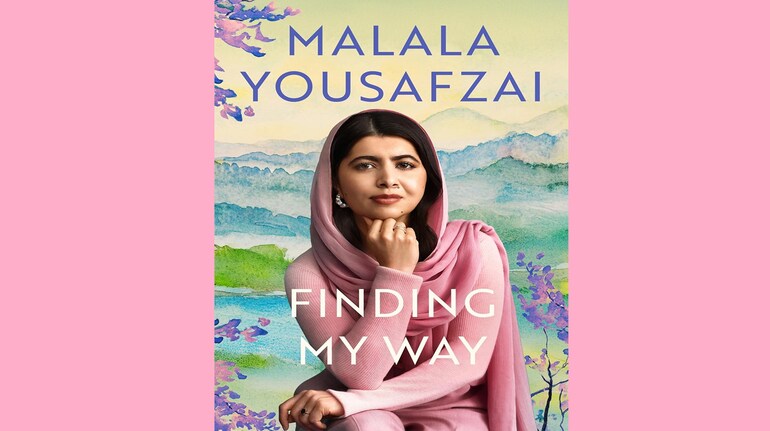
Excerpted with permission from the publisher Finding My Way: The intimate and revelatory new memoir on growing up, first love and mental health from the global icon Malala Yousafzai, published by Weidenfeld & Nicolson / Hachette India.
***
Rowing club met at sunrise. As I dressed in the dark for our first practice, I already regretted signing up for it in my Freshers’ Fair haze. The full extent of my error hit me as soon as I reached the docks. These were not the charming rowboats I’d seen lazing along the river—they were racing shells, long and narrow aluminum tubes with a heavy, twenty-foot oar at each seat.
‘First thing you need to know, if you want to be a rower: you can’t just step into the boat,’ the instructor announced. ‘If you put all your weight in at once, you’ll sink. You place one foot on the side farthest from the dock and then squat, lowering yourself down and hovering your other leg over the boat until you’re fully seated.’ I was now sure I did not want to be a rower, but it was too late to run away. Everyone had seen me.
With eight of us inside, the top of the boat was almost level with the water. One wrong move and I would go overboard, drowning in the river in my first month at Oxford. I had neglected to tell anyone that I didn’t know how to swim. Just a small, unimportant detail.
The instructor pushed the boat off the dock with her oar. I rowed as hard as I could but did little more than splash the water’s surface, alternating between saying prayers and holding my breath for the entire practice. Afterward I went back to my room, collapsed on the bed, and slept for a few hours.
When I woke up, my phone was buzzing with Twitter notifications and WhatsApp messages. Someone had snapped a picture of me walking back to the dorm after rowing practice and sent it to a popular Pakistani Facebook group. From there it spread to other social media platforms, then to Urdu-language news sites and TV channels. In the photo, I’m wearing jeans, a T-shirt, and a nylon bomber jacket. The faint morning light is falling on my headscarf.
Hundreds of people, mostly Pakistani men, voiced their shock that I was wearing jeans instead of a shalwar kameez. There were comments calling me a traitor or a porn star; others claimed my clothes were a sign that I had abandoned my country and religion. A few wrote that it was shameful that I had walked down the street on my own without a father or brother to monitor me. This is absurd, I thought. Because of jeans? I’d expected some sort of uproar about my college life, but not this soon, or over something so stupid.
My phone rang and I knew who it was without looking at the screen. ‘Why did you wear those clothes?’ my mom demanded. ‘Our relatives are calling! Everyone at home is talking about you.’
My mom’s anger always shook me, but I knew I had to stand up for myself. If I gave in now, I’d have to do it again and again for all three years of college. I might as well move back home and let my parents run my life.
‘I was going to rowing club, not on a religious pilgrimage, Mom. I’m not a diplomat representing my country or culture. I’m just a student! And I want to have a normal life, at least while I’m at college.’
‘You are not <just a student>,’ she hissed, then changed tack. ‘Zia, you speak to her.’
My shoulders relaxed—I’d always had an easier relationship with my dad. ‘Hello, Malala,’ he said in a weary voice. ‘So what will we do about this? People are very upset.’ Criticism from
Pakistan always unnerved him. He desperately wanted to go back home someday, and didn’t want to find himself an outcast when he got there.
‘Dad, this is so unfair. Look at my brothers, your sons—they wear jeans and hoodies every day and no one says they’re less Muslim or Pakistani or Pashtun. Men and boys can wear whatever they please, so why can’t I?’
I could hear the resignation—and a hint of pride—in his voice. ‘I suppose you’re right about that, Malala,’ he said. ‘You are right.’
I hung up the phone feeling justified but still frustrated. Jeans are not a crime against Islam and not wearing a shalwar kameez didn’t make me any less Pakistani. But too often in my home country, women’s bodies are used to measure the strength of our religious beliefs and national identity. Challenge the social norms created and enforced by men, and you disgrace your family and community. That morning, it meant that the patriarchy had grown so fragile that it could be threatened by a pair of jeans. On darker days, it meant a woman could be killed for rejecting a suitor or posting pictures of herself on Instagram. When a man’s honor lies in a woman’s body, he will take her life to reclaim it.
I was only eight years old when I learned what would happen if I broke these rules. One afternoon my little brother Khushal and I followed some neighborhood kids to a nearby stream. On hot days, we liked to splash around and throw water on each other, soaking our hair and clothes until we cooled off. Walking home, we ran into our teenage cousin. ‘Where have you been?’ he demanded.
‘Playing with my friends,’ I answered, unsure what I had done wrong.
‘You bring dishonor on your family,’ he seethed, ‘parading around with your clothes tight and sticking to your body for everyone to see.’ Then he raised his hand above his head and slapped me hard across the cheek.
The shame lingered much longer than the physical pain. For a while, I stopped going outside and kept to my room when we had guests. I felt nauseated when I thought about the slap, yet I couldn’t stop replaying it in my mind. It was a brutal introduction to the way some men police women’s bodies, protecting their power under the guise of ‘honor’ and ‘tradition’.
My phone kept buzzing; when I picked it up again, I found that the online conversation was spreading beyond Pakistan. Tabloid websites had compiled the most hateful tweets and rushed to publish their clickbait. Thousands of people shared the Daily Mail ’s story, ‘Nobel Prize Winner Malala Yousafzai Is Targeted by Vile Trolls for Wearing Skinny Jeans.’
Most of the comments were a mix of ‘her body, her choice’ and ‘leave her alone’. I paused at a reply from a reader in the Czech Republic: <It is not the UK or the Western world she needs to impress. They, for the most part, respect a woman’s right to education.
But her own people expect her to dress the part. No matter what she does or where she is, she will always be an object of interest as well as ridicule. By adhering to a dress code acceptable to her critics, she will get more positive attention for her cause.>
It surprised me that someone who didn’t know me or live in my country could understand the impasse so well. It was true: If I wanted to promote education and equality for girls and women in Pakistan, I had to be inoffensive in every way. I felt responsible for proving that an educated girl is not a threat. As long as I conformed to my culture’s rules and dress code, no one in my community could say, ‘Look how Malala turned out. We are right to keep a tight leash on our daughters.’
Every time I gave a speech and mentioned the millions of girls around the world who weren’t in school, the same faces ran through my mind: My cousin who came home one day to learn she would never go back to the classroom because her father had arranged her marriage. A friend who had two babies by the time she was fifteen. The child laborers I saw everywhere in Mingora— girls who cleaned houses, sold oranges by the side of the road, sifted through garbage dumps for scrap metal.
To help girls like them, I had tried, for a long time, to obey all the rules — to wear the clothes my mom picked out, to be the deferential daughter that Pakistani parents expect. But maintaining that balance was starting to feel like a trap. I could stand behind a podium all day, calling out the worst abuses perpetrated by men, and it would never stir up the level of media attention that wearing jeans did. So why should I even try to placate my critics?
Choosing what I wore was a small rebellion, but clothes symbolized freedom and anonymity to me. They gave me confidence, especially at Oxford. I couldn’t live a normal life if I was always looking over my shoulder, trying not to cause a scandal.
I knew I should turn off my phone for the rest of the day, but morbid curiosity made me open the Daily Mail story again. A few commenters were taking issue with my headscarf, claiming it was a symbol of oppression and arguing that I could not be fully emancipated until I erased all traces of my ethnicity and my faith. Those opinions were as unwelcome as the others—I wouldn’t justify my choices to the secular mob any more than I would to the denim police.
My scarves reminded me of home and helped me connect to a world I had lost. No matter what the misogynists or Islamophobes said, I wanted girls in Pakistan to know that I had not forgotten them. If I was going to be photographed without my consent, at least they would see that a girl in a scarf could walk down the street on her own, go to college—or even row a boat.
**********
Malala Yousafzai, Finding My Way: The intimate and revelatory new memoir on growing up, first love and mental health from the global icon, Weidenfeld & Nicolson / Hachette India, 2025. Pb. Pp.320
Malala Yousafzai was just fifteen years old when she was shot in the head at point-blank range for daring to speak out against the Taliban and fight for her right to an education. In an instant, she became the most famous teenager in the world. Millions of people knew her name, but in the years that followed her shooting — as she became a Nobel laureate, a bestselling author, an Oxford graduate, a wife — she began to feel less and less sure that she really knew herself.
Buckling under the weight of all her different identities (heroic schoolgirl, reckless college kid, good Pashtun daughter, overachieving academic, global activist icon), Malala realised she needed to figure out who it was she really wanted to be. That journey to self-discovery is the story of this book.
In the second week of December that the Nobel Laureates 2025 have congregated in Stockholm to receive their awards, it is befitting that we are publishing an extract from the youngest Nobel Laureate.
Malala Yousafzai is an education activist, Nobel laureate, bestselling author and an investor in women’s sports. She was born in Mingora, Pakistan, in 1997 and graduated from Oxford University in 2020.
Discover the latest Business News, Sensex, and Nifty updates. Obtain Personal Finance insights, tax queries, and expert opinions on Moneycontrol or download the Moneycontrol App to stay updated!





Find the best of Al News in one place, specially curated for you every weekend.
Stay on top of the latest tech trends and biggest startup news.