







The National Highways Authority of India (NHAI) has issued a public advisory cautioning citizens against a rising online scam linked to the FASTag Annual Pass service. The warning follows multiple reports of fraudulent websites impersonating official NHAI platforms and tricking users into making payments for fake annual passes.
The advisory was shared through the Indian Cyber Crime Coordination Centre under the Ministry of Home Affairs, urging road users to remain alert while accessing FASTag-related services online.
Authorities said scammers are exploiting search engine results and online advertisements to lure users to lookalike websites that closely mimic official government portals.
How the FASTag Annual Pass scam works
According to the advisory, fraudsters create professionally designed websites that resemble legitimate NHAI payment pages. These fake portals often appear at the top of search engine results due to paid advertisements and search optimisation tactics.
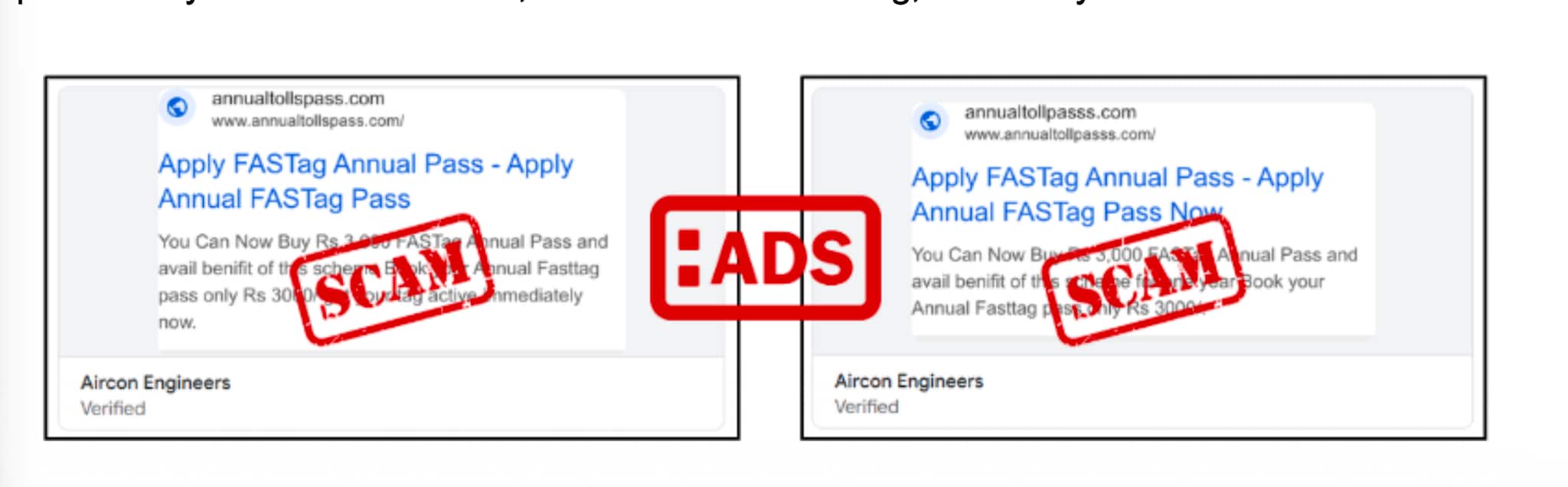 Fastag scam
Once users click on these links, they are prompted to enter personal details such as mobile numbers, vehicle information, and payment credentials. The payment interface looks authentic, but the money is redirected to mule bank accounts controlled by criminals.
In many cases, users do not receive any confirmation or valid pass after payment, and the website either becomes inaccessible or provides fake transaction messages to delay suspicion.
Key problems faced by users
Several victims have reported instant financial losses after making payments on these fraudulent portals. Some users also received follow-up scam calls posing as customer support, asking for OTPs or additional charges to “activate” the fake pass.
Cyber authorities have noted that these scams are particularly effective because they copy official branding, logos, and layouts, making it difficult for users to spot the difference at first glance.
Tips to stay safe from FASTag scams
The advisory urges citizens to access FASTag services only through official government websites and verified platforms. Users should carefully check website URLs and avoid clicking on sponsored links or unknown advertisements while searching online.
It is also recommended not to share OTPs, card details, or personal information with anyone claiming to offer technical assistance. If a website looks suspicious or requests unusual permissions, users should exit immediately.
Victims of such scams are encouraged to report incidents on the cybercrime portal or contact local cyber cells for prompt action.
The authorities stressed that awareness remains the strongest defence against digital fraud, urging users to remain cautious as online financial scams continue to evolve across India.


Discover the latest Business News, Sensex, and Nifty updates. Obtain Personal Finance insights, tax queries, and expert opinions on Moneycontrol or download the Moneycontrol App to stay updated!
Find the best of Al News in one place, specially curated for you every weekend.
Stay on top of the latest tech trends and biggest startup news.







