






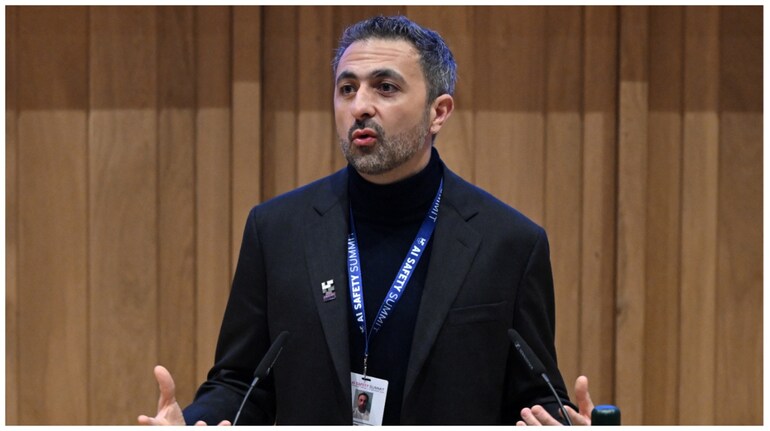

Microsoft’s AI chief has issued one of the bluntest warnings yet on artificial intelligence and jobs: most white-collar roles that rely on computers could be automated within the next 12 to 18 months.
In an interview with the Financial Times, Mustafa Suleyman said Microsoft is racing to build what he called 'professional-grade AGI,' AI systems capable of performing nearly everything a human professional can do. If that vision materialises on the timeline he outlined, lawyers, accountants, project managers and marketers could see large portions of their work absorbed by machines.
What Suleyman said about white-collar jobs
Suleyman told the Financial Times that “white-collar jobs, essentially those sitting in front of computers… most of these tasks will be fully automated by AI within the next 12 to 18 months.”
He argued that anyone whose core work happens on a computer screen could be exposed to automation risk. The prediction goes beyond incremental productivity gains. It points to structural displacement across knowledge-based professions.
The comments come as global companies step up AI adoption. US-based cloud services platform Salesforce reportedly cut up to 1,000 roles this month as it pivots more aggressively towards artificial intelligence. Similar workforce reductions have been reported at large tech and logistics companies in recent weeks.
Microsoft’s enterprise AI strategy
The warning is tied to Microsoft’s commercial strategy.
Suleyman said the company is focused on capturing a larger share of the enterprise market through “professional-grade AGI.” These systems, he suggested, would allow firms to automate routine and repeatable tasks that currently require skilled employees.
The push reflects a broader race among technology giants to embed AI deeply into corporate workflows, from document drafting and data analysis to project coordination and customer engagement.
AI model creation to get easier
Suleyman also predicted that building AI models will soon become far simpler.
In the Financial Times interview, he compared the future of AI model creation to starting a podcast or writing a blog — accessible and routine rather than the preserve of specialist engineers.
“Creating a new model will be as simple as making a podcast or writing a blog,” he said, adding that institutions and individuals could design AI tailored to their specific needs.
Within two to three years, he said, AI agents could become capable of managing complex workflows across large organisations.
Microsoft’s push for AI self-sufficiency
Alongside the workforce warning, Suleyman signalled a strategic shift inside Microsoft.
He indicated that the company plans to expand production of its own AI models in an effort to reduce dependence on OpenAI, following a revised agreement between the two companies.
“We decided that this was a moment when we have to set about delivering on true AI self-sufficiency,” he said.
Suleyman has suggested that new in-house AI models could debut as early as 2026, a move that would mark a significant step in Microsoft’s bid to control more of its AI stack.
Discover the latest Business News, Sensex, and Nifty updates. Obtain Personal Finance insights, tax queries, and expert opinions on Moneycontrol or download the Moneycontrol App to stay updated!
Find the best of Al News in one place, specially curated for you every weekend.
Stay on top of the latest tech trends and biggest startup news.





