






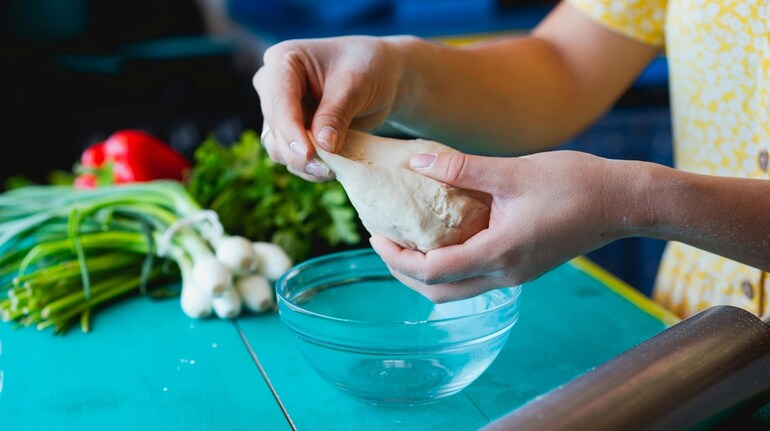

Social media has found a fresh food enemy: chilled chapati dough. Trending posts state that keeping atta in the fridge lets harmful germs multiply, causing gas, swelling, and stomach acid. But does science back up this worry?
Food expert Krish Ashok, who wrote Masala Lab: The Science of Indian Cooking, talked about this on Instagram. On his @_masalalab account, he broke down the facts behind cold fermentation and food safety.
In his video, the food expert points out that refrigerating dough isn't a trick gone bad — it's a widely known method called cold fermentation. Artisan bakers across the world, from sourdough specialists in San Francisco to traditional pizza makers in Naples, routinely refrigerate dough for 24 to 72 hours to improve flavour and texture.
When dough is kept at around 4°C, microbial activity slows significantly. Harmful bacteria struggle to multiply at this temperature. At the same time, beneficial lactic acid bacteria continue to work gradually.
These are the same bacteria involved in making yoghurt, idli and dosas. Far from being dangerous, they play an important role in fermentation.
Also Read: Why old-school fermented meals might be the simplest hormone remedy
In his video, Ashok explains that during slow fermentation, natural microbes start to break down complex carbs and proteins in the flour. This can make the dough easier for your body to process.
Fermentation lowers the amount of phytic acid, a substance in grains that sticks to minerals like iron and zinc, making it hard for our bodies to absorb them. Less phytic acid might make it easier for our bodies to use these minerals.
In other words, dough that's been in the fridge for 8 to 12 hours isn't always worse than dough that's just been made. In some respects, it may even offer digestive advantages.
Indian homes often use fermented foods — idli and dosa batter, dhokla, and curd are common examples. These foods wouldn't cause stomach issues if fermentation alone were the cause of digestive problems.
Some people might feel gassy or bloated after eating wheat products, but this has nothing to do with refrigeration.
People who know they're sensitive to gluten or have celiac disease might react to any wheat products — whether they're fresh or have been refrigerated.
Bacteria in food usually make people worried. But bacteria are all around us — on our skin, in our mouths, and throughout our guts. What matters isn't just that they're there, but what kind they are and how many there are.
When food is kept cold (around 4°C), bad germs like Salmonella, Listeria, and E. Coli grow much more. In contrast, leaving dough at room temperature for prolonged periods creates conditions more favourable for rapid bacterial growth.
From a food safety standpoint, storing dough properly in the refrigerator is generally safer than keeping it out on the kitchen counter for hours.
Also Read: 6 ways to keep your rotis soft and fresh till lunchtime
Refrigerated chapati dough is not inherently harmful. When stored in an airtight container at appropriate temperatures and used within a reasonable time frame, it remains safe for consumption.
Cold fermentation is a long-established culinary method that can enhance flavour and, in some cases, digestibility.
As with most viral food scares, context and proper storage practices matter more than alarmist headlines.

Discover the latest Business News, Sensex, and Nifty updates. Obtain Personal Finance insights, tax queries, and expert opinions on Moneycontrol or download the Moneycontrol App to stay updated!
Find the best of Al News in one place, specially curated for you every weekend.
Stay on top of the latest tech trends and biggest startup news.





