-
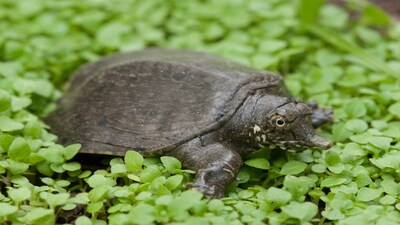
Tiny survivors: The daring life of River Turtles
Explore the incredible life cycle of river turtles, embodying resilience as they battle predators, habitat loss and climate threats for survival.
-

Astronomers reveal birthplace of Protostellar jets in HH 211
Astronomers with help of ALMA and JWST telescopes revealed HH 211’s accretion disc and energetic jets which offer new insights into early star formation.
-
Rainbow chip may reduce AI energy demands- Here is what engineers created
The rainbow-on-a-chip breakthrough enables simultaneous laser data channels, boosting AI performance, cutting energy demands and future computing technologies.
-
Alien civilizations can be invisible due to advanced AI- Here is what study says
Scientists suggest advanced alien civilizations might remain undetectable, using AI and exotic communication. They also explained the Fermi Paradox and guiding future cosmic searches.
-
Scientists examine burning object in Western Australia, likely from space
A burning object in Western Australia’s Pilbara desert, likely space debris, is under investigation by scientists and authorities for its origin.
-
Science of snake milking: How venom is extracted for medicine
Snake milking turns deadly venom into lifesaving antivenoms. Experts extract toxins carefully, helping develop treatments for blood disorders, nerve damage and other medical breakthroughs.
-
Study reveals how optical illusions trick fish but not birds
A new study reveals guppies are easily tricked by optical illusions, while ring doves see clearly, highlighting differences in visual perception and animal cognition.
-
New genus of Jumping Spiders unearthed in New Zealand
Scientists in New Zealand have discovered a new genus of jumping spiders, Ourea, revealing 12 unique alpine species and remarkable camouflage adaptations.
-
Science reveals the secret behind the Blue-Tongued Skink’s vibrant tongue
With a flash of its vivid blue tongue, the blue-tongued skink confuses predators, proving evolution's clever ways to survive.
-
This rare orchid lives and flowers entirely underground – here’s how it thrives
A hidden orchid with no leaves, Rhizanthella survives via fungi, demonstrating extraordinary plant adaptations and the critical need to protect endangered species.
-
Meet the Katydid: The Bug That Looks Just Like a Leaf
Katydids, the insects that mimic leaves with astonishing precision and cunning to survive. This insect always fascinates scientists and nature enthusiasts worldwide.
-
Astronomers spotted first ever ‘heartbeat’ of a newborn star in distant cosmic explosion
Astronomers have detected the first “heartbeat” of a newborn star within a cosmic explosion, revealing a rapidly spinning magnetar and reshaping the understanding of gamma-ray bursts.
-
Comet C/2025 R2 will dazzle the night sky in October – Here is how to see it
Comet C/2025 R2 (SWAN) is brightening the October night sky, offering stargazers a rare chance to see its glowing tail. Here is how and when to watch it.
-
Astronomers detect mysterious ‘Blob of Darkness’ in a distant galaxy
Astronomers have detected a million-solar-mass “blob of darkness” in a distant galaxy, possibly a rare dark matter clump shaping the cosmos unseen.
-
New hairy snail species found in Maharashtra’s Tilari forest, named after a Japanese animator
The newly found species has been named Lagocheilus hayaomiyazakii sp. nov., honouring Japanese animator and Studio Ghibli co-founder Hayao Miyazaki.
-
Giant, mysterious rippling wave detected in Milky Way by Gaia Telescope
For decades, astronomers have known that stars orbit the Milky Way’s centre and that the galactic disc is warped.
-
Mysterious mass stranding leaves 26 killer whales dead in Argentina, scientists seek answers
Killer whales, also known as orcas, are apex predators and key indicators of marine health. They are the largest members of the dolphin family and are easily recognised by their black-and-white colouring.
-
World’s oldest alpaca, Wainui, dies at the age of 27 in New Zealand
Alpacas generally live for around 15 to 20 years, making Wainui’s long life extraordinary.
-
Satellites track the largest ocean waves ever seen, fueled by a powerful storm
Ocean swells are not the choppy waves seen near shores. They are smoother, longer and can travel vast distances for days or even weeks.
-
Aliens found humans too boring, so they quit contacting us, claims scientist
A new theory from a scientist working with NASA, raises a surprising question about extraterrestrial life and why they might have stopped reaching out to humanity altogether.
-
World’s most venomous blue-ringed octopus turns yellow to warn, one bite can kill humans
Normally, the blue-ringed octopus is brown or cream in colour, blending easily with rocks and sand. But when disturbed, it flashes vivid blue rings across its body while its skin turns bright yellow.
-
Joey, the world’s oldest canary, died at 34 after spending its entire life in a cage
A remarkable pet from Hull quietly made history, living an unusually long life that left experts amazed and pet lovers wondering about the secret behind its longevity.
-
DNA Reveals Hippos Survived Europe’s Glacial Ice Age Against Expectations
Researchers had long assumed that central European hippos went extinct at the onset of the Weichselian glaciation.
-
‘Grass Peacock’ of India, known for swayamvar dance, on brink of extinction, warns WII
Known locally as the “grass peacock”, the Lesser Florican (Sypheotides indicus) is famed for its leaping courtship display during the monsoon.
-
Mars’ mysterious dune gullies may be the work of exploding ice blocks, say scientists
For years, scientists believed carbon dioxide ice might play a role in shaping Mars’ surface. However, no one had ever observed this process in action.
-
Haunting image of rare hyena in ghost town wins 2025 Wildlife Photographer of the Year, here's its story
The 2025 Wildlife Photographer of the Year contest received a record-breaking 60,636 entries from 113 countries. Each entry offered a glimpse into the fragile beauty of wildlife and the growing threats it faces.
-
Regent Honeyeater: Meet this Australian songbird who is fighting for survival
Meet the Regent Honeyeater, a critically endangered Australian songbird. Discover its struggles, unique song and ongoing conservation efforts to save the species.
-
Giant weak spot in Earth’s magnetic field discovered, continues expanding, say scientists
Scientists made these observations using data from the European Space Agency’s Swarm mission, which relies on three identical satellites to measure magnetic signals from Earth’s interior and oceans.
-
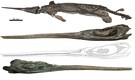
Scientists unearth the fossil of ‘Sword Dragon’, revealing ancient marine life
Scientists discovered Xiphodracon goldencapsis, a 3-metre Early Jurassic ichthyosaur on England’s Jurassic Coast, revealing predation and insights into ichthyosaur evolution.
-
Always alert, even in dreams: The extraordinary sleep of Dolphins
Dolphins sleep with one half of their brain awake, staying alert while resting. Discover the fascinating science behind this extraordinary ocean survival strategy.
-
MIT scientists discover 4.5-billion-year-old traces of ‘proto-earth’ before the moon-forming collision
For years, scientists believed the “giant impact” that formed the Moon melted and reshaped the entire young Earth, erasing its original composition. The new MIT findings challenge that view.
-
Study reveals how stem cells of freshwater flatworms could unlock human regeneration
Study of planarian stem cells reveals distant regulation, advancing research into regenerative medicine and potential human tissue repair.
-
New study reveals unexpected molecular bonds on this Saturn Moon
Researchers at Chalmers University in Sweden and NASA have discovered an unexpected chemical interaction on Saturn’s moon Titan, offering new insights into prebiotic chemistry and potential pathways to life.
-
Mysterious deep-sea faceless fish found in South Pacific leaves scientists astonished
The most striking trait of this fish is the absence of visible eyes. Living in total darkness, the faceless cusk eel has evolved to survive without sight.
-
The Andromeda galaxy lights up October skies — Here is all you need to know
October 2025 offers ideal conditions to observe the Andromeda Galaxy. Learn how to locate it, viewing tips and capture stunning images of M31.
-
One of the World’s longest: Dinosaur footprints stretching over 650 feet discovered in UK
The largest trackway, now known as the dinosaur superhighway, extends across the quarry and is believed to have been made by a sauropod similar to Cetiosaurus.
-
Astronomers uncover Betelgeuse’s mysterious companion: It is just a regular star
New X-ray observations reveal Betelgeuse’s mysterious companion is not a collapsed stellar remnant but a young, Sun-like F-type star orbiting the massive red supergiant.
-
Physicists predict the Universe will end in a reverse big bang, here’s when
For two decades, scientists believed the cosmological constant, known as λ (lambda), was positive. That meant the Universe would keep expanding indefinitely.
-
Tiger Sharks: The master of marine survival and one of ocean’s apex predators
Tiger sharks are powerful apex predators but crucial to ocean ecosystems, who are facing threats from overfishing and habitat loss.
-
Reindeer populations face huge decline across the arctic- Here is what study says
Reindeer populations have declined nearly 40%, with climate change, habitat loss and overhunting threatening Arctic ecosystems and conservation efforts.
-
Emerald-green Comet Lemmon to be visible from Earth on October 22 – Here's how to see it
Comet Lemmon will pass approximately 55.4 million miles from Earth. It will appear low in the northwest sky after sunset.
-
Comet Lemmon’s tail ripped by solar wind, timelapse shows dramatic event
The solar wind is a constant flow of charged particles emitted by the Sun. It pushes against a comet’s tail, which is formed from dust and gas escaping its icy nucleus.
-
NASA prepares to bid farewell to the international space station after 25 years in orbit – Here's why
The ISS, launched in pieces beginning in 1998, has served as a beacon of global cooperation among the United States, Europe, Japan, Canada and Russia.
-
Physicists proposed beat patterns in pulsars could reveal origins of Nanohertz gravitational waves
Physicists proposed “beat” patterns in pulsar timing can reveal nanohertz gravitational wave sources, including supermassive black hole binaries.
-
Study reveals rising decline of Common Toads across UK and Switzerland
A new study reveals a worrying decline in common toad (Bufo bufo) populations across the UK and Switzerland. Scientists warn urgent action is needed to prevent ecological disruption.
-
Four solar storms headed for earth this week- Alert for stargazers
Four coronal mass ejections from sunspot AR4246 are heading toward Earth, triggering auroras across northern skies and minor satellite or power disruptions.
-
Slender-billed curlew declared extinct, IUCN confirms loss of iconic migratory bird
Once common across Europe, North Africa and West Asia, the slender-billed curlew has not been officially sighted since 1995, when one was recorded in Morocco.
-
Solar tornadoes could trigger hidden geomagnetic storms
New models show interplanetary solar tornadoes may trigger geomagnetic storms capable of disrupting satellites, electricity networks and global communications.
-
India’s wild elephant population falls 25% in eight years, says DNA study
The All-India Synchronous Elephant Estimation (SAIEE) 2025 has estimated the nation’s wild elephant population at 22,446, lower than 27,312 recorded in 2017.
-
Elon Musk’s Starlink satellites are crashing into Earth, worry scientists
SpaceX’s Starlink programme operates over 6,000 satellites in low-Earth orbit, the largest satellite constellation ever built.