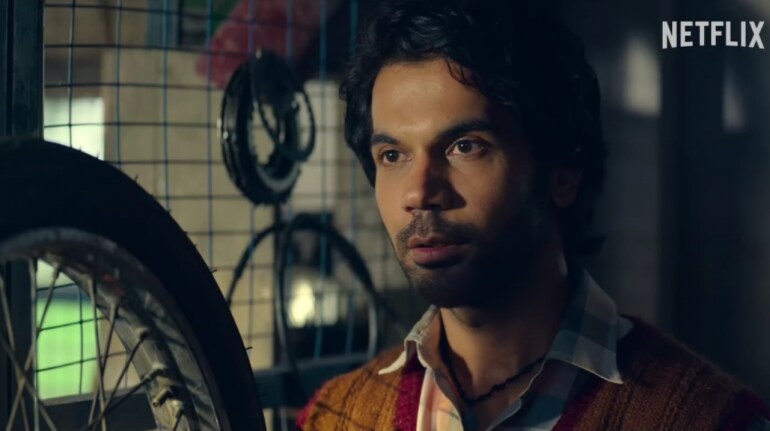
In a sequence from Netflix’s Guns and Gulaabs, Bryan Adams’ "Look into My Eyes" plays on a tape recorder as a young schoolkid sits in the middle of a farm, writing a love letter on someone’s behalf. “Matlab kuch samjh mein toh nahi ayaa, par mazaa agya,” one of the men, overseeing the orchestration of this ruse, says. It’s a disclaimer that somewhat summarizes a series that could have used the tighter packaging of a film, compared to the tiresome labyrinth its length lends itself to. Draped in nostalgia and coloured in the pulpy texture of '90s cinema, the world of Guns and Gulaabs is animated, quirky and rarely without bilious dialogue, but it is also a world that can at times feel overstretched, to support a marathon that could so easily have been a delightfully blazing sprint.
The series is set in the fictional town of Gulaabganj, a small hamlet overlooking the hills of Sherpur, with a history and a present, dictated by the opium farming. Though much of this farming is sanctioned by the government, a significant portion of it is operated illegally for nefarious purposes by rival gangs. Gulaabganj is overseen by Ganchi, played, perhaps in his last role, by the late Satish Kaushik. His gang rules the foothill town and its resources, while in the hills his former protégé, Nabeed, represents a growing threat. In the shadow of a landmark deal that Ganchi presides over with a Kolkata-set cartel, Nabeed has his right-hand man, Babu Tiger, murdered. Thus ensues a tale of violence, betrayal and the quest for identity, as a stellar cast holds together the quadrants of a fairly sprawling tale.
Adarsh Gourav (The White Tiger) plays Jugnu, Ganchi’s seemingly effeminate but savage son, out to win the approval of his father. Dulquer Salmaan essays the role of Arjun, a city-bred narcotics cop who isn’t all that he seems. Rajkummar Rao is singularly exceptional as Tipu, the soft, reluctant son of Babu Tiger. Gulshan Devaiah essays perhaps the most mysterious of all the lead characters, as the risible, but also mysterious contract killer as Atmaram. There is also a sidetrack of three schoolboys, hopelessly pursuing love through modern means in an age where it might be considered taboo. It’s interesting, but also contrived to look like a needless appendage to a more urgent story. Most of these characters interact and clash in a refreshing exchange of precocious talent that isn’t, for once, treated like a preserved rarity. That abundance, however, doesn’t translate to a strong spine, as characters flitter about the margins of a chaotic spectacle, like fireflies looking to glide free of the explosive, bright beam of its messy, unspecific core.
On the face of it, Guns and Gulaabs boasts the kind of talent pool, and colourful tapestry that ought to drive its carriage of nostalgia, on the electricity of talent alone. Raj and DK, and frequent collaborator, Suman Kumar, have after all delivered streaming hits like The Family Man and Farzi. Guns and Gulaabs, in comparison, staggers, trips and just about loses its bearings before making a cathartic, satisfying dash towards the finish line; the kind of sprint that maybe this show could and should have been. There are shades to the characters here, the hint of an inner being. Tipu’s reluctance to claim his father’s violent heritage, his unflinching attachment to a woman and his put-on machoism are all entertaining traits, but rarely insights to his person. Arjun’s two-faced stance on righteousness, a secretive life, spreads him on a spectrum, but stops short of excavating him for the complex human that he is. Similarly, Jugnu and Atmaram have ticks, moments of confessional blindness, but just aren’t afforded the wiggle room to stretch their arms and shape the scenery of their individual stories. They are reduced to anecdotes, as opposed to fleshed characters. Which makes them ideal for pulpy scampers, as opposed to intimate anthropological excavations. In fact, Devaiah’s Atmaram – also the smallest role of the four– is probably the most intriguing, because he babbles the least and therefore fascinates by way of absence.
It’s not until the last film-length episode, when all that bureaucracy of making deals, pointing guns and jostling for make-believe territories, comes to a perch of reckoning, that this series actually lets itself be. The adrenaline of casual violence, of multiple twists, and hilarious outtakes by stressed gangsters who never quite scream the kind of dread that gun-wielding masochists ought to, finally approaches the tumult that this show has been yearning to dissolve into. It’s here that Raj and DK’s humour, their nous for unguarded masculinity, and sharp dialogue, eventually triumphs. Unfortunately, it also underlines the structural flaw that makes Guns and Gulaabs come precariously close to sinking, before it catapults itself to a place of wit from where bald, depthless, fun feels like the natural consequence of its self-effacing origin story as opposed to the hair-splitting manoeuvring that needlessly cradles it. For that matter, Guns and Gulaabs is as its best when it wholly commits to the disorder it was always meant to portray. It just takes too long to get there.
Discover the latest Business News, Sensex, and Nifty updates. Obtain Personal Finance insights, tax queries, and expert opinions on Moneycontrol or download the Moneycontrol App to stay updated!
Find the best of Al News in one place, specially curated for you every weekend.
Stay on top of the latest tech trends and biggest startup news.