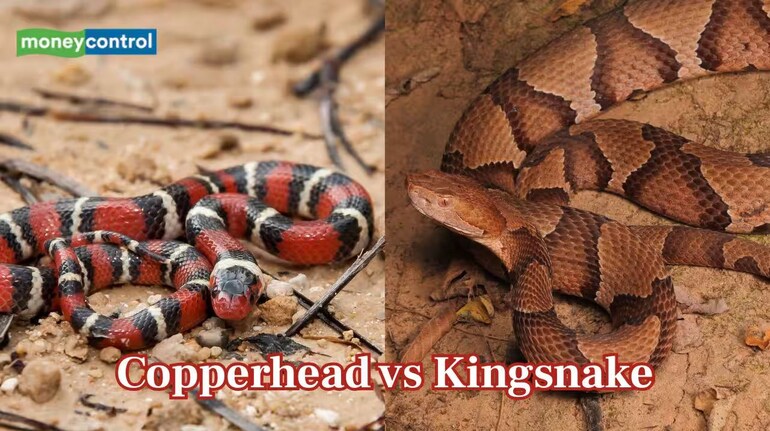
Two common American snakes, copperheads and kingsnakes, often share habitats but differ sharply in danger, diet and survival strategies. Wildlife experts say understanding these differences helps people identify risks and recognise how nature balances predator encounters.
What Is Happening Between Copperheads and Kingsnakes
Copperheads and kingsnakes inhabit much of eastern America together. Despite overlapping ranges, their biology and behaviour sharply diverge. Copperheads are venomous pit vipers with ambush hunting strategies. Kingsnakes are nonvenomous constrictors that actively search for prey.
Copperheads display coppery heads and hourglass patterned bodies. Their triangular heads, vertical pupils, and heat pits aid hunting. Kingsnakes show bold bands, chains, or speckles instead. Their heads remain oval with round pupils.
Adult copperheads usually reach 2 to 3 feet. Females often grow larger and live over 10 years. Kingsnakes typically reach 3 to 4 feet long. Some exceed 5 feet and survive 10 to 15 years.
What It Means for Diet, Venom and Defence
Copperheads eat rodents, lizards, frogs, birds and insects. They rely on venom to quickly immobilise prey. Their bites pose medical risks to humans, experts say. Fatalities remain rare but treatment is strongly advised.
Kingsnakes eat rodents, birds, eggs and many snakes. Their diet regularly includes venomous pit vipers. Kingsnakes resist venom, allowing survival after dangerous bites. They kill prey through powerful constriction rather than venom.
Research shows kingsnakes generate exceptional squeezing pressure. Pound for pound, they outmatch many larger snakes. Copperheads depend on venom rather than sustained physical combat. This difference shapes outcomes during snake encounters.
What Happens in a Snake-on-Snake Encounter
In most encounters, kingsnakes overpower copperheads effectively. Venom resistance prevents copperhead strikes ending fights quickly. Kingsnakes coil rapidly, restricting breathing and circulation. Copperheads remain dangerous but rarely prevail.
Copperheads give live birth during late summer months. Kingsnakes lay eggs in early summer nesting sites. Both species mate mainly during spring activity periods. Seasonal behaviour increases chances of crossing paths.
To humans, copperheads present the greater medical threat. In nature, kingsnakes hold the advantage over rivals. Their name reflects dominance among other snake species. Including copperheads, kingsnakes often claim the final victory.
Discover the latest Business News, Sensex, and Nifty updates. Obtain Personal Finance insights, tax queries, and expert opinions on Moneycontrol or download the Moneycontrol App to stay updated!
Find the best of Al News in one place, specially curated for you every weekend.
Stay on top of the latest tech trends and biggest startup news.