The pullout of General Motors and MAN not withstanding fresh investments in the automotive space will move unhindered at least over the next five years believes the government. It is more reassuring to know that the concept of stock-out of a brand and its models which was unheard of in almost a decade has made a comeback. More on this in the write-up below, but here is the list of all the major development in the automotive space this week.
Auto sector may attract $8-10bn investments by 2023The country's automobile sector, which attracted $16.5 billion in FDI between April 2000 and December 2016, is expected to attract $8-10 billion more in local and foreign investments by 2023, the government said.
The Year End Review 2018 of the Ministry of Heavy Industries and Public Enterprises, which made the projections, said growth of the industry in India since early 1990s is an example of how industrial prowess supported by progressive policies and national economic growth can yield rewards to all stakeholders.
Vehicle recalls hit new highs in 20182018 has been a worse year for the auto industry in terms of vehicle recalls. Car and bike makers have recalled nearly 2.5 lakh vehicles in 2018, three times more than that in 2017.
The industry had recalled little over 80,000 vehicles in 2017, as per data available with the Society of Indian Automobile Manufacturers, the apex lobby body of the automobile industry. In fact, such was the intensity that recalls in the first three months of 2018 surpassed the total call backs made in 2017.
Maruti’s hybrids to cost Rs 2.5 lakh more than petrol modelsThe country’s largest car maker, Maruti Suzuki is set to become the first Indian company to mass produce 'strong' hybrids, which it hopes to price at a premium of Rs 2.5 lakh over petrol variants.
Speaking to Moneycontrol, RC Bhargava, Chairman, Maruti Suzuki said although a GST rate cut on hybrids would be welcome making it affordable, the company is benchmarking diesel cars to price its hybrids.
Auto sector eyes elections to boost EVsWith cleaner fuel fast emerging as an order of the day in 2018, a busy year awaits the Indian automobile industry in 2019. This will also be a year before the Bharat Stage-VI standards gets implemented, when manufacturers would need to drive extra mile to meet the strict emission norms.
Although electric vehicles are being already talked about as a futuristic option for India, considering increasing pollution that many of its cities were facing, automobile industry players are still divided on the way forward. While hybrids, CNG and biofuels found favour in 2018 among many carmakers including Maruti Suzuki, Mercedes-Benz, Toyota and Honda, others such as M&M and Tata Motors have shown full faith in electric vehicles.
Suzuki launches 2019 Hayabusa at Rs 13.74 lakhThe 2019 version of the Suzuki Hayabusa has just been launched at a price of Rs 13.74 lakh. The bike features a few cosmetic changes while the motor has been left untouched. The superbike will continue with the 1,340cc inline-four engine that makes 199.7 PS of power and 115 Nm of torque and mated to a 6-speed gearbox.
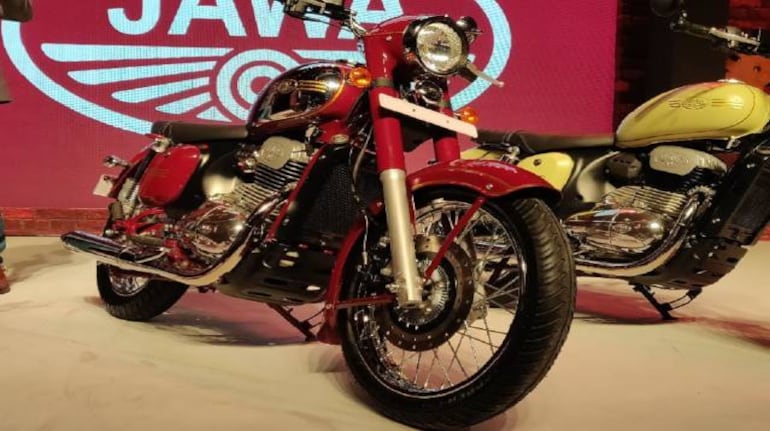
Jawa sell out is a big positive for MahindraWhen brands are offering discounts to the tune of 15-20 percent on the selling price of the vehicle to clear high inventories it comes as a big surprise that one brand has managed a stock-out for the next nine months. M&M is not accepting any further bookings for any of the three Jawa models it showcased last month.
Mumbai-based conglomerate Mahindra & Mahindra seems to have hit a goldmine with Jawa, a brand that was brought back from the dead and resurrected to reestablish M&M has a credible player in the highly competitive two-wheeler space.
This space has been very unwelcoming for the company right from its entry more than a decade ago with the buyout of business assets of the Kinetic Motors. Despite multiple attempts to revive the business, M&M has found it increasingly painful to sustain its two-wheeler operations.
Despite no fault of its own, Mahindra-branded scooters and motorcycles hardly found any takers even with the solid backing of the parent brand armed with a deep retail reach. Even international biggies like Suzuki, Piaggio (Vespa and Aprilia) and Yamaha and remained fringe players despite years of operation in India.
The last time a company had to stop accepting fresh bookings due to a stock-out situation was when Toyota launched the Fortuner in 2010. The premium SUV was available in limited numbers but demand far exceeded supply.
Jawa has given M&M the opportunity to start afresh in the two-wheeler space. And instead of competing in the bottom-end of the market the company has priced its products comfortably above the Rs 1 lakh mark. But this time M&M has refrained putting the Mahindra brand on the bikes.
Revival of yesteryear forgotten models has become the new flavor of automotive companies. Jawa’s major rival Royal Enfield has been banking on designs of 1960s and 1970s bike to sell its current range. The same goes for Ducati and Honda.
And this trend will most likely continue when M&M gets the other two brands out on the roads along-side Jawa. The company has promised to bring back BSA and Yezdi in India to keep the tempo high for such retro models.
It will be most interesting to see how many buyers are there who fancy such bikes even as faster, stylish, new age bikes with digital connectivity are preparing to flood the showrooms near you soon.



Discover the latest Business News, Sensex, and Nifty updates. Obtain Personal Finance insights, tax queries, and expert opinions on Moneycontrol or download the Moneycontrol App to stay updated!
Find the best of Al News in one place, specially curated for you every weekend.
Stay on top of the latest tech trends and biggest startup news.