What's latest at Musk's Twitter: Elon Musk has finally suggested how much he might charge for the Twitter Blue subscription and, most likely, for the Blue tick verification as well. In response to a tweet, he suggested $8. A look at the latest updates on Musk's Twitter in the last 24 hours:
- More exits in store: Twitter's chief customer officer Sarah Personette said in a tweet today that she resigned last Friday and her work access has been cut off. Twitter’s head of product Jay Sullivan has deleted his bio while head of engineering Nick Caldwell has included the word “former” in his bio.
Meanwhile, Aprameya Radhakrishna, co-founder and CEO of Koo, has urged Twitter users to "switch to Koo" and indicated that the company has no plans to charge users for a verification badge.
In today’s newsletter:
- WhatsApp biz takes off in India
- Big Tech companies feel the pinch
- More layoffs at Byju’s?
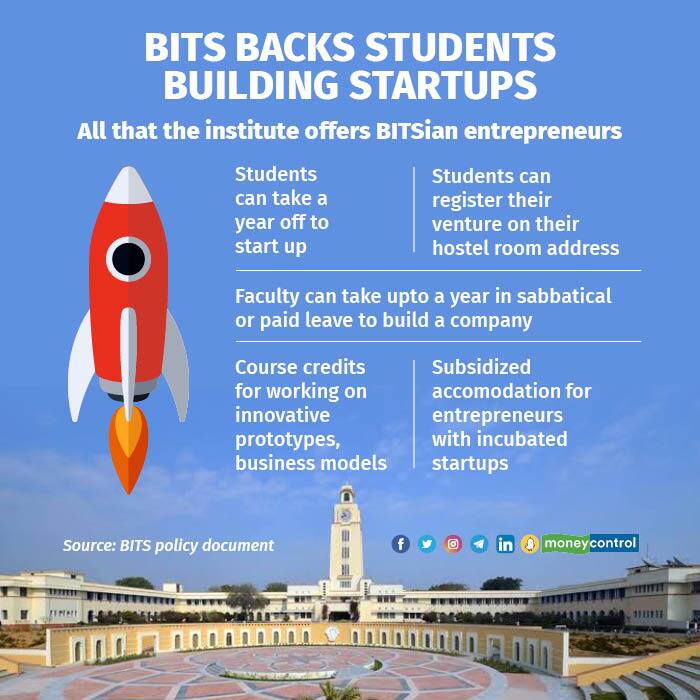
Bonus: One of India's most prestigious institutes is now allowing students and faculty members to take up to a year off to start their own venture. Scroll down for more deets!
 Top 3 stories
WhatsApp biz takes off in India

Millions of Indians begin and end their day with WhatsApp. Parent Meta is now looking to tap into the app's ubiquitous presence to expand its revenue sources beyond traditional digital advertising for its future growth prospects.
Driving the news
WhatsApp, which makes money by helping businesses and brands to engage with their customers, is set to hit revenue of $1 billion in India by next year, people familiar with the matter told us.
Meta chief executive Mark Zuckerberg recently said that business messaging is a “major monetisation opportunity” and is among the three primary areas where they will focus their investment in 2023.
- A major chunk of the revenues is currently coming from "click to message"/ "click to WhatsApp" ads that recently crossed a $1.5 billion run rate, growing more than 80 percent year on year.
Making revenue more predictable
The social networking giant wants to double down on WhatsApp's customer support software and its API platform, to create a SaaS-like revenue stream that is more predictable than online advertising.
"WhatsApp Business has built more product features in FY22 than the past five years combined. So it has transformed into a completely new offering", said Aakrit Vaish, chief executive of Haptik.
Why it matters
For Meta, the idea is to complete the entire customer journey - from discovery to customer support and transactions - within its family of apps. Locking customers to their own platforms will help Meta to monetise better while reducing the dependency on Apple and Google platforms.
Yes, but
Unsolicited promotional messages from brands on WhatsApp are rearing its ugly head, which is causing frustration among many users. Without robust controls in place to tackle them, this could potentially dampen future revenue growth.
Go deeper
Big Tech companies feel the pinch

Last week, Big Tech companies reported lacklustre earnings, stocks plummeted, and they sounded a note of caution regarding the future.
- The FAAMNG companies—Facebook (Meta), Amazon, Apple, Microsoft, Netflix, and Google (Alphabet)—have all either announced hiring freezes, reduced personnel additions going forward, or layoffs. That pinch is being felt in India as well.
The impact on India
According to Xpheno data, these companies currently have less than 4,000 active job openings in India currently, down 90 percent from their typical volumes of around 40,000.
- Google, Apple and Microsoft’s job openings in India are currently in the low three digits.
Hiring has declined significantly across a wide range of skill sets and functions, and is primarily only for critical roles.
Does anyone stand to gain?
It's unlikely to be Indian IT giants or B2C startups, as the former is also limiting hiring and the latter is going through a funding winter. Additionally, as Monster.com CEO Sekhar Garisa says, the talent in product and service companies rarely intersect.
In the current hiring market, non-tech companies looking for tech talent may benefit.
But what about the long term? And are there any sectors that stand to gain? Read on.
More layoffs at Byju’s?

Last month, Byju’s announced laying off five percent of its staff or over 2,500 employees, in what was one of the biggest mass layoffs announced in the history of India’s startup ecosystem.
Did you believe that was it, and that Byju's had cut enough flab? That does not appear to be the case, as additional layoffs are likely at the world's most-valued edtech firm.
Driving the news
Over 5,000, or 10%, of Byju's employees, are said to have received performance notices in the last few weeks, which could be a sign of more layoffs at the edtech company.
Byju's also recently changed its internal policy for its sales executives. Now, if a salesperson can't meet 70 percent of their weekly targets, they will be fired right away.
- The assessment period will be of eight weeks or about two months
While the employees were notified about this policy in August, they only took it seriously when Byju’s announced mass layoffs on October 12.
Spending on ad continues
Byju's has always been aggressive in its advertising and marketing, but this time it is surprising given the firm appears to be cutting costs aggressively.
- It has signed up as the official sponsor of the FIFA World Cup this year
- Byju’s is also one of the main sponsors of the ongoing Men’s T20 Cricket World Cup
- A day before it announced layoffs, Byju's became the principal sponsor of an Indian Super League football club
- It also renewed its title sponsorship contract with the BCCI for $55 million
Besides, Byju’s has tied up with e-commerce companies like Flipkart and Zepto to give users on these platforms a ‘free class,’ which typically acts as a customer acquisition fuel.
Two boxes to tick?
Byju's seems to have set two parameters for itself: profitability and growth. The company reported a surprising revenue drop for FY21, despite the fact that it was overall the best year for India's edtech companies. To please its investors, it will need to show significant growth in FY22 and FY23.
On the other hand, the company’s losses surged to Rs 4,589 crore in FY21 from Rs 262 crore in FY20, which also seems to have spooked investors. In October, the company said in a statement that it will try to achieve company-level profitability by FY23.
The concerns around its valuation were visible as it raised its first-ever flat round at $22 billion in October, an indication of the valuation curve flattening for the edtech. It also put the spotlight on edtech valuations in India.
Some eye-popping anecdotes and details about Byju’s new policy for sales executives here.
MC Explainer: Decoding IT rules changes

After a wait of almost five months, the government has made changes to one of the country’s most important laws for regulating internet platforms. Now, the government has given itself the power to appoint a quasi-judicial body which will hear user appeals against the content moderation decisions of digital intermediaries.
- For users, these amendments provide a separate platform where they can appeal the decisions of intermediaries
- Non-compliance with the panel's decision would mean that it might lose its safe harbour protection.
Read our in-depth explainer about what it all means for users and platforms



 PREVIOUS
 Tweet of the day
 QUICK HITS
 DEALS OF THE DAY
 GLOBAL PICKS