-
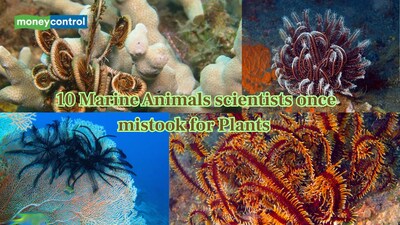
Scientists mistook these 10 marine animals for plants
These marine creatures are so deceptive that scientists once mistook them for plants. Their shapes, colours and movement perfectly mimic underwater vegetation, creating confusion for researchers.
-

Manta Ray Mating Dance: This is the biggest "dance-off" in the wild
Female manta rays lead dozens of males in spectacular underwater dance-offs near Yap Island, revealing mating behaviour, intelligence and unique physiology while aiding marine conservation research.
-
Why "Seaweed" is a climate hero? 7 superpowers you must know
From carbon storage to plastic alternatives, seaweed’s seven superpowers are turning this ocean algae into a climate change hero.
-
Scientists Warning: Deep sea mining reduces ocean life by 37%
A study reveals deep sea mining significantly reduces animal abundance, harms biodiversity and raises urgent concerns for ocean ecosystems in the Pacific Clarion-Clipperton Zone.
-
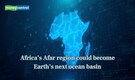
Scientists predict Africa’s Afar region could become Earth’s next ocean basin
The Afar region in northeastern Africa could split over millions of years, forming a new ocean. Scientists monitor rifts, magma and tectonic activity closely.
-
Algae to replace corals by 2100? Volcanic sites show a troubling future
Volcanic CO₂ seeps in Papua New Guinea reveal coral decline and algae takeover under future acidic oceans, threatening biodiversity and coastal communities worldwide.
-
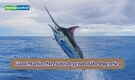
Giant Marlin: Meet this legend of the Open Sea
The Giant Marlin reigns supreme in the ocean, showcasing unmatched strength, speed and beauty across tropical and subtropical waters.
-
A mysterious golden orb found 3,300 meters below ocean surface
Scientists discovered a mysterious golden orb 3,300 meters deep off Alaska. Its origin is unknown, prompting further research into deep-sea life.
-
Researchers track land carbon transport across central Arctic Ocean
Researchers reveal 16% of Arctic Ocean carbon comes from land, influencing global carbon cycles and climate, highlighting warming impacts on permafrost and coastal erosion.
-
Scientists reveal how mantle currents feed volcanic islands remotely
Scientists show deep mantle waves move continental roots across oceans, producing volcanic islands with continental chemical signatures millions of years after rifting.
-
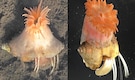
Scientists discovered a pink sea anemone that builds protective shells for crabs
A pale-pink sea anemone constructs homes for its crab companions. The discovery reveals some complex behaviour among these animals under the ocean.
-
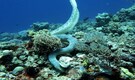
Scientists decode sea snake's diving styles in deep oceanwater
Sea snakes appear more skillful under water than believed. New research reveals unique dive styles, energy-saving glides, and curious wiggles improving hunting success.
-
Why is the ocean salty? Easy science facts kids will love
Oceans are salty because rivers carry minerals like sodium and chloride from rocks on land, gradually adding salt over millions of years. Here’s all you need to know about why the sea tastes salty and how it affects life beneath the waves.
-
Deep beneath the ocean might lie alien life amid dark oxygen, says new study
A team of scientists, including researchers from Boston University, recently uncovered evidence that challenges the long-held belief that oxygen production is solely tied to sunlight.
-
Deepest 'blue hole' discovered in abyss at 1,300 feet. It's bottom hasn't been reached yet
Blue holes are sprawling sinkholes, often hundreds of feet deep and equally wide, remain enigmatic due to their inhospitable conditions.
-
Bloodsucking sea creature resembling 'Dune' sandworms washes ashore in UK
Photographs depict a creature with an eel-like body adorned with rows of teeth reminiscent of Pennywise from Stephen King's horror classic 'IT.'
-
Titanic Tourist Submarine: Why was it hard to rescue Titan submersible?
The Titanic tourist submersible, which vanished during a voyage to the 111-year-old shipwreck at the bottom of the Atlantic Ocean, imploded, and the 5 people onboard are presumed dead. The US Coast Guard said that an underwater vessel has located a debris field near the Titanic in the search for the missing submersible. The 23,000-pound vessel named Titan was owned by OceanGate Expeditions. So, why was it tough to find the Titan sub in 5 days and what safety concerns an ex-OceanGate employee had raised for the Titan vessel in 2018? Watch to find out.
-
A landmark UN treaty is poised to curb exploitation of the ocean
The ocean supplies half the planet’s oxygen, absorbs more than a third of carbon dioxide emissions from the burning of fossil fuels and feeds billions of people.
-
A look at the annual divergence of global ocean surface temperature from 20th century average
Since the 1980s, annual average temperatures of the oceans’ surfaces have been diverging from the 20th century average more and more. While the annual divergence fluctuates, the trend is definitely upward.
-
Subsurface ocean on Jupiter's moon Europa deemed potentially 'habitable'
Europa, with an ocean hidden beneath a thick shell of ice, long has been viewed as a potential habitat for extraterrestrial life in our solar system, alongside other candidates such as Mars and Saturn's moon Enceladus. A new study presented on Wednesday at a geoscience conference underscores its potential.
-
Global warming: By 2100, oceans would become greener and bluer
Researchers predicted that the global temperature too will rise by 3 degrees Celsius till 2100
-
NASA's undersea mission Neemo-22 to simulate Mars Exploration
The crew will test time delays in communication, simulate spacewalks, and evaluate a variety of tools and procedures to be used in future space missions
-
Hungry sea otters help keep oceans healthy: study
Sea otters are warding off the accumulation of acidic carbon dioxide in Alaska's waters by preying on sea urchins that feed on underwater kelp beds vital to the oceans' health, according to a study.
-
Japan stops nuclear plant leak; crisis far from over
Japan stopped highly radioactive water leaking into the sea on Wednesday from a crippled nuclear plant and acknowledged it could have given more information to neighbouring countries about contamination in the ocean.