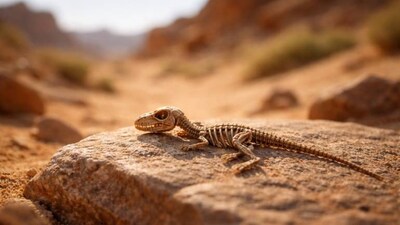
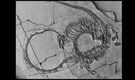
A remarkably preserved miniature skeleton from Mongolia is offering a rare glimpse into life during the Late Cretaceous period.
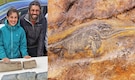
An 11-year-old fossil hunter helped scientists discover remains of a giant marine reptile that lived about 202 million years ago and may have been the largest sea reptile ever.
Scientists discovered a crocodile relative that is 200 million years old and had two legs. The diversity of reptiles during the Triassic period is shown by this discovery, which is long before crocodiles came into existence.
Scientists have discovered a water-bottle sized dinosaur fossil in Patagonia, Argentina. The tiny predator lived 95 million years ago and ranks among the smallest dinosaurs ever identified.
A 307-million-year-old tetrapod, Tyrannoroter heberti, is one of the earliest known plant-eaters on land. Its tiny teeth reshaped ecosystems and paved the way for humans’ plant-based meals.
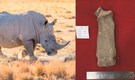
Scientists have discovered 3,500-year-old rhinoceros bone fragments near Coimbatore, revealing that rhinos once lived in southern India. The rare find reshapes understanding of ancient ecosystems and offers important lessons for modern conservation efforts.
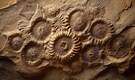
Scientists discovered exceptionally preserved Ediacaran fossils in sandstone, revealing how soft-bodied organisms survived 570 million years ago. The study sheds light on early life, fossil process and Earth’s ancient oceans.
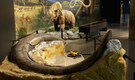
A 40,000-year-old mammoth named Zed is helping scientists unlock secrets of Ice Age life, extinction and evolution, as Los Angeles prepares to showcase him in a historic museum transformation.
Fossils reveal a giant lamniform shark lived 115 million years ago in Australia. The discovery shows early modern sharks grew large, dominating ancient oceans.
A newly identified marine crocodile ancestor, found in Egypt’s Western Desert, pushes back crocodile evolution and reveals Africa’s role in early origins.
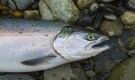
Researchers discovered Sivulliusalmo alaskensis, a 73-million-year-old Arctic salmonid fossil, revealing ancient fish diversity and survival in harsh Cretaceous Arctic environments.
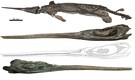
Scientists discovered Xiphodracon goldencapsis, a 3-metre Early Jurassic ichthyosaur on England’s Jurassic Coast, revealing predation and insights into ichthyosaur evolution.
Previously, a type of phytosaur fossil was found on the Bihar-Madhya Pradesh border in 2023, however, this is said to be the first definitive, well-preserved find in India.
The discovery was made when a local amateur fossil hunter Peter Bennicke found some unusual fragments the Cliffs of Stevns, a UNESCO-listed site south of Copenhagen.
Measuring just 1 m in height, the hobbit’s diminutive size is thought to be the result of island dwarfism—a phenomenon where species evolve smaller sizes due to the environmental pressures of isolated islands.
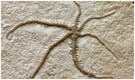
This species, Ophiactis hex, was uncovered during a 2018 excavation in southern Germany. The fossil, encased in limestone, was exceptionally well-preserved, capturing the creature in a moment of regeneration.
Vasuki indicus: The fossil of a serpent found in Gujarat may have been the largest snake to ever exist of Earth, exceeding even the Titanoboa in size.
The most recent fully articulated fossil, unveiled as part of the research, provided a comprehensive view of the creature from 'the tip of the nose right down to the tip of the tail.'
The accused tried to evade the official agents by labeling the dinosaur fossils as wood, rocks, and stones.