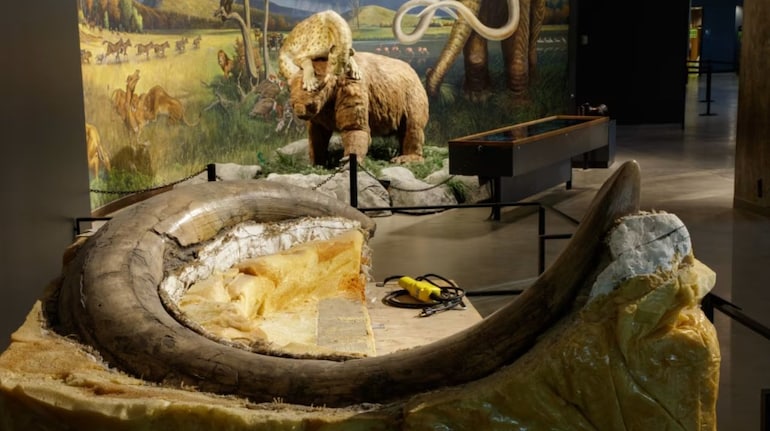

The La Brea Tar Pits & Museum in Los Angeles is entering a bold new era. For the first time since 1977, the iconic fossil site is getting a major renovation. In 2006, workers accidentally uncovered massive bones. Scientists soon realised they belonged to a giant mammoth. He was later named "Zed". Today, Zed stands at the centre of global scientific attention. At its heart stands Zed, a 40,000-year-old Columbian mammoth nearly intact from the Ice Age. This is not just another museum update. This is a transformation.
Who Is Zed, the Mammoth?
Zed was discovered in 2006 when construction crews digging a parking garage uncovered his bones. Unlike most fossils trapped directly in sticky tar, Zed’s skeleton was buried in an ancient stream bed and preserved without being crushed or scavenged. Scientists estimate his remains are about 80 percent complete, a rare find at this site. Despite a slice of skull lost to equipment early on, researchers have cleaned and stabilized the rest.
Who Are Studying Zed?
Zed is studied by paleontologists from the La Brea Tar Pits Museum. Researchers from universities also join this effort. Bone experts, climate scientists, and genetic researchers work together. Each team studies different parts of his life story. Some analyse teeth and tusks. Others examine bones using modern scanning technology. Together, they rebuild Zed’s ancient world piece by piece.
How Did Zed Die In The Ice Age Landscape?
Scientists believe Zed lived during a dangerous period. Ice Age Los Angeles was filled with predators and hidden traps. Sticky asphalt pools covered parts of the land. Many animals accidentally wandered into these deadly pits. Zed may have slipped while searching for water. He could have been injured before becoming trapped. His body was slowly preserved over thousands of years.
What Zed’s Bones Reveal About His Life?
Zed’s skeleton is nearly eighty percent complete. This makes him extremely valuable to science. His teeth show what he ate daily. Wear patterns reveal grasses, leaves, and shrubs. Small fractures hint at past injuries. Bone thickness shows he was strong and healthy. Growth lines reveal his approximate age at death.
Can Mammoths Be Brought Back To Life One Day?
Some scientists are now studying mammoth DNA. Fragments of genetic material remain inside preserved bones. Biotechnology companies are exploring cloning possibilities. They aim to combine mammoth genes with elephant cells. Supporters say this could restore lost species. Critics warn of ethical and ecological risks. Zed contributes valuable genetic and biological data.
Why Studying Zed Matters So Much for Science?
Zed helps scientists understand extinction patterns. He shows how climate change affected ancient animals. His remains reveal how ecosystems collapsed. Researchers compare his data with modern wildlife. This helps predict future environmental risks. Zed also improves fossil preservation techniques. His study strengthens global paleontology research.
Discover the latest Business News, Sensex, and Nifty updates. Obtain Personal Finance insights, tax queries, and expert opinions on Moneycontrol or download the Moneycontrol App to stay updated!
Find the best of Al News in one place, specially curated for you every weekend.
Stay on top of the latest tech trends and biggest startup news.