Pepper Bark Tree: This medicinal tree in South Africa recently improved from from “endangered” to “vulnerable”
Once pushed close to extinction, South Africa’s pepper bark tree is showing signs of recovery. Community efforts and science are helping this medicinal species return to the wild.

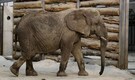
Scotland’s only African elephant Mondy dies aged 54 after decades at Blair Drummond Safari Park
Scotland’s only African elephant, Mondy, has died aged 54 after age-related illness. Her life at Blair Drummond Safari Park highlights ongoing debates about animal welfare and captivity.
From 2 Hours to 20 Minutes: China completes 28-kilometer-long cross-sea corridor in the Pearl River
China has completed the 28km Shenzhen–Zhongshan Link, featuring an eight-lane underwater tunnel, artificial islands and AI monitoring. The project is transforming travel in the Pearl River region.
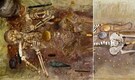
Europe's Oldest Gold: Archeologists found 6,500-year-old gold in Bulgaria revealing ancient metallurgy
Archaeologists in Bulgaria have uncovered 6,500-year-old gold artefacts in an ancient grave, revealing evidence of early social elites and advanced metalworking in prehistoric Europe.
Do humans have a ‘seventh sense’? Scientists in London discovered remote touch ability
New research suggests humans can detect objects without direct contact, using subtle physical cues. Scientists call it a form of “remote touch” that may represent a hidden seventh sense.
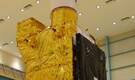
After its failure in 2021, ISRO prepares for GISAT-1A launch, the satellite to head Sriharikota soon
After a failed launch in 2021, ISRO is preparing to send GISAT-1A into orbit. The powerful satellite will provide near real-time images to support disaster response, climate monitoring and national planning.
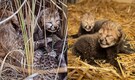
Second time mother, Namibian Cheetah, "Asha" gave birth to 5 newborn cubs at Kuno National Park, population rises to 35 in India
Five newborn cheetah cubs at Kuno National Park have lifted India’s cheetah population to 35, offering fresh hope for one of the world’s most ambitious wildlife restoration projects.
Your chance to work with NASA, applications open for paid summer internships; Here’s how to apply
NASA has opened paid 2026 internships for students worldwide, offering hands-on mission experience, mentorship, and possible career pathways, but eligibility rules and deadlines may surprise many applicants.
Russian authorities seize 4.5-billion-year-old meteorite hidden as sculpture in UK-bound shipment
Declared as garden décor, a massive object stopped at a Russian port turned out to be a rare space relic, triggering legal questions, scientific interest, and an international investigation.
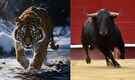
Tiger vs Bull: Strength, power and who would truly win the battle
When a tiger meets a bull, strength alone does not decide survival. The outcome shifts with timing, terrain, and instinct, revealing how nature balances power with strategy.
Which city earned the sweet title ‘Chocolate Town of India’ and Why?
A misty hill town quietly built a chocolate legacy through climate, craftsmanship, and habit, turning simple souvenirs into an identity travellers now seek beyond scenery and colonial charm.
Frozen surface burning core: Scientists discover 207 hidden volcanoes beneath Antarctica
Beneath Antarctica’s frozen silence, scientists have mapped hundreds of hidden volcanoes, revealing unseen forces that quietly shape ice movement, sea levels, and the continent’s uncertain future.
Watch a camera dive into Antarctica’s most dangerous 'doomsday glacier' ice hole
make a curious 30-word excerpt or summary for above article in a way that it give information yet leave viewrs in a little curiousty so that they read the article and give summary for this article under 80 words that capture the essence of the article.
Story of forgotten cows: A herd of cattle abandoned on a remote island survived on their own for 130 years
Abandoned cattle survived alone on a remote subantarctic island, evolved against all odds, then vanished overnight, leaving scientists questioning what was lost and whether nature was truly protected.
'Human mind is only a receiver that must be tuned to the universe': Why did Nikola Tesla say this?
Nikola Tesla held a striking belief about how ideas reach the human mind. His thinking challenges creativity itself and hints at a hidden connection most people never notice.
Not a palace, not a museum: This is the World’s largest house and it is located in India
Spanning hundreds of acres in Gujarat, Lakshmi Vilas Palace still stands as a lived-in royal home, blending vast scale, rare art, and surprising modern comforts from India’s princely era.
A mountain that changes colour: Which Indian peak is called the ‘golden mountain’ and why?
At dawn, a Himalayan giant briefly turns gold, shaping legends, beliefs and landscapes, leaving viewers wondering how light, faith and geography combined to give Kanchenjunga its enduring nickname.
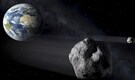
Asteroid 2024 YR4 may slam into the Moon, creating a flash seen from Earth, scientists say
A newly tracked asteroid could strike the Moon in 2032, triggering bright flashes, lunar debris, and rare meteor storms on Earth, scientists say, though the odds remain slim.
Selfies in space soon? NASA allows astronauts to take smartphones into space
NASA will soon let astronauts carry smartphones into orbit, starting with Crew-12 and Artemis II, changing how space missions are documented and bringing unexpected, personal moments closer to Earth.
Longest robot walk: China’s AgiBot A2 completes epic 100+ km journey, winks and interacts with bystanders
A human-shaped robot just walked over 100 km across China, winking and interacting with onlookers. Its record-breaking journey raises questions about the future of humanoid robotics and AI in daily life.
Scientists in China found a new way to control light — Could this be the future of wireless?
Scientists have generated ultra-stable, donut-shaped light structures called skyrmions. These innovative beams can carry data at terahertz frequencies, promising faster, more reliable wireless communication in the future.
Meet Moya: World's first life-like humanoid robot from China that walks, winks and smiles like a human
Meet Moya, the lifelike humanoid robot from Shanghai that smiles, walks, and holds eye contact like a human. Could this mark the future of companionship, care, and human-robot interaction?
Chinese man extracts 191 g of gold worth Rs 26 lakh from SIM cards: Here’s how he did it and can you do it too?
A Chinese man has extracted 191 grams of gold from old SIM cards, worth Rs 26 lakh, revealing a risky yet fascinating method that has gone viral online.
Pet dog chews off owner’s toe while he slept, what doctors discovered next was shocking: Know the whole story here
After collapsing at home, a Michigan musician woke bleeding to a shocking discovery involving his dog, an undiagnosed illness, and a medical outcome doctors later called lifesaving for everyone involved.
Indian-origin scientist Veerabhadran Ramanathan wins 2026 Crafoord Prize in geoscience
Tamil Nadu-born climate scientist Veerabhadran Ramanathan has won the prestigious 2026 Crafoord Prize in Geosciences for his pioneering research on super-pollutants and atmospheric processes that shape Earth’s climate.