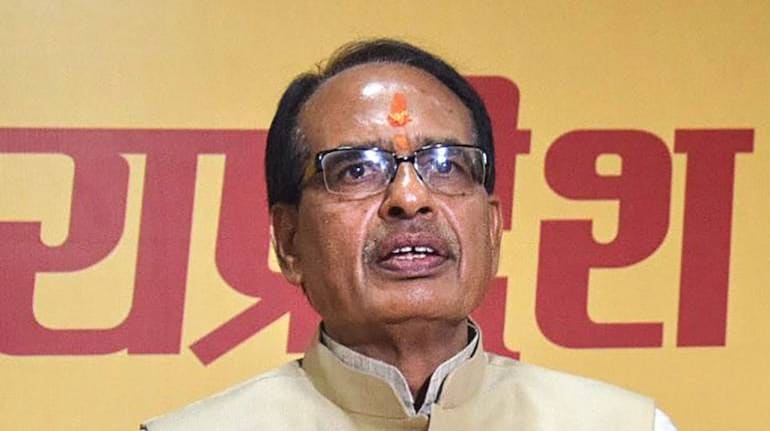
Madhya Pradesh Chief Minister Shivraj Singh Chouhan on Saturday said that local circumstances are likely to dictate the next phase of lockdown as he spoke of the sufferings of the poor and pitched for kickstarting economic activities outside places where the spread of coronavirus infection is high.
Speaking to reporters through a video conference, he also called for coordination among states to ensure that migrant workers are provided transport to reach their homes so that tragedies like the road accident in Uttar Pradesh on Saturday morning that killed 24 of them are avoided.
Huge numbers of migrant workers have been walking hundreds of kilometres from several big cities towards their villages as an extended coronavirus-induced lockdown has made their financial condition precarious.
Coronavirus India LIVE News Updates
His government has deployed 1,000 buses to ferry migrant workers and drop those who are from other states at the Madhya Pradesh border point nearest to their destination, Chouhan said, asserting that no labourer will have to walk on roads or be hungry as long as he is in Madhya Pradesh.
The Madhya Pradesh government is also coordinating with states like Uttar Pradesh, Bihar, Chhattisgarh and Jharkhand, from where large numbers of migrant workers hail, so that they are attended to after being dropped at its borders.
With the third phase of lockdown ending on Sunday and Prime Minister Narendra Modi speaking of an "entirely different lockdown-4.0", Chouhan said the focus now should be on speeding up economic activities while ensuring that COVID-19 is contained.
Poor people and those running small-scale industry are suffering due to extended lockdown, he said.
"We will have to fight the coronavirus and also take measures to kick-start economic activities at a fast pace," Chouhan said.
Noting that the prime minister has given states a major say in deciding on the nature of the next phase of lockdown, he said local circumstances will dictate it and most activities in green zones, and in orange zones outside containment zones will be allowed.
In red zones, where the spread of coronavirus is highest, economic activities will be guided by strict regulations, he added.
However, crowds will not be allowed to assemble and so places like malls and cinema halls will remain closed. Religious and political congregation will continue to be barred, he said and advised people to celebrate Eid at their homes.
Chouhan said development model will have to change due to COVID-19, and governments will now have to put emphasis on providing employment to people near their homes.
Modi's call for a "self-reliant India" is a step in this direction, and the Madhya Pradesh government has taken agriculture and labour reforms to boost investment and generate employment for a long term solution.
Asked about the RSS-affiliate Bharatiya Mazdoor Sangh's strident opposition to the labour reforms brought in by his government, Chouhan asserted that the measures are in the interest of labourers and he will continue to have dialogue with the BMS in this regard.
With the opposition criticising the central government for not taking adequate measures to mitigate the sufferings of migrant labourers, the senior BJP leader strongly defended various decisions of the Centre.
When lockdown was announced from March 25, it was expected that migrant workers will stay at the place of their work, he said.
As it was extended and they began facing financial hardships, they decided to leave for their homes, Chouhan said, noting that COVID-19 was something entire unexpected and nobody knew how things would unfold in the coming days and weeks.
The Centre's priority was to stop the spread of infection and this is what it did with the lockdown, he said, adding that it has taken several measures to help the poor.
The Madhya Pradesh government has also transferred anywhere from Rs 1,000 to Rs 2,000 to its poor and spent a total of Rs 13,600 crore on the welfare measures, he said.
With the coronavirus situation in the state showing some improvement of late, Chouhan said the previous Kamal Nath-led Congress government did "nothing" to tackle the disease, and it was only after he took over on March 23 that health infrastructure and capacity were built.
He brushed aside the charge levelled against the BJP for engineering the fall of the Kamal Nath government, saying it was brought down by Congress leaders as it was a "destructive" dispensation that did no good to the state.
Follow our full coverage of the coronavirus pandemic here.
Discover the latest Business News, Sensex, and Nifty updates. Obtain Personal Finance insights, tax queries, and expert opinions on Moneycontrol or download the Moneycontrol App to stay updated!
Find the best of Al News in one place, specially curated for you every weekend.
Stay on top of the latest tech trends and biggest startup news.