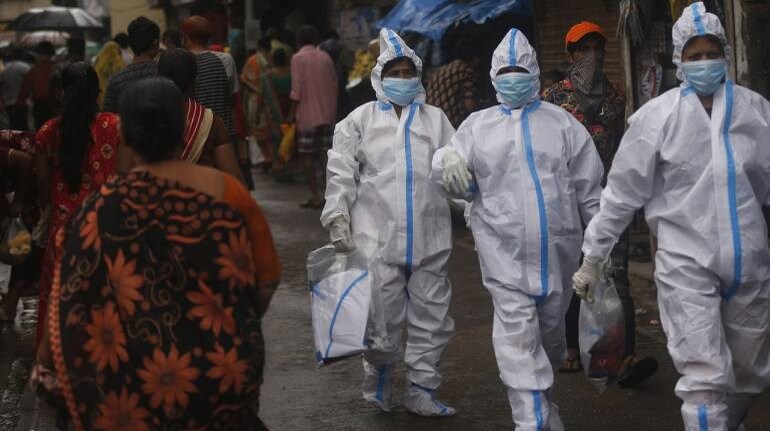
India generated around 33,000 tonnes of COVID-19 biomedical waste in the last seven months, with Maharashtra contributing the maximum (3,587 tonnes) to it, according to Central Pollution Control Board (CPCB) data.
Over 5,500 tonnes of COVID-19 waste was generated across the country in October -- the maximum for a month so far.
According to the data received from state pollution control boards, since June 2020, all states and union territories have generated 32,994 tonnes of COVID-19-related biomedical waste which is being collected, treated and disposed of by 198 common biomedical waste treatment facilities (CBWTFs).
COVID-19 biomedical waste could include PPE kits, masks, shoe covers, gloves, human tissues, items contaminated with blood, body fluids like dressings, plaster casts, cotton swabs, beddings contaminated with blood or body fluid, blood bags, needles, syringes etc.
According to the data, Maharashtra generated 5,367 tonnes of COVID-19 waste in seven months since June, followed by Kerala (3,300 tonnes), Gujarat (3,086 tonnes), Tamil Nadu (2,806 tonnes), Uttar Pradesh (2,502 tonnes), Delhi (2,471 tonnes), West Bengal (2,095 tonnes) and Karnataka (2,026 tonnes).
Around 4,530 tonnes of such waste was generated in December, with Maharashtra contributing the maximum 629 tonnes, followed by Kerala (542 tonnes) and Gujarat (479 tonnes).
Delhi generated 321 tonnes of COVID-19 bio-medical waste in December, according to the CPCB data.
Around 4,864 tonnes of COVID-19 waste was generated in November, of which 609 tonnes was contributed by Maharashtra, 600 tonnes by Kerala, 423 tonnes by Gujarat and 385 tonnes by Delhi.
In October, the country generated 5,597 tonnes of COVID-19 waste, the maximum in the last seven months, with Kerala (641), Gujarat (545) and Maharashtra (542) being the top three contributors.
In September, 5,490 tonnes of such waste was generated. Gujarat contributed the maximum 622 tonnes, followed by Tamil Nadu (543 tonnes), Maharashtra (524 tonnes), Uttar Pradesh (507 tonnes) and Kerala (494 tonnes), as per the data.
The CPCB had in March last year issued specific guidelines for handling, treatment and disposal of such waste at healthcare facilities, quarantine centres, homes, sample collection centers, laboratories, pollution control boards, urban local bodies and common biomedical waste treatment facilities (CBWTFs).
The apex pollution body had in May developed the ''COVID19BWM'' mobile application to monitor coronavirus-related biomedical waste and to compile the data through electronic manifest system. This application tracks COVID-19 waste at the time of generation, collection and disposal.
In July last year, the Supreme Court made it mandatory for all urban local bodies and state pollution control boards to use the mobile application for tracking biomedical waste daily in a bid to ensure that the waste is collected, transported and sent to the registered CBWTFs.
As on Sunday, India''s COVID-19 caseload stands at 1,04,50,284 while the death toll is 1,50,999.
Follow our full coverage of the coronavirus pandemic here.
Discover the latest Business News, Sensex, and Nifty updates. Obtain Personal Finance insights, tax queries, and expert opinions on Moneycontrol or download the Moneycontrol App to stay updated!
Find the best of Al News in one place, specially curated for you every weekend.
Stay on top of the latest tech trends and biggest startup news.