
Shares of paint makers, tyre companies and oil marketing firms fell sharply on Monday as crude oil prices surged on escalating conflict in West Asia, intensifying concerns over input costs, inflation and margin pressure. At 12:15 pm, the Sensex was down 1,483 points, or 1.8 percent, at 79,804, while the Nifty slipped 448 points to 24,730. Market breadth remained decisively negative, with 3,296 stocks declining against just 584 advances on the NSE.
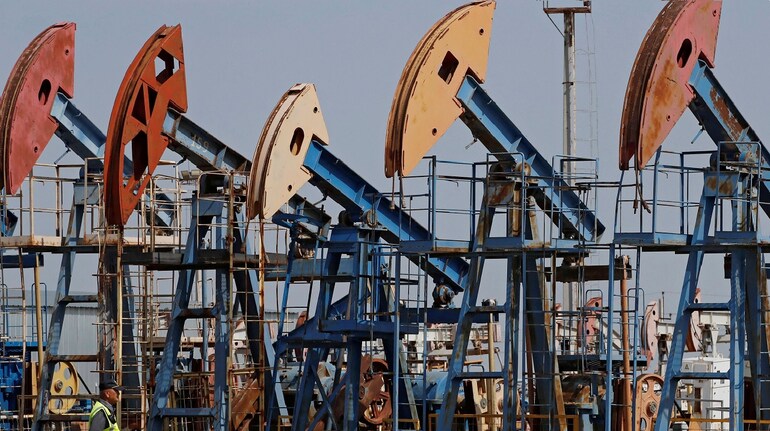
Brent crude climbed over 6 percent to around $77-78 a barrel after briefly topping $82 earlier in global trade, amid deepening US-Israel and Iran conflict. Oil prices surged as military tensions threatened to disrupt global supply, with particular focus on the Strait of Hormuz, through which roughly 20 percent of global oil flows pass.
Paint stocks slide on raw material worries
Asian Paints shares fell 2.87 percent to Rs 2,307.9, Berger Paints declined 2.13 percent, and Kansai Nerolac dropped 3.62 percent. Akzo Nobel India also slipped 1.17 percent. Paint manufacturers are directly exposed to crude-linked derivatives such as solvents and resins. A sustained rise in crude raises raw material costs and can compress margins if price hikes cannot be passed on quickly.
Tyre makers hit by input cost concerns
Tyre stocks were among the worst affected. JK Tyre stock plunged 5.63 percent, CEAT dropped 2.56 percent, and Apollo Tyres fell 1.98 percent. Tyre companies rely heavily on crude-based synthetic rubber and petrochemical inputs. Higher oil prices also raise logistics and transportation costs, compounding pressure on profitability.
Oil marketing companies under pressure
State-run oil marketing companies (OMCs) also saw heavy selling. Indian Oil Corporation slumped 4.26 percent, Bharat Petroleum fell 2.93 percent, and Hindustan Petroleum declined 2.45 percent. OMCs face the dual risk of higher crude procurement costs and potential margin strain if retail fuel prices are not adjusted in tandem. Markets typically discount earnings uncertainty in such scenarios, especially if geopolitical risks persist.
Traders are closely monitoring the status of the Strait of Hormuz, which is effectively disrupted amid heightened military tensions. Gold and the dollar also gained as investors rotated into safe-haven assets.
According to Reuters, shipping activity in the Strait has slowed significantly, raising fears of supply bottlenecks. Jorge Leon, head of geopolitical analysis at Rystad Energy, told Reuters that unless de-escalation signals emerge swiftly, markets could see a “significant upward repricing of oil.”
Brokerage JM Financial had earlier noted that markets may shift from earnings-driven to oil-driven trading in the near term, with crude emerging as the key macro variable for Indian equities. The brokerage warned that a prolonged disruption through Hormuz could push Brent above $90 a barrel, and potentially beyond $100 in a broader conflict scenario.
For India, the implications are direct. Every $1 increase in crude adds roughly $2 billion to the annual import bill, exerting pressure on the trade balance and potentially reigniting inflationary concerns.
Disclaimer: The views and investment tips expressed by experts on Moneycontrol.com are their own and not those of the website or its management. Moneycontrol.com advises users to check with certified experts before taking any investment decisions.
Discover the latest Business News, Sensex, and Nifty updates. Obtain Personal Finance insights, tax queries, and expert opinions on Moneycontrol or download the Moneycontrol App to stay updated!
Find the best of Al News in one place, specially curated for you every weekend.
Stay on top of the latest tech trends and biggest startup news.