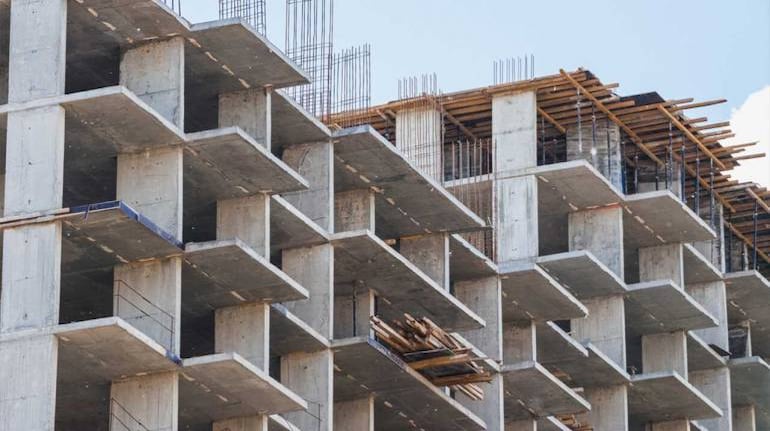
In view of the liquidity crisis being faced by the real estate sector due to the ongoing COVID-19 pandemic, a real estate builders' body has demanded that the government allow part sharing of cashflows between the stress fund and the existing lenders.
"Since the last four months only two projects have received funding from AIF amounting to no more than Rs 540 crore, a negligible fraction of the interest liability accumulating during the period. We recognize that the entire concept of AIF is premised upon the fund having priority in repayment over the existing lenders," Credai said in a letter addressed to the Secretary, Department of Financial Services, Ministry of Finance.
"After deliberations with all stakeholders, it is requested to please allow sharing of cash flows between stress fund and existing lenders to the extent that debt servicing of the existing lenders is not in default. This will help the fund investment to take off. This is the single most important reason for disbursement from AIF not taking off," the letter noted.
It also requested that an amendment to the AIF guidelines be brought about where by AIF may continue to enjoy priority of charge on the security and the cash flow of the project, with the cash flows being shared by AIF with the existing lenders to the extent of the debt service requirements.
Alternative Investment Fund (AIF) of Rs. 25,000 crore is an initiative that seeks to directly assist completion of stalled projects estimated to comprise more than 5 lakh units worth Rs. 4.5 lakh crore all over India.
The letter noted that the Central Government has infused Rs 5,000 crore and the AIF has achieved its first closing at Rs 10,500 crore.
In November last year, the central government announced a Rs 25,000-crore fund to help complete over 1,500 stalled housing projects, including even those that have been declared NPAs (non-performing assets) or admitted for insolvency proceedings. The move was likely to help 4.58 lakh housing units across the country. Only RERA-registered projects with positive net worth will be provided funds.
In the first stage, the Centre is infusing Rs 5,000 crore into the stress fund of Rs 12,500 crore while the remaining is being pumped in by LIC, SBI, HDFC and nationalised banks. The AIF is being managed by SBI Cap Ventures Ltd.
On February 14, the finance ministry had tweeted that preliminary clearance has been given for due diligence to 14 projects with a capital commitment of Rs 2,500 crore. This will provide relief to 10,000 homebuyers and release Rs 12,500 crore of invested capital. Around 40 more deals are under active consideration for investment.
The fund has received maximum deals from NCR and MMR region as also from other five top cities. Deals have also come in from Dehradun, Bhiwadi, Goa, Nashik, Jaipur, Bhopal, Amritsar, Coimbatore, Vizag and Surat.
Oversupply situation, project net worth status and land dues to authorities are the challenges that the fund has faced so far with regard to selecting projects in NCR that has the maximum number of stuck units across the country.
“Certain challenges that are seen to a varying extent in different NCR projects is the oversupply situation, project net worth status and the accumulated dues to the relevant authority for land allotment," Arun Mehta, MD, SBI Capital Markets and Chairman SBICAP Ventures, had told Moneycontrol in March.
In UP, especially Noida and Greater Noida, the authorities have the first charge as there are still land dues running into crores.
"We are examining the position in terms of the investment policy. The Fund proposes to provide capital for the outstanding land dues as ascertained as part of the project cost. As regards charge, the charge to the Fund in such cases shall be subject to the authority’s charge. The fund conservatively assumes and provides for funding of the interest charges as per the land payment schedule. Any savings in these charges due to the zero period, if awarded, are a buffer for the completion of the project," Mehta had said.
As many as 60 stuck real estate projects have not met the criteria.
"Only about 60 projects, which is a small portion of the deals received, have not met the criteria for funding as they are green field projects or are not net worth positive or don’t have RERA registration," he had said.
He had explained that the qualifying criteria is the initial eligibility screening basis for the fund. Once the deal meets the qualifying criteria, the fund team undertakes a detailed investment evaluation that covers factors including investment analysis, legal issues and credit checks. This is then further evaluated by the Investment Committee prior to arriving at a decision to proceed with the investment.
Discover the latest Business News, Sensex, and Nifty updates. Obtain Personal Finance insights, tax queries, and expert opinions on Moneycontrol or download the Moneycontrol App to stay updated!
Find the best of Al News in one place, specially curated for you every weekend.
Stay on top of the latest tech trends and biggest startup news.