TCS bags deal from travel tech firm Amadeus to accelerate modern airline retailing
As part of the collaboration, TCS will develop the Service Center User Interface for Amadeus’ next-generation airline platform, Nevio.

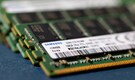
Samsung weighs multi-year deals to ease memory chip crunch fears
The company is considering lengthening contracts from the current quarterly or annual agreements to as much as three to five years, co-CEO Jun Young-hyun told shareholders at the company’s annual general meeting.
'If you don’t help yourself, neither can the company': KPIT CEO urges staff to be AI-ready
With AI disrupting job functions and coding requirements, KPIT is now hiring 30-40% fewer freshers, Kishor Patil tells Moneycontrol
Foxconn is moving beyond iPhones, and the next business is growing even faster
Foxconn expects AI server shipments to double in 2026 as cloud business overtakes consumer electronics, driven by strong AI demand.
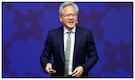
What’s behind Nvidia’s new $1 trillion AI forecast? Jensen Huang lays out the next wave
Nvidia CEO Jensen Huang sees $1 trillion orders for Blackwell and Rubin chips by 2027; unveils new AI chips, racks and auto push.
Did OpenAI almost build a ‘sexy suicide coach’? Inside the blow-up over erotic ChatGPT chats
OpenAI delayed its planned 'adult mode' for ChatGPT after advisers warned of mental health and child safety risks.
Global Wealth Summit 2026: Why Aletheia's Jonathan Wilmot believes AI is more than just another market boom
At Moneycontrol Global Wealth Summit, global strategist says AI and machine learning could transform productivity and eventually lower costs of food, energy, housing and healthcare.
Meta may cut up to 16,000 jobs as CEO Mark Zuckerberg doubles down on AI investments
Meta is considering layoffs affecting up to 20% of its workforce as it ramps up AI investments and data centre spending, Reuters reports.
Iran war pushes American MNCs to reassess operations; India GCCs may emerge as refuge
While companies remain cautious on decision-making in the near term, India will benefit from its positioning as a safe harbour and geopolitically stable market, industry experts said.
Karnataka to hire consultant to attract GCCs amid competition from neighbouring states
Karnataka will soon identify a strategic consultant to spot gaps, pitch to global companies, and build an investment pipeline for Global Capability Centres, IT/ITeS firms and data centres.
Onboarding delays at Tech Mahindra; over 1,000 freshers await offer letters
"Across the industry, anticipated demand for fresh graduates has been lower than projected, resulting in a slower pace of onboarding...We remain committed to honoring our campus hiring commitments," a Tech Mahindra spokesperson said.
White House plans executive order to rip Anthropic AI out of federal agencies
White House preparing executive order to remove Anthropic’s Claude AI from federal systems as dispute with the company escalates.
Siemens expects AI demand to revive India’s private sector capex
It is too early to say. Other areas like data centres are fuelling demand and business expectations, Siemens AG CTO and board member Peter Koerte tells Moneycontrol on impact of US-Iran war
Mid-cap IT firms corner 58% of 2025 incremental revenue as enterprises widen vendor pool for large deals
Industry experts say the shift reflects a structural change in the outsourcing landscape, where large deals are no longer the exclusive territory of tier-one IT service providers.
In the age of AI and platforms, trust remains finance’s most valuable currency: Experts
Market downturns, failed transactions or even minor platform glitches can quickly erode confidence among investors who are already anxious about their money, said all experts.
Siemens sees AI-driven shift in workforce mix, India to have smaller tech teams work on value creation for new products: CTO Peter Koerte
The company has about 10,000 software and AI experts across its global innovation centres in Bengaluru and Pune. India is Siemens' fourth largest market, contributing significantly to its revenue growth.
To strengthen startup ecosystem, Karnataka budget proposes incubation centres in tier-2 tech hubs
The government has increasingly been pushing the development of technology ecosystems in cities such as Mysuru, Mangaluru, Hubballi-Dharwad and other emerging hubs in its beyond Bengaluru push
Vanguard reverse transitions part of Infosys’ largest outsourcing deal
The development comes nearly 6 years after Vanguard and Infosys announced a partnership under which the IT firm assumed day-to-day operations, while Vanguard builds a tech GCC in Hyderabad
Tech job openings in India rise 9% in March amid AI-driven hiring uncertainty
Roles in consulting and advisory, business development, sales and marketing, and project management are currently driving hiring demand
How NetApp is rethinking tech hiring amid AI-led productivity gains
NetApp’s largest global innovation centre is in Bengaluru with over 3,600 engineers.
AI contracts start at $10 million while traditional deals run into hundreds of millions: Cognizant CFO
Firms are moving away from building small AI applications that demonstrate tech capabilities to deploying solutions that have a real impact on business operations, Jatin Dalal has said
Accenture buys Ookla-parent unit, Downdetector from Ziff Davis in $1.2 billion cash deal
The acquisition strengthens Accenture’s network intelligence and AI-led enterprise capabilities.
P.E. Analytics to launch AI-powered real estate intelligence platform
The company has also signed a memorandum of understanding with the University of Cambridge’s Department of Land Economy to introduce structured real estate education programmes in India.
Inside IIT Madras Brain Centre: How researchers are building a Google Earth for the human mind
Unlike most frontier neuroscience projects that rely primarily on state funding, this one has been built through a rare mix of philanthropy, corporate social responsibility funding, and government backing.
Operations across tech industry continues as usual, member companies remain vigilant: Nasscom on Middle East conflict
The technology industry body has advised its member companies to enable work-from-home arrangements for all employees in the region.