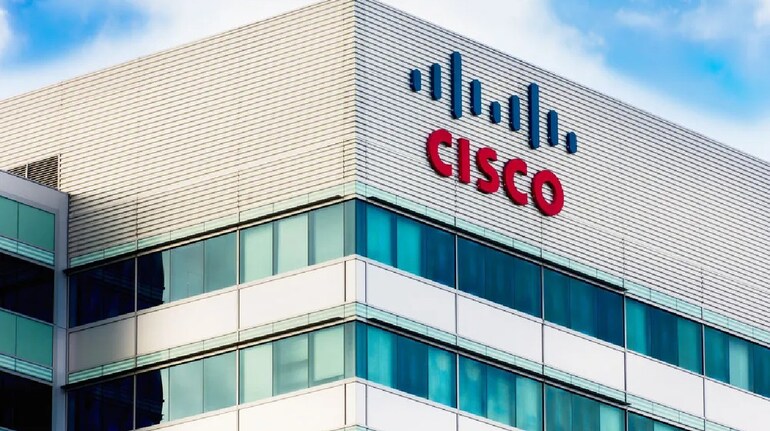
Enterprise networking and security firm Cisco on July 25 said its firewall is now AI-driven, which autonomously manages and updates itself, aimed at simplifying cyber-defence for its enterprise clients.
The new firewall is designed to write its own codes, test them in real-time within the user's environment, and deploy them across different platforms, whether in data centers, the cloud, or a combination of both. The AI-powered firewall can also automatically remove rules once it deems unnecessary.
“We've built a firewall now that writes its own rules, tests the rules in your environment, live with traffic, deploys these rules wherever the application is at, whether in your data center, cloud, or a combination thereof. When the rule is no longer needed, it takes out the rule,” said Raj Chopra, Chief Product Officer-Security Business Group, Cisco.
This new feature comes at a time when enterprises face increasing cyber-attacks around the world. According to reports, the global cost of cybercrime is estimated to be over a whopping $8 trillion in 2023.
Nonetheless, the AI-driven approach reduces manual oversight and comes with a feature to function without requiring manual upgrades. This is equivalent to a user experience by modern web browsers like Chrome, Safari, Edge, and Firefox, which updates automatically in the background. “You never have to upgrade ever again,” Chopra said while delivering a keynote address at the Accel Cybersecurity Summit 2024.
“I don’t even know what version of Chrome I’m using. And I spend half my waking day in Chrome. I don’t even care what version it is,” Chopra further commented.
Cisco’s move to integrate AI into its cybersecurity solutions reflects a broader trend in the technology industry, where automation and intelligent systems are being increasingly used.
Cisco's Global Traffic
Cisco claims that 80 percent of the world's internet traffic runs on systems that have been built by it. "So if any system is connected to something else, Cisco has a role to play in that. (About) 80 percent of the world's traffic runs through something that is Cisco,” Chopra said.
This near-monopoly in connectivity allows Cisco to “harness” and utilise vast amounts of data for contextual insights. The company said this happens in three phases: assistantship, augmentation, and automation.
The first phase, assistantship, is already under playing out with AI functioning as an assistant, answering questions and providing guidance. “We have built this capability in a lot of our interactions in the console,” Chopra said.
The second phase – augmentation - sees AI not just informing but augmenting workflows. This is particularly beneficial in high-stress environments like Security Operations Centers (SOCs), where AI assists professionals by augmenting their actions rather than replacing them.
“So how can you augment a professional, not replacement, but augment the actions that they're trying to do? This is what we're working on next,” he added.
The third phase, automation, builds on the trust established in the previous phases. Chopra warned that automation can make a good thing happen really fast, but it can also make a bad thing happen faster.
“All of them are happening at the same time for different use cases. But it's a broad effort within Cisco,” Chopra added.
Meanwhile, Cisco has been doubling down in India, launching its cloud-based Webex Calling for enterprises in partnership with Tata Communications in May.
Also read: Digitisation across sectors to drive growth in 2024: Cisco India President


Discover the latest Business News, Sensex, and Nifty updates. Obtain Personal Finance insights, tax queries, and expert opinions on Moneycontrol or download the Moneycontrol App to stay updated!
Find the best of Al News in one place, specially curated for you every weekend.
Stay on top of the latest tech trends and biggest startup news.