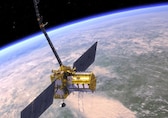
NASA has officially decommissioned its NEOWISE spacecraft, ending a mission that spanned more than a decade and significantly advanced our understanding of near-Earth objects. The spacecraft's final command to power down was issued from NASA’s Jet Propulsion Laboratory (JPL) in Southern California on Thursday, marking the conclusion of its mission to identify and track asteroids and comets that could potentially threaten Earth.
Final Command and Shutdown
The command was sent from the Earth Orbiting Missions Operation Center, with both current and former team members, along with NASA officials from Washington, present to witness the spacecraft's final moments. The Tracking and Data Relay Satellite System then transmitted the signal to NEOWISE, officially ending the mission. NEOWISE's science operations had already concluded on July 31, and all remaining data had been safely transmitted back to Earth.
Nicola Fox, associate administrator of NASA's Science Mission Directorate, praised the mission, stating, "NEOWISE has been an extraordinary success, enhancing our understanding of the universe and safeguarding our planet by tracking potentially hazardous objects. While it's bittersweet to see the mission end, the foundation it has laid will benefit future planetary defense efforts."
Reason for Mission Conclusion
NASA decided to end the mission as NEOWISE's orbit around Earth was becoming too low to produce reliable data. Increased solar activity is causing the upper atmosphere to expand, creating drag on the spacecraft, which lacks a propulsion system to maintain its orbit. NEOWISE is expected to safely disintegrate upon reentry into Earth's atmosphere by late 2024.
 This final image captured by NASA’s NEOWISE shows part of the Fornax constellation in the Southern Hemisphere. (Image: NASA/JPL-Caltech/IPAC/UCLA)
A Decade of Discoveries
NEOWISE initially launched in December 2009 as part of the WISE (Wide-field Infrared Survey Explorer) mission, designed to survey the entire infrared sky over a seven-month period. By July 2010, WISE had exceeded its scientific goals, capturing images with greater sensitivity than any previous infrared survey. However, the mission's coolant ran out, limiting its ability to observe faint infrared objects. Nonetheless, NASA extended its mission under the NEOWISE banner to focus on detecting asteroids and comets, a task it continued until February 2011, when the spacecraft was placed in hibernation.
Reactivation and Planetary Defense
In 2013, NEOWISE was reactivated under NASA’s Near-Earth Object Observations Program, which later became part of the agency's Planetary Defense Coordination Office. The spacecraft continued to provide valuable data on near-Earth objects, contributing to our understanding of the solar system.
During its operational lifetime, NEOWISE created comprehensive all-sky maps, documenting 1.45 million infrared observations of over 44,000 solar system objects. The mission detected more than 3,000 near-Earth objects, 215 of which were first identified by NEOWISE. It also discovered 25 new comets, including the notable Comet C/2020 F3 NEOWISE, which captivated stargazers in the summer of 2020.
Paving the Way for Future Discoveries
NEOWISE’s legacy extends beyond its data. The mission has paved the way for NASA’s next-generation planetary defense telescope, the NEO Surveyor. This upcoming mission, also managed by JPL, will seek out some of the most elusive near-Earth objects, such as dark asteroids and comets that reflect little visible light. NEO Surveyor is expected to significantly enhance global planetary defense efforts, with its launch slated for no earlier than 2027.
Amy Mainzer, principal investigator for both NEOWISE and NEO Surveyor, expressed her gratitude for the mission's contributions: "NEOWISE has provided an invaluable long-term dataset of the infrared sky, and it has set the stage for future discoveries with the NEO Surveyor."
The NEOWISE mission’s contributions align with the goals of NASA’s Planetary Defense Coordination Office, which was established following a mandate from the NASA Authorization Act of 2005. The office aims to discover and characterise at least 90% of near-Earth objects that are over 460 feet (140 meters) across and could pose a threat to Earth.
Discover the latest Business News, Sensex, and Nifty updates. Obtain Personal Finance insights, tax queries, and expert opinions on Moneycontrol or download the Moneycontrol App to stay updated!
Find the best of Al News in one place, specially curated for you every weekend.
Stay on top of the latest tech trends and biggest startup news.