
co-presented by
ASSOCIATE SPONSORS
co-presented by


ASSOCIATE SPONSORS


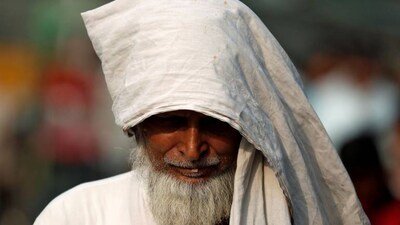
Skymet has predicted that Northern regions of the country such as East Rajasthan, Madhya Pradesh, Uttar Pradesh, South Punjab, South Haryana and isolated pockets of Delhi NCR may experience a heatwave in the next 24 hours.
The sun’s heat and light reach urban and rural areas in the same way but the difference in temperature is mainly because of the surfaces in each environment and how they absorb and hold heat
The early onset of monsoon could bring cheer as most parts of the country witnessed extremely high temperatures over the past fortnight. The normal onset date for monsoon over Kerala is June 1.
The weather system is likely to further lose steam and turn into a depression by Thursday morning, the Met Department said.
The minimum temperature settled at 28 degrees Celsius, three notches more than normal.
The relative humidity recorded at 8:30 am was 60 per cent, while the maximum temperature is likely to touch 41 degrees, the meteorological department said.
In India, summer began early this year with record temperatures in March – the hottest in 122 years. Temperatures in many parts continue to rise and the country has already seen four heatwaves – two in March alone.
Temperatures are expected to exceed 48 degrees Celsius on the border between Pakistan and India this week. A month ago, the heat broke a 122-year-old record. What can people do to weather the worst and prepare for a future of extreme heat.
According to the Indian Meteorological Department (IMD) forecast on April 28, heatwave conditions across India are likely to continue for the next five days. IMD has issued a yellow alert for many places where extreme heat will be seen in isolated pockets.
An unusually early heatwave brought more extreme temperatures in April to a large swath of India’s northwest, raising concerns that such weather conditions could become more frequent
The death toll from week-long floods battering Australia's east coast rose to 20 on March 8. Tens of thousands of Sydney residents have been told to evacuate their homes as severe storms and flash flooding inundated swathes of Australia's largest city on March 8.
The number of heat waves in the Indo-Gangetic plains is likely to be lower than normal during the period, the India Meteorological Department said.
AQI in most parts of Delhi stood at 396, while in some areas it crossed 400. Neighbouring cities grapple with worsening air pollution.
The southwest monsoon started receding from west Rajasthan and adjoining Gujarat on October 6, making it the second-most delayed withdrawal since 1975.
The southwest monsoon withdrawal line currently passes through Kohima, Silchar, Krishnanagar, Baripada, Malkangiri, Nalgonda, Bagalkote, and Vengurla.
This is for the third consecutive year that India has recorded rainfall in the normal or above normal category.
While the pandemic is wreaking havoc around the world, extreme weather events have also become more common, reveals a report.
According to India Meteorological Department (IMD) data, the rainfall in July was 7 percent less than normal.
Earth is warmer than it has been in 1.2 lakh years, says the IPCC report on climate change. Here are some key points from the report and why it’s a big deal.
"For every degree Celsius of warming, monsoon rains will likely increase by about 5 per cent. Global warming is increasing the monsoon rainfall in India even more than previously thought," according to a recent study, 'Climate change is making the Indian monsoon seasons more chaotic' by Germany's Potsdam Institute for Climate Impact Research.
The Safdarjung Observatory, which provides representative data for the city, recorded 100 mm rainfall in just three hours on Tuesday morning, according to the India Meteorological Department (IMD).
The met department has sounded a red alert for Pune, Raigad, Ratnagiri, Kolhapur and Satara districts in Maharashtra for July 14.
Mrutyunjay Mohapatra said that the forecast accuracy is over 80 percent in a 24-hour period and more than 60 percent over a five-day period.
Globally, the decade to 2019 was the hottest recorded, and the five hottest years have all occurred within the last five years.
IMD Director General Mrutunjay Mohapatra said though the rainfall is not expected to be good in the first week of July, the precipitation activity is likely to pick up in the second half of the second week of the month.