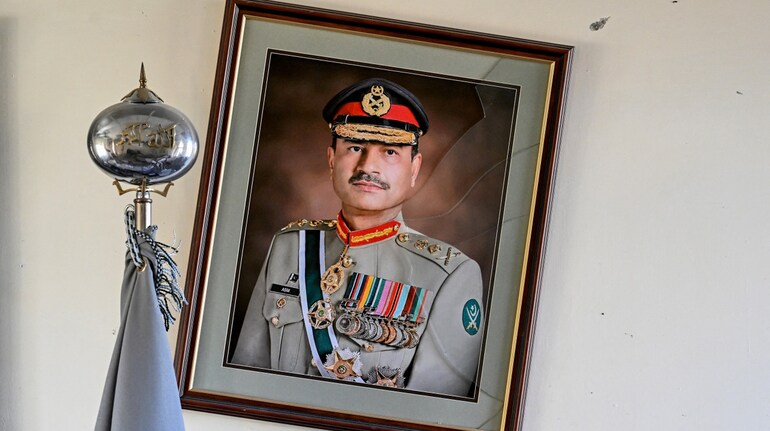

Pakistan’s political and military leadership is facing an unusually public reckoning after India walked away with a better deal in the latest trade agreement with the United States. The trigger was US President Donald Trump announcing a reduction in tariffs on Indian goods to 18 per cent, while Pakistan was left with a higher 19 per cent rate despite months of lobbying, outreach and what critics describe as outright supplication in Washington.
The difference may be just one percentage point, but in Pakistan it has exploded into a national embarrassment. Journalists, opposition leaders and social media commentators argue the outcome exposes a deeper truth. India negotiated as an equal partner. Pakistan pleaded and still came back empty-handed. The backlash has been sharpened by Prime Minister Shehbaz Sharif’s own admission days earlier that he and Army Chief Asim Munir had been travelling abroad begging for financial help.
One phone call vs months of lobbying
The India-US trade deal was announced on February 2 after a phone call between Trump and Narendra Modi. India secured a tariff cut to 18 per cent. Pakistan, despite high-level visits and persistent engagement with the Trump administration, remained stuck at 19 per cent.
That outcome has become a symbol of what critics call a collapse of Pakistan’s diplomatic leverage. Commentators noted that India managed the lower tariff despite refusing to abandon its strategic positions outright, while Pakistan was still penalised after conceding ground repeatedly.
Opposition figures from Pakistan Tehreek-e-Insaf contrasted India’s “hard bargain” with what they described as Islamabad’s culture of “diplomatic begging.” Several social media users mocked the repeated Washington trips by Pakistan’s leadership, likening them to “rickshaw-style shuttling” undertaken for regime survival rather than national interest.
Journalists tear into leadership
Prominent journalist Asad Toor said the tariff outcome was especially humiliating given Pakistan’s economic weakness. He pointed to falling exports, vanishing foreign investment and a state that has lost all negotiating power.
Strategic analyst and vlogger Moeed Pirzada was even more scathing, directly targeting the narrative built around personal rapport with Trump.
“We were told that the ‘Field Marshal’ title and the ‘minerals briefcase’ were the keys to Trump’s heart,” Pirzada said. “Yet Modi gets a phone call and an 18% rate after defying the US on Russia, while our leadership gets 19% after doing everything asked of them. This is not diplomacy; it is transactional surrender.”
Journalist Imran Riaz Khan echoed that frustration, attacking what he called the government’s sales pitch diplomacy.
“The ‘Salesman-in-Chief’ strategy has failed. You can give away Balochistan’s minerals in wooden boxes, but you cannot buy respect,” he said.
Pakistani economist Javed Hassan wrote on X: "India did not nominate Trump for a Nobel prize, yet still gets better tariff deal than Pakistan. Other than the opportunity to apply extra layers of cherry blossom what has Trump actually given to Pakistan?"
India did not nominate Trump for a Nobel prize, yet still gets better tariff deal than Pakistan. Other than the opportunity to apply extra layers of cherry blossom what has Trump actually given to Pakistan?— Javed Hassan (@javedhassan) February 2, 2026
‘Mistress’ jibe and viral mockery
The ridicule intensified after a viral post cited by Moneycontrol compared Asim Munir’s engagement with Trump to that of a disposable subordinate.
“Donald Trump has treated the Field Marshal like that mistress who makes her lover do all the illegal and dirty work, and when the time comes to give or take something, she says I am compelled to obey my family’s decision,’” wrote Pakistani user Umar Ali, in a post widely shared across X.
The comparison struck a nerve, especially after it emerged that Pakistan still failed to secure tariff parity with India despite offering minerals, strategic cooperation and repeated assurances.
Claims of narrative management
Imran Riaz Khan also claimed the India-US deal went beyond economics, alleging that Trump had quietly agreed to stop publicly referencing the May 2025 India-Pakistan air skirmishes as part of a broader understanding with New Delhi.
According to Khan, the agreement effectively “buys a new history,” allowing India to protect its global image while Pakistan gained little beyond symbolic engagement.
‘Partner vs shopkeeper’ comparison
Digital creator Wajahat Khan summed up the prevailing sentiment online.
“Trump is a businessman. He saw a manager and a shopkeeper and gave them a shopkeeper’s deal. India came as a partner and walked away with the 18 per cent prize. This is the cost of having a government without the backbone of a public mandate,” he said.
Anger spills online
Hashtags criticising the Shehbaz-Munir leadership trended across Pakistani social media, with users accusing the establishment of trading national interest for personal power.
“India protected its interests; we only protected the survival of a few individuals in power,” read one widely shared post.
As Pakistan grapples with economic stress and a credibility crisis abroad, analysts warn that the tariff controversy may deepen internal fractures and further erode faith in the country’s foreign policy direction.
Discover the latest Business News, Sensex, and Nifty updates. Obtain Personal Finance insights, tax queries, and expert opinions on Moneycontrol or download the Moneycontrol App to stay updated!
Find the best of Al News in one place, specially curated for you every weekend.
Stay on top of the latest tech trends and biggest startup news.