





Having covered the banking sector for around 25 years, journalist Tamal Bandyopadhyay veers away from monetary policy and banking decision to focus on key bankers themselves, in his latest book Roller Coaster: An Affair with Banking.
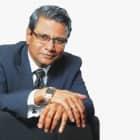
Among the bankers whose quirks, stories, and leadership journeys Bandyopadhyay shares in the book are Uday Kotak, Sandeep Bakhshi, Amitabh Chaudhry, V. Vaidyanathan, C. Rangarajan, Bimal Jalan, Y.V. Reddy, D. Subbarao, Raghuram Rajan, Urjit Patel, Shaktikanta Das and ICICI managing director and CEO Sandeep Bakhshi—a section from the chapter on Bakhshi is excerpted here:
No Limelight Seeker
Unlike (Chanda) Kochhar, Bakhshi does not believe in grabbing the limelight. He did not take his salary in the COVID-hit financial year 2020–21, but the bank did not make this a public relations topic. The media got to know this only from the bank’s annual report for the year.
A journalist once told Bakhshi that he had done a fantastic job with the bank’s mobile banking app iMobile Pay, which was adjudged as one of the best in the world and far ahead of the competition in India. Bakhshi attributed this to the team at ICICI Bank. He reminded the journalist that the app was launched in 2008.
Bakhshi had taken the helm in 2018 after Kochhar was shown the door.
When the journalist pointed out that the bank had transformed the app to allow customers of any bank to use it (this was done in December 2020), a first-of-its-kind initiative in India, Bakhshi said: “We do upgrade our app every now and then; it’s like upgrading software for any of your devices.”
This attitude is rare in the world of bankers, where people happily take credit for good work done by others.
At internal presentations prepared by group heads, Bakhshi doesn’t like superlative adjectives such as “dominant” or “dominating” (e.g., “The bank is holding a dominant position in a particular business segment”) as he feels nothing is permanent in the stacking order. If the bank is doing well in a business, he prefers focussing on maintaining the position instead of bragging about it.
 340 pages; Rs 499.
Bakhshi hates hierarchy—something omnipresent in Indian banking. This is evident from the way he conducts meetings—the order of speakers, the order of seating, and so on. He calls up people even four-five ranks junior to him, something unheard of in ICICI Bank’s history. He has allowed all senior leaders (some 400 top managers) to have lunch in the room that was earlier earmarked for directors. Kochhar used to occupy the head of the table, always.
Bakhshi also threw out a rule that an employee would get a loan for a car allowed by the pay grade. Now, the loan amount is linked to the pay grade, but the employee can buy any car they want. As a result, many employees drive fancy vehicles today, while Bakhshi himself has a Mahindra SUV and a mid-sized sedan. Earlier, only the directors used to drive top-end cars.
While we are on the topic of cars: One of Bakhshi’s colleagues in ICICI Lombard General Insurance Company told me this story to explain his style of leadership.
Before his current assignment, Bakhshi had stints at both the insurance outfits in the group as MD and CEO—ICICI Prudential Life Insurance Company as well as ICICI Lombard. Lokanath P. Kar, fondly called “Elpee sir” by his colleagues, who left ICICI Lombard in early 2022 as the chief legal and compliance officer, told me this story.
Kar joined ICICI Lombard in 2006 when Bakhshi was the CEO. Those days, Kar used to live in Goregaon, in the Western Suburbs, and travel to the office, located at Zenith House on Keshavrao Khadye Marg, Mahalaxmi, by his car.
Driving Lesson, Life Lesson
Kar, a wildlife enthusiast, was fond of music and literature, and there was great chemistry between Bakhshi and him. Kar had his car and a driving licence, but he used to suffer from amaxophobia, or the fear of driving.
Bakhshi was quietly hatching a plan to cure this! And he got the opportunity on a rainy day in July 2007.
Fed up with the frequent absence of his driver, Kar decided to drive his car to the office that day. Pradipta Sahu, a colleague who used to be the national manager of HR in the company, and a neighbour, offered to accompany him. Pradipta kept guiding and encouraging Kar all the way while he drove.
In the evening, while it was time to go home, Pradipta informed Kar that he had already left the office to attend a meeting and would go home from there.
It was heavily raining that Monday evening. Kar sat in the driver’s seat but could not muster the courage to drive the vehicle home through the busy Tulsi Pipe Road that monsoon evening in Mumbai. He got out of the car and didn’t know what was to be done.
Seeing him standing at the portico, Bakhshi enquired if Kar had his car. A little embarrassed, Kar nodded, pointed to his parked car, and said he was waiting for Pradipta to join.
Bakhshi smiled and got into his car.
After moving a few meters, his car reversed, and Bakhshi dropped the window and asked Kar pointedly, “LP! Do you know how to drive?” Kar was stunned and didn’t know what to say. Finally, Bakhshi got down from his car, put his arm around Kar’s shoulder, and said: “What’s the big deal about driving a car? All that you have to do is to be on the wheel and manage the immediate situations. Home will come on its own.”
He insisted that Kar get into the car and take to the wheel. Before Kar started, Bakhshi repeated: “Never ever drive to reach home. Keep that objective at the back of your mind. Remain focused only on what you see through the windscreen.” He stood there while Kar slowly drove away. After Kar reached home, he received a call from Bakhshi. He sounded a little worried and enquired if Kar had reached home safely.
“You know, LP, I was very worried all this while.”
For Kar, it was not a driving lesson; it was a life lesson.
He drove down safely—and never looked back. Soon, he started driving to his office and within a few months, he started driving long distances such as Lonavala and Khandala. That was Bakhshi’s master stroke to kill Kar’s fear of driving.
This is just one example of how he helps his colleagues realise their potential and get the best out of them.
Another incident shows a different side of Bakhshi’s character as a leader.
It was March 2008, and ICICI Lombard was falling marginally short of its annual topline target. Being at the fag- end of the financial year, the company’s entire management team was trying hard to write a few crores of premium so that it could maintain its “never-missed-the-target” reputation.
There was a state government-sponsored health insurance scheme for mass insurance cover, and the government had invited ICICI Lombard to make a presentation. The existing scheme was expiring in the second half of March. The state government was eager to close the insurance contract before the existing cover’s expiry to ensure there was no gap in the beneficiaries’ cover.
The proposed premium for the scheme was enough to take ICICI Lombard far ahead of its annual budget. All of them were too eager to close the contract and book the premium before the end of the financial year.
The senior state bureaucrat who was responsible for the scheme wanted a clause to be inserted in the contract, which, for a certain set of claims, would take away the right of the company to determine whether the claim falls within the scope of the cover and vests that right with the state government. If this was accepted, the company would simply act upon the government’s instructions on determining entitlement for that set of claims. In a typical insurance structure, this amounts to handing over the claims pen to the insured.
Being responsible for contracts, Kar was negotiating the terms. He was keen on bagging the project as it would help ICICI Lombard meet its target. At the same time, he was aware that such a clause would certainly jeopardise the company’s interests. The state government was unwilling to bend and make any change in the contract which was to be signed the next day.
Kar called up Bakhshi and explained the situation. “Let me come along with you tomorrow; we will see,” was his response. The next morning, Kar and his boss went to the office of the senior bureaucrat, who was almost ready to sign the contract. Bakhshi, in his typical yogic expression, tried to explain to him how difficult it was for the company to accept such a condition. However, the bureaucrat, who was anticipating this, expressed his inability to consider his request. Bakhshi simply stood up and said he would not sign the contract.
The bureaucrat was not expecting this. He got furious. But Bakhshi held Kar’s hand and calmly walked away from the office.
While driving back to the office, Kar asked him, “Shouldn’t we have looked for some alternatives?” Bakhshi’s answer was: “It’s not about doing a business deal; it is always about performing upon the business one commits. I know none of you would enjoy this business. Just for the sake of meeting the target, I can’t undertake a tiring responsibility for all of us.”
For the record, ICICI Lombard did not miss the budget that year.
As the CEO of India’s second-largest private bank, Bakhshi sees himself playing the role of a trustee. Life is temporary, and the time spent in the corner office is even more transient, while the kurshi of the CEO is permanent. Why take yourself so seriously and behave like an emperor?
Excerpted with permission from Tamal Bandyopadhyay’s Roller Coaster: An Affair with Banking published by Jaico Publishing House. The book is slated to be released on 10 January.
Discover the latest Business News, Sensex, and Nifty updates. Obtain Personal Finance insights, tax queries, and expert opinions on Moneycontrol or download the Moneycontrol App to stay updated!
Find the best of Al News in one place, specially curated for you every weekend.
Stay on top of the latest tech trends and biggest startup news.




