-
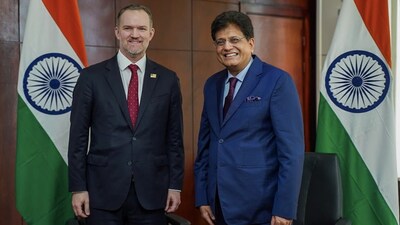
Goyal, USTR Greer hold talks on India-US trade deal at WTO meet
Goyal, in a post on X, said he had a 'production discussion' with Greer on various topics, including India-US trade deal and WTO agenda
-

India calls for trust, consensus at WTO’s MC14, pushes action on ‘past mandates’
Piyush Goyal said restoring confidence among members was essential to revitalise the WTO’s functioning
-
Piyush Goyal urges careful reconsideration of e-commerce moratorium, pushes for WTO reforms
In a statement circulated at the WTO’s 14th Ministerial Conference (MC14) on March 26, Goyal flagged the 'potentially significant implications' of the moratorium
-
No need to hoard LPG: Piyush Goyal says fuel supply stable despite war
According to Piyush Goyal, the commerce ministry is also preparing standard operating procedures to support exporters if shipments need to be returned or rerouted.
-
India, UK trade pact may come into effect in one month from now: Goyal
Goyal said that it will be the fastest agreement to be approved by the UK parliament
-
Businesses have to take full advantage of FTAs for India to take 'big leap forward': Piyush Goyal
Goyal said that start-ups, corporates, and MSMEs must work towards making good use of FTAs.
-
India got best trade deal with US among competing nations; both share powerful relationship: Piyush Goyal
Commerce and Industry Minister Piyush Goyal said that India-US relationship is strong, multi-dimensional, and not only about trade as there is a huge technology overlay on it.
-
Middle East tensions: 'We will use every policy tool to support exporters,' says Piyush Goyal
Exporters are facing issues with regard to the movement of consignments to West Asia following the joint attack launched by the US and Israel on Iran
-
Government forms inter-ministerial group to ensure supply chain resilience amid Middle East crisis
Goyal said an Inter-Ministerial Group (IMG) for Supply Chain Resilience has been created to strengthen coordination and monitoring.
-
Rising Bharat Summit 2026 | Piyush Goyal Answers the Big India–US Trade Deal Question
-
India will start trade talks with US as soon as there is more clarity: Piyush Goyal
The Indian team was scheduled to start the three-day meeting on February 23 in the US
-
With key trade deals sealed, India shifts focus to quality-driven manufacturing
Goyal said PM Modi has placed big focus on 'quality consciousness' to make Indian products globally recognisable
-
70% of global GDP, two-thirds of global trade now open to India: Piyush Goyal
Goyal stated that India today engages with developed economies with confidence, safeguarding sensitive sectors while securing gains in areas of competitive strength
-
'IT will power AI's future': Piyush Goyal dismisses market, investors fears
Addressing a gathering at the GEC event in Mumbai, Goyal said recent market unease over the IT sector does not reflect the sector’s long-term prospects.
-
Piyush Goyal says IT firms well prepared for AI shift, recommends tech stocks
Speaking at the launch of NITI Aayog’s Frontier Tech Hub roadmap on India’s Technology Services in New Delhi, Goyal said companies should not take a “depressed outlook” on the future.
-
'Certain pulses' to attract reduced tariffs under India-US deal: US fact sheet
Under the new agreement, India will eliminate or reduce tariffs on all U.S. industrial goods and a wide range of U.S. food and agricultural products, including dried distillers’ grains (DDGs), red sorghum, tree nuts, fresh and processed fruit, certain pulses, soybean oil, wine and spirits, and additional products.
-
'US would’ve won if only tariffs were ...': Piyush Goyal's hilarious cricket dig at Sergio Gor | Watch
India, on February 7, opened their ICC Men’s T20 World Cup 2026 campaign with a 29-run win over the U.S. at Wankhede, restricting them to 132 for eight while chasing 162.
-
Buying US crude, LNG in India’s strategic interest as oil sources diversify: Piyush Goyal
India and the United States recently announced a framework for an Interim Trade Agreement on reciprocal and mutually beneficial trade, reaffirming their commitment to a broader Bilateral Trade Agreement (BTA) that was launched by US President Donald Trump and Prime Minister Narendra Modi
-
No difficulty for India to purchase $500 billion in US goods over next five years: Piyush Goyal
Piyush Goyal said India is already importing between $45–50 billion worth of goods from the US annually, largely in areas where domestic production is limited.
-
PM Modi and President Trump are 'Man of the Match' of India-US trade deal: Piyush Goyal to News18-India
Goyal asserted that there has been no compromise on farmers' welfare and that he has presented complete information transparently before the nation.
-
Quota-based duty concessions on apples from US; farmers fully protected: Piyush Goyal
India has imposed a minimum import price (MIP) of Rs 80 per kg and an import duty of 25 per cent on apples from the US under the proposed India-US trade pact, which is expected to be signed by mid-March.
-
American wines, motorcycles, medical devices gain from India-US interim trade pact
Under the framework, India will eliminate or cut tariffs on all US industrial goods and a broad basket of American agricultural products, including dried distillers’ grains (DDGs), red sorghum for animal feed, tree nuts, fresh and processed fruits, soybean oil, wine and spirits and additional items.
-
Section 232 carve-outs could ease tariffs on about $5 billion of Indian exports to US
In 2024, more than $8 billion worth of Indian exports were subject to Section 232 tariffs, which range between 25% and 50% depending on product categories. Nearly $4 billion of this exposure came from automobiles and auto components
-
Harley-Davidson motorcycles to enter India duty-free under interim US agreement
India-US Trade Deal: Under the interim agreement, India will reduce duties on high-end American cars, but no tariff concessions have been extended to electric vehicles.
-
Reduced tariffs, preferential access, $30 trillion market: India, US unveil interim trade pact | Key highlights
Piyush Goyal said the interim framework would open up a $30 trillion market for Indian exporters, particularly benefiting MSMEs, farmers and fishermen.