


co-presented by
ASSOCIATE SPONSORS
co-presented by


ASSOCIATE SPONSORS


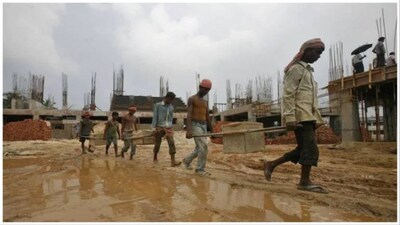
New data reveal a decade of intense income and wealth concentration in India, creating a dual economy that is redefining winners and losers across consumer and asset markets

In urban centres, the growth in consumption spending was faster for STs and OBCs, at 11.4 and 9.1 percent, respectively, compared to the general category.

PRICE Household Surveys show that post Covid, the recovery has been more egalitarian, says CEA

"One of the key drivers of reduced inequality has been the government’s focus on financial inclusion. The number of adults with bank accounts in India has more than doubled since 2011."

The focus should be less on the gap between rich and poor and more on how to ensure that economic gains are widely shared

UN rights chief Volker Turk warned that the world faces a choice between continuing on a destructive path of military escalation, repression, and inequality, or changing course to avert a dystopian future.

The Gini coefficient for total consumption expenditure, the most commonly used measure of inequality, declined for both rural and urban India. While it decreased to 0.266 in 2022-23 from 0.283 in 2011-12 for the rural sector, for urban households it fell to 0.314 from 0.363 for the same period.

Piling more taxes on the rich would disincentivise savings in a country like India. Also, the top income tax rate, including cess and surcharge, is already too high at 40 percent. How then can the government check inequality of income and wealth without being 'anti-business and anti-rich'?
India’s rank in the Human Development Index (HDI) is a lowly 134, but it’s even lower, at 140, when the index is adjusted for inequality

The income share of top 1% is among the very highest in the world, higher than even South Africa, Brazil and US, a report by World Inequality Lab said.

Though inequality among countries has decreased, there is an increase in inequality within those countries, executives said.

Noted economist Arvind Panagariya slams reports by Oxfam and Azim Premji University claiming inequality rose substantially. He explains that the same data has been interpreted differently by the National Bureau of Economic Research. Panagariya in the paper states that inequality went down during the pandemic because growth went down. Watch this exclusive conversation on Moneycontrol.

Based on modelling by MIT scientists of a world destabilised by growing consumption, the 1972 "Limits To Growth" simulation has been attacked as flawed by some but applauded by others as prescient of accelerating planetary stress.
New Delhi will need to double down as red-hot inflation erodes purchasing power at the bottom of the pyramid, amidst the prolonged Russia-Ukraine war.
Deng Xiaoping had said, ‘We should let some people and some regions get rich first’, adding, ‘for the purpose of achieving common prosperity faster’

Economic inequality is now contributing to the deaths of at least 21,300 people each day finds a study by Oxfam International.

Half or more of the increasing gap in wages among American workers over the last 40 years is attributed to the automation of tasks formerly handled by human workers

The 2021 G20 Summit is scheduled to take place in Rome, Italy on October 30-31. Prime Minister Narendra Modi is also scheduled to visit the two-day summit.

The debate rages on the legitimacy and consequences of what central banks are doing, especially in this era of crises

New Delhi/Davos, Jan 25 Accelerating inequality, the market dominance of tech platforms and remote working are likely to be the longest-las..

Why are American billionaires doing so well while so many other Americans suffer? Part of the story is garden-variety American inequality

As Deng Xiaoping said, let some people get rich first

According to the Commitment to Reducing Inequality Index developed by Oxfam and Development Finance International, Nigeria, Singapore, India and Argentina are among a group of governments that are fuelling inequality.

Income tax data shows an unnamed taxpayer owed the government Rs 21,870 crore for the assessment year 2014-15.

The United States ranked 25th on the index of 149 countries, scoring poorly on promoting clean energy and fighting inequality and climate change, said the ranking by the UN. Sustainable Development Solutions Network and Bertelsmann Stiftung, a German social responsibility foundation.


