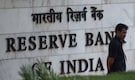
From cashbacks to discounts to waiver of processing fees on home loans, many banks have lined up goodies for consumers. Make sure to check if there are offers with your credit and debit cards as well.
Even in the first five months of the current fiscal, home loan outstanding of banks has clocked double-digit growth, despite the Reserve Bank raising the key interest rate thrice during this period by a whopping 140 basis points (bps), which led to a hike in the home loan rate.
Despite RBI’s 50-bps rate increase, ten banks and housing finance companies continue to offer interest rates of up to 8.1 percent on floating-rate home loans, considered to be cheapest in the market.
Gross of transfers through interbank participation certificates and bills rediscounted, the bank's advances grew by around 25.8 per cent over September 30, 2021
Credit growth will be led by strong demand from corporate and individual borrowers as well as micro, small and medium enterprises, rating company CRISIL said.
As per RBI’s latest data, banks’ outstanding non-food credit grew 16 per cent year-on-year (YoY) to Rs 124.30 lakh crore as on August 26, higher than 6.7 per cent growth registered a year ago.
Today’s policy rate action was per expectations. Going by statements in the press conference, future rate action will depend on how the inflation pans out. It is likely there would be another rate hike of 25-35 basis points on December 7, 2022.
The fresh hike in repo rate is likely to have a market-wide impact on borrowers as existing EMIs, as well as new loans, are set to become costlier. The rate hike has given momentum to rising FD interest rates.
The death of a 27-year-old pregnant woman in Jharkhand's Hazaribagh, after being crushed under the wheels of a vehicle financed by Mahindra Finance, once again throws the spotlight on the strong-arm tactics NBFCs apply for loan recovery.
HDFC Bank and ICICI Bank have launched campaigns to lure festive shoppers with discounts on a range of products and services.
EMIs are one of the most attractive features of a credit card. But beware: always ensure that you spend within limits, so that you are able to pay your bills on time and avoid the hefty finance charges and penalties that can lead to a debt spiral.
Builders are trying to drive demand by offering discounts and offering to bear some of the interest burden.
The availability of credit with just a click of a button lures us to borrow more and more. Taking a loan is not bad, but it becomes a problem when you borrow for things that are not a necessity. Loan apps have made it easier to borrow, but also made it easier to get trapped in the vicious cycle of borrowing to repay. So here are a few points to keep in mind to borrow responsibly, so that loan apps don’t kill you.
The monthly collection ratios (MCR) of securitised pools rated by Crisil Ratings have remained ”largely unaffected” by the macroeconomic challenges, the agency said.
Low base, small ticket size loans, working capital requirements, and a shift to bank borrowings on account of high yields in the capital market continue to drive growth, rating agency CARE Edge said in a note on Tuesday.
While the EMI reduction option would result in higher disposable income for the borrower, opting for the tenure reduction option would result in higher savings in overall interest cost.
According to independent analyses, the people eligible for debt relief are disproportionately young and Black. And they are concentrated in the middle band of Americans by income, defined as households earning between $51,000 and $82,000 a year.
The move could boost support for his fellow Democrats in the November congressional elections, but some economists said it may fuel inflation and some Republicans in the U.S. Congress questioned whether the president had the legal authority to cancel the debt.
Biden unveils plan to cancel $10,000 in federal student loans.
On August 5, Indostar Capital reported its highest ever quarterly net loss for the quarter ended March at Rs 767.2 crore.
Strap: The ten cheapest education loan offers range from 6.95-8.65 percent, with state-owned majors Central Bank of India, Punjab National Bank and State Bank of India occupying the top three slots.
The increase in lending rate comes days after the Reserve Bank of India hiked its benchmark lending rate by 50 basis points to tame inflation.
In the June quarter, Bank of Maharashtra (BoM) and State Bank of India (SBI) were in the lowest quartile as far as Gross Non Performing Assets (NPAs) and net NPAs were concerned, according to an analysis of the quarterly financial numbers published by the public sector lenders.
The top five banks by asset size accounted for half of the reduction in provisions and 53 percent of the drop in bad loans. This means small lenders are yet to recover completely