On March 26, 2020, days after Prime Minister Narendra Modi announced a three-week national lockdown, finance minister Nirmala Sitharaman announced a Rs 1.7 lakh crore fiscal support package that clearly set the government’s priorities about who needs to be protected the most from the devastating disruptions that the Coronavirus pandemic had caused.
The government had picked those living on the margins, those with limited savings and those with weak borrowing power as the first set of people for handholding. These were daily wage earners, construction workers, farmers and women with low income.
Many of these eke out a subsistence living, spending a very large proportion of their income on food, leaving very little to spend on other “non-essentials” or aspirational products and services.
India was then reporting daily Covid-19 positive cases in hundreds.
Lives or Livelihood?In March, when the virus started spreading rapidly, the government had to make a hard trade-off of choosing between lives and livelihood. It chose the former, dealing a sapping blow to the economy.
Curative medicines, let alone vaccines, were still a very distant certainty. The impact on the economy was visible. As activity came to a screeching halt, the India slipped into a recession. Real or inflation-adjusted gross domestic product fell by over 24 percent in the April-June quarter, followed by a more than seven percent shrinkage in the July-September quarter.
The following quarter, however, marked a swift recovery, with the real GDP growing 0.4 percent. The big takeaway from this quarter was that four sectors—manufacturing, electricity, construction, and financial services—recorded growth compared to the same quarter in the previous year.
Effectively, this implied that the output from factories, construction activity such as roads and highways, electricity production and the value added in financial, real estate and professional services, during October-December 2020 was greater not just over the previous three months, but also compared to last year when the state of the economy was far rosier than it is now.
During October to December, Indian containerised trade grew 13.2 percent as compared to the same period in 2019. This was the first time in the year when both exports and imports grew in a quarter.
This swing – from a 24 percent GDP contraction in April-June to growth in many sectors by December—was aided by a steady decline in the number of Covid-19 cases in India, the gradual opening up of the economy, and expectations of an early vaccination drive to contain the virus’ spread.
By March 21, 2021, India had administered more than 44 million Covid-19 vaccine shots. Over the last few days more than two million Covid-19 vaccine shots have been administered daily.
"There is a restless urgency in the air in India to resume high growth, and incoming data point to even contact-intensive services such as personal care, recreation and hospitality gathering traction and pace even as agriculture crosses production highs in various crops and in horticulture, and manufacturing finally shrugs off the vice-like grip of contraction,” a Reserve Bank of India (RBI) article on the state of the economy, published on March 19, said.
Mobility indicators, such as the Apple mobility index and the Google Mobility index, indicate that movement has normalised across all major cities through February and March 2021.
Don’t Let The Guard DownBut here is a caveat.
India’s daily Covid-19 caseload is now dangerously rising, crossing 40,000 a day in recent days. The positivity rate, the number of Covid-19 positive cases per 100 tests, is rapidly crawling to higher levels, including in places such as Delhi where it has crossed 1 percent, signalling a worrisome surge in cases.
This has again led to a nagging uncertainty and the haunting spectre of a return to lockdowns. India cannot afford another hard stop to the economy. For the recovery to sustain, the top 15-20 cities that account for bulk of economic value added, need to keep their wheels running.
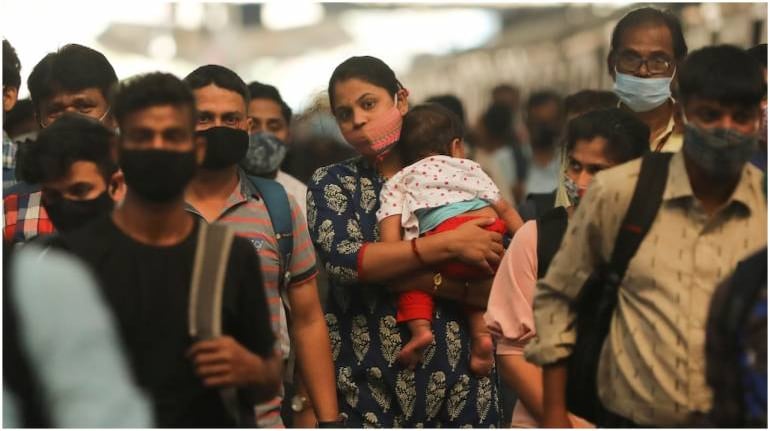
Preventing the economy falling into a deep W-shaped plunge from a fledgling V-shaped recovery hinges on two factors: mass masking up and a rapid scale up of vaccination. The role of people’s participation in both— in wearing masks and shedding vaccine hesitancy—need no emphasis.

Discover the latest Business News, Sensex, and Nifty updates. Obtain Personal Finance insights, tax queries, and expert opinions on Moneycontrol or download the Moneycontrol App to stay updated!
Find the best of Al News in one place, specially curated for you every weekend.
Stay on top of the latest tech trends and biggest startup news.