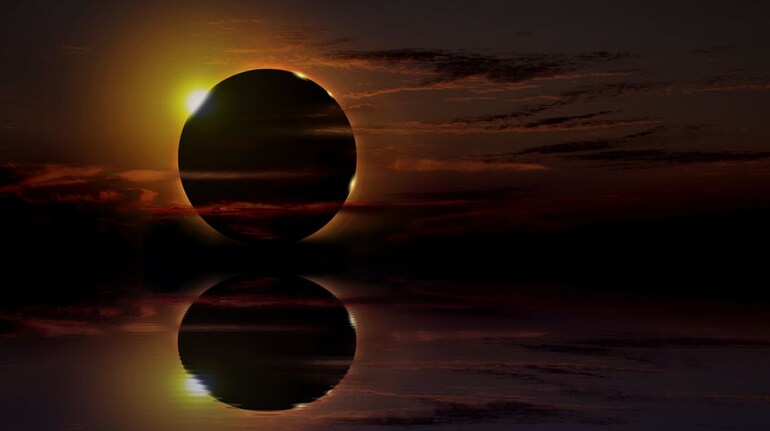
Skywatchers worldwide will witness four major eclipses in 2026, featuring two solar and two lunar events, with astronomers urging careful planning as visibility varies sharply by region, officials said.
The eclipse calendar for 2026 includes rare alignments of the Sun, Moon, and Earth. These celestial events will unfold across different continents and seasons. Two eclipses occur during the spring season. Two more follow during the autumn eclipse window. Scientists say eclipses repeat in predictable seasonal cycles. Visibility depends on location and timing. Observers are advised to note safety guidance carefully.
| Event Date | Event Name |
|---|---|
| 2026-02-17 | Annular Solar Eclipse |
| 2026-03-03 | Total Lunar Eclipse |
| 2026-08-12 | Total Solar Eclipse |
| 2026-08-27–28 | Partial Lunar Eclipse |
February 17 Annular Solar Eclipse visibility details
The first eclipse arrives 17 February 2026. It is an annular solar eclipse. The Moon will not fully cover the Sun. A bright ring will remain visible. The path of annularity crosses East Antarctica. Most regions will see only partial coverage. Partial views extend across southern Argentina and Chile. Southern Africa and surrounding oceans also see partial phases. This eclipse is not visible from North America.
Observers must use certified solar viewing protection. Direct viewing without protection is unsafe. Regular sunglasses are not suitable. Pinhole projection methods are recommended for beginners.
March 3 Total Lunar Eclipse timings explained
The second event is a total lunar eclipse on 3 March 2026. It will be visible across Asia and Australia. The Pacific Islands will also see the eclipse. North and South America will experience full visibility. The Moon enters the penumbra at 3:44 A.M. EST. Totality begins after the umbral phase starts. The eclipse ends at 9:23 A.M. EST.
Viewing is completely safe without eye protection. Binoculars or telescopes improve surface detail. Eastern North America will see the Moon setting early. Central and western regions offer better viewing conditions.
August 12 Total Solar Eclipse path explained
The most anticipated event occurs on 12 August 2026. A total solar eclipse will cross Europe and Arctic regions. The path of totality includes Greenland and Iceland. Northern Spain will also experience total darkness. Parts of Portugal lie close to the path. Most of Europe will see partial phases. Canada and northern United States get partial views.
This eclipse is not total from North America. Partial viewers must wear ISO-certified eclipse glasses. Totality viewers may observe briefly without protection. Planning tools like eclipse mapping apps are recommended.
August 27–28 Partial Lunar Eclipse details
The final eclipse spans 27 August and 28 August 2026. It is a partial lunar eclipse. Visibility includes the Americas and Europe. Africa and western Asia will also observe it. The Moon enters penumbra at 9:22 P.M. EDT. Umbra entry follows at 10:33 P.M. EDT. The eclipse ends at 3:03 A.M. EDT.
Western regions may see the Moon rising mid-eclipse. The Moon could appear low on horizons. Viewing remains safe for naked eyes. Optical aids enhance contrast during partial shading.
How eclipses differ and how to watch safely
Solar eclipses occur during new Moon phases. Lunar eclipses occur during full Moon phases. Solar events affect limited Earth regions. Lunar eclipses span entire night hemispheres. Solar viewing always requires eye protection. Lunar eclipses require no special equipment.
Astronomers advise early planning for travel and weather. Warm clothing helps during long lunar events. Eclipse seasons repeat roughly every six months. The next total solar eclipse in the United States occurs on 23 August 2044. The next lunar eclipse visible from North America occurs on 3 March 2026.
Discover the latest Business News, Sensex, and Nifty updates. Obtain Personal Finance insights, tax queries, and expert opinions on Moneycontrol or download the Moneycontrol App to stay updated!
Find the best of Al News in one place, specially curated for you every weekend.
Stay on top of the latest tech trends and biggest startup news.