The dollar index fell for a fourth consecutive day on October 3 after touching its highest level in two decade
The state-run company blamed the 40 per cent increase in input prices by the government from October 1 for the steep increase in the retail prices along with the supply cut.
At the sixth fortnightly review, the government reduced the tax on domestically produced crude oil to Rs 8,000 per tonne from Rs 10,500 per tonne
Also, this will be the third increase in rates since April 2019 and comes on the back of firming benchmark international prices.
Globally, gold was trading 0.67 per cent higher at USD 1,679.80 per ounce in New York.
In the international market, gold was trading higher at USD 1,642 per ounce while silver was up at USD 18.57 per ounce.
In the previous trade, the precious metal had closed at Rs 49,775 per 10 gram.
Find out the latest in commodities with Karunya Rao and Manisha Gupta.
Petrol and diesel in Delhi cost Rs 96.72 and Rs 89.62 a litre, respectively. In Mumbai, petrol is being sold for Rs 106.31 per litre and diesel for Rs 94.27.
The statement by the food ministry came a day after its factsheet alluded to a pricing pressure and rates of rice rising in the near term.
The rupee slipped below the 81-mark against the US dollar for the first time in early trade on Friday, weighed down by the strong USD and risk-off sentiment among investors. Watch Karunya Rao in conversation with Latha Venkatesh as the latter decodes the key factors weakening INR, and the likely course ahead for the domestic currency.
The statement was made in the fact sheet that the ministry issued detailing reasoning behind recent amendments to the India's rice export policy.
The e-auction for eight coal mines will be conducted on September 13 and for two coal mines on September 14, Ministry of Coal added.
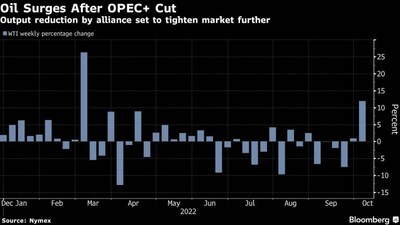
Brent crude rose $2.70, or 3%, to $91.85 a barrel by 11:22 a.m. EDT (1522 GMT). U.S. West Texas Intermediate (WTI) crude rose $2.63, or 3.2%, to $86.17 a barrel.
The gold market continues to see a slow and steady reduction of exchange-traded funds (ETF) and trading volumes on U.S. futures markets continue to weaken
Silver imports into India surged to 5,100 tonnes in the first seven months of this year. Why are imports surging? Who's buying? Find out here with Karunya Rao and Manisha Gupta.
Spot gold was down 0.4% at $1,711.10 per ounce by 10:02 a.m. EST (1402 GMT), after hitting a more than one-week high earlier in the session. U.S. gold futures fell 0.4% to $1,721.40.
Oil prices edged higher on Thursday, but remained near eight-month lows, as China's extension of COVID-19 lockdown measures exacerbated concerns a slowdown in global economic activity would hit fuel demand.
Brent crude futures lost 40 cents, or 0.4%, to $87.60 per barrel by 1002 GMT, near a late-January low. U.S. crude futures were down 41 cents, or 0.5%, at $81.53 a barrel, near a mid-January low.
Spot gold was little changed at $1,717.30 per ounce, as of 0852 GMT, after rising nearly 1% in the previous session. U.S. gold futures edged 0.1% higher to $1,728.60.
Several world central banks are slated to keep hiking rates to fight inflation, but economists have said the US appears better placed to weather the storms. That has boosted the dollar to a 24-year peak against the yen and a 37-year high versus sterling
Fuel prices have stayed unchanged for more than a month
Karunya Rao catches up with Sugandha Sachdeva of Religare Broking to decode why metal prices are declining
Brent crude futures for October, due to expire on Wednesday, were down $2.51 at $96.80 a barrel following Tuesday's $5.78 loss. The more active November contract was down 62 cents to $97.22 a barrel.
Spot gold fell 0.5% to $1,715.79 an ounce by 09:55 a.m. ET (1355 GMT). Bullion has lost about 3% so far in August, and was set for its fifth straight month of declines.