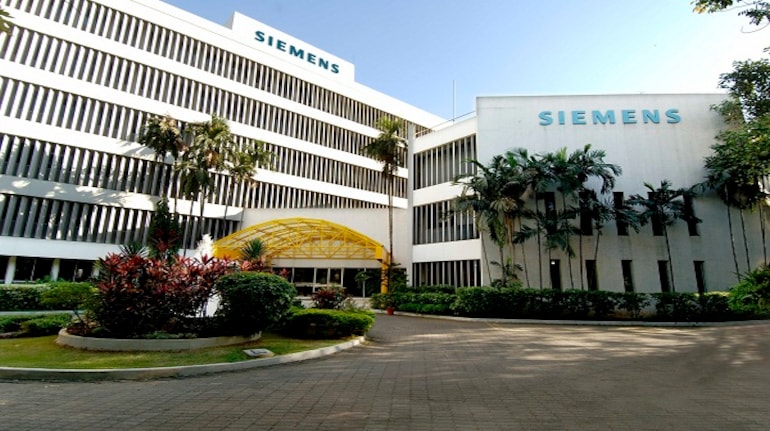
Shares of Siemens India showed brisk gains after the company announced on Friday that the board proposal to sell its LV motors business to a privately owned subsidiary was voted out by minority shareholders in a postal ballot. But the day after on August 1, the stock was trading 2 percent lower. While there is still a lack of clarity about what lies ahead for the LV business, and the long history of questionable related-party transactions at Siemens that does not inspire investor confidence, fund managers are approaching the stock with mixed emotions. A fund manager said, the company’s governance lapses are at odds with its high growth prospects as the capex cycle is turning. Currently, Siemens’ target price put out by most analysts exceed the current price.
On May 19, Siemens India’s board approved the move to carve out its low voltage motors division to a private company at a valuation of Rs 2,200 crore. The decision left a bitter taste among investors. Fund managers were anguished by the deal which was seen as “shafting” minority shareholders. The stock reacted sharply with a 10 percent correction on May 22, with most analysts red-flagging the raw deal for minority shareholders and cutting the target price for the stock and/or downgrading their ratings.
Institutional shareholders hold a 12.79 percent stake in the company, while individual shareholders or the retail public hold 7.62 percent. Siemens AG, the German parent, is the biggest shareholder with a 75 percent share. Decisions involving related-party transactions are put to vote among minority shareholders, and passed based on the verdict of the “majority of minority.” The board decision was voted out at a postal ballot that concluded on Friday.
“Possible scenarios ahead among others include the parent offering higher value to the shareholders or the LV business itself in India being marginalised or the sale seeing some delay till some other solution is found. Any adverse change to the construct of the India business will be a negative, while a materially higher price will be a positive,” Jeffries said in a report.
The history of lapses
Over the years, Siemens has fallen into disrepute for short-changing investors with a number of deals involving the purchase and sale of businesses at valuations favourable for its German parent, and unfair to minority shareholders of Siemens India, the listed entity. Axis Capital analysts captured investors ire in their report dated May 22: “To err once is human, but to err again and again is…”
An analysis of deals made by the listed company since 2006 shows several purchases, including those of loss-making companies, at high valuations, and sales to wholly-owned subsidiaries or private entities at high valuations.
Back in 2006, the company purchased the automotive division of Siemens AG, Siemens VDO, which had a loss of Rs 3 billion. It was seen as a very expensive purchase, especially because of VDO’s losses. A year down the line, in October 2007, Siemens VDO was sold to a wholly-owned subsidiary at Rs 1.7 billion, about 40 percent lower than the acquisition price paid barely 18 months ago. VDO was one of the global leaders in CRDI technology, second only to Bosch. And diesel engines were undergoing technology transformation when Siemens decided to take it private.
Then again, in April 2007, the company decided to sell its communication network division at a consideration of Rs 580 million to the parent’s wholly-owned subsidiary. Its deal valuation was very low according to analysts, and that business (Nokia-Siemens) today is one of the leading player in 5G and is now approved for PLI. Similarly, Siemens Public Communication Network was also sold at book value, in the following year i.e. in 2008. “The list of sale and purchases is fairly long, and every single time, it’s the same story,” says a fund manager.
Another deal that stood out for bad faith was the sale of the information technology business in 2009. The business was sold to a wholly owned subsidiary for Rs 4.49 billion which was to be paid through a dividend pay-out of Rs 2.1 billion from Siemens Information Systems and a cash consideration of Rs 2.4 billion from Siemens AG. Siemens AG paid a historical multiple of 5.6x earnings, which was a significant discount to the prevailing multiple of 20x for the industry. In terms of EV/Sales, the deal was valued at 0.3x as against 7.5x for the industry. What stood out for analysts was that the business’s Ebit margins had dropped from 25 percent to 7 percent in two years prior to the sale. “The IT business was both a high-growth and high-margin business. There was nothing peculiar about the business at that time that could have caused margins to see such a serious compression. It was clear the company had suppressed profits,” recalls an analyst.
At the time, such decisions were not put to a shareholder vote. So, despite the hue and cry by investors, the company could take the company private. Thereafter, Sebi came out with the norms for related party transactions. Siemens then decided to take its stake up from 51 percent to 75 percent in 2009. And the saga of sales and purchases continued. Even last year, the company sold its ‘large drive’ business to its parent’s wholly owned subsidiary for Rs 4.4 billion, at an implied valuation of 1x EV/sales.
The LV deal
The deal on the table this time– the sale of low voltage motors business was being valued at 2x EV/Sales, which analysts contested was very low. Siemens overall, is valued at over 8x EV/Sales, considering FY22 revenue of Rs 15,255 crore and the current market-cap of Rs 1. 22 lakh crores. If you look at it from the prism of profits, the business contributes nine percent to its bottom line, but the consideration paid for this business was only 1.8 percent of the total market-cap of the company, translating into a huge gap, analysts argued. The sale looked even more indefensible when you consider the fact that it is happening at a time when the domestic market is showing strong demand tailwinds for LV motors and other dominant players like CG Power and ABB India are consolidating their market share by expanding capacities. The prospects of the business are actually brightening up now. “This is not any different from the past. Whenever a business is poised to do better, the company likes to take it private,” said a fund manager.
The company, however, defended the sale as well as the valuations. A detailed valuation report had not been shared by the company, but it said it had been executed by Grant Thronton. The basis for valuation, according to the company, was a combination of discounted cash flow of the business and multiple for comparable businesses. “The management did not share all the assumptions and logic for calculation of the fair price,” an analyst claimed.
According to analysts, the closest company for comparison is CG Power, which is quoting at close to 7x EV/Sales and 50x EV/Ebitda based on FY22 numbers. The other competitor is ABB. Siemens enjoys an Ebit margin of 12.5 percent for the motor business, but its margin for the company overall was 10.9 percent in FY22. “The motor business for Siemens is an asset-light business with potentially very high returns and cash generation. Theoretically, it can enjoy infinite return because it enjoys negative capital employed,” explained an analyst. That’s because Siemens get its motors outsourced from local players, does quality checks, brands them as Siemens, and distributes them through its channels.
Besides, the market for LV Motors is highly consolidated with CG Power roughly having about 35 percent market share, ABB about 20 percent share and Siemens about 11 percent. Siemens has stated that it would like to get out of the business because it could get commoditised in the future. “How can a business where the top three players constitute more than 60 percent of the business be commoditised,” questioned the analyst.
Globally and in India, there is a large push around energy efficiency. Motors are part of all shopfloors and there is a distinct need for energy-efficient solutions and multinationals like Siemens are at a great advantage with their technology around energy-efficient products and solutions, said another analyst. That’s one of the reasons why the market is willing to give these companies very high multiples despite the well-known governance issues.
The trade-off
At this point, what is playing in favour of Siemens is that the overall capex cycle is turning which means its profits can go up disproportionately as operating leverage kicks in. Operating leverage is a measure of fixed costs as proportion of the total costs of a company. When capital-intensive, cyclical companies come out of a down cycle, they are usually clocking lower sales than their capacities would allow. As sales grow, their fixed costs get divided over a larger sales volume, supercharging profits.
Nomura in its latest report said, Siemens is a play on the railways and transmission capex cycle in India and should surprise on earnings as operating leverage plays out. The brokerage expects a compounded growth of 36 percent between FY22-25, with a jump in return on equity to 20 percent. “Our PT of Rs 4,520 values the company at 55x PE Mar 2025 (Sept. year-end), which is in-line with the 10-yr average,” the report said. The brokerage outlined the weakening of the capex cycle and a faster rise in fixed costs as compared with sales growth as key downside risks. On August 1, Siemens was trading at Rs 3,898.
Discover the latest Business News, Sensex, and Nifty updates. Obtain Personal Finance insights, tax queries, and expert opinions on Moneycontrol or download the Moneycontrol App to stay updated!
Find the best of Al News in one place, specially curated for you every weekend.
Stay on top of the latest tech trends and biggest startup news.