




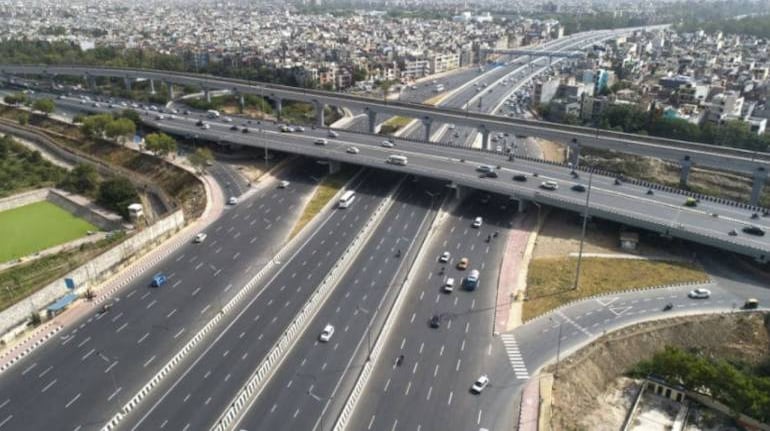
The National Highways Authority of India (NHAI) plans open up its upcoming infrastructure investment trust (InvIT) to retail investors and is also looking at ways to allow this class access to its toll-operate-transfer (TOT) projects in the future, multiple senior officials said.
This, it is hoped, will help meet its asset monetisation target of Rs 20,000 crore in the current fiscal.
InvITs are collective investment vehicles similar to a mutual fund that enable direct monetary investment by individual and institutional investors in infrastructure projects which earn them a small portion of the income as return.
“The NHAI has seen a growing interest from retail investors in road projects and depending on the success of our InvIT with retail investors, TOT projects and BOT (build-operate-transfer) projects may be opened up in the future as well,” a senior NHAI official said.
He added that a fixed return structure for retail investors is being discussed between the NHAI, the central government and the Securities and Exchange Board of India (SEBI).
The roads authority is looking to offer around 25 projects worth Rs 45,000 crore under the InvIT model. NHAI InvITs constitute a platform to monetise roads over the next three to five years.
In 2021-22, NHAI had raised Rs 8,000 crore through its first InVIT, monetising five projects accounting for 400 km.
Another NHAI official said that a combination of a depreciating rupee, ongoing geopolitical tensions, a slight decrease in the pace of road construction in India due to the pandemic and the NHAI’s debt has made the company less attractive to foreign investors and institutional investors. This is perhaps one of the reasons it is considering the new plans.
“While the NHAI is confident of meeting the asset monetisation target of Rs 20,000 crore, retail investors will play a big part in reducing the company’s debt and fundraising,” the second official said.
NHAI is also in discussion with the government to offer tax incentives for investments in InvITs to make them more attractive for both retail and foreign institutional investors.
The second official added that based on the ongoing discussion with the government, a new capital gains tax regime will soon be rolled out.
Under current taxation norms, an investor in InvITs has to pay a short-term capital gains tax of 15 percent on profits made on the sale of units within three years of purchasing them. If InvIT units are sold after three years, the profit is subject to a long-term capital gains tax of 10 percent if the gains exceed Rs 1 lakh.
NHAI had raised Rs 6,100 crore from institutional investors from its maiden InvIT launched in October and expects opening up the InvIT to retail investors will unlock more value of the road assets held in the InvIT.
The body is also looking to launch its second InvIT, which will be open to retail investors from the outset, through which it aims to raise Rs 4,000-5,000 crore.
Another reason NHAI is looking at retail investors for its fundraising is that the government has asked the highway developer to limit its borrowings. As part of the budget for 2022-23 as well, the government projected NHAI’s internal and extra-budgetary resources (IEBR) to fall to around Rs 1 lakh, from Rs 65,000 crore in 2021-22. IEBR constitutes funds raised by NHAI by way of profits, loans, and equity.
Proceeds raised from InvITs are not counted as debt as the company launching the InvIT does have to pay a fixed amount as returns. Similarly, as the company launching the InvIT does not dilute any of its shares while raising funds through an InvIT, it does not count as equity either, market experts said.
This was part of the government’s move to reduce the highway developer’s debt. NHAI’s debt stood at Rs 3.44 lakh crore at the end of January 2022, against Rs 24,188 crore in 2014-15, a 14-fold rise in less than seven years. The government is now looking to reduce NHAI’s debt to Rs 1 lakh crore by 2024-25.
In April, SEBI, in a bid to promote InvIT and real estate investment trusts (REITs) among retail investors, reduced the investment limits for such investors. SEBI had reduced the minimum subscription limit for REITs from Rs 2 lakh to Rs 50,000, and that for InVITs from Rs 10 lakh to Rs 1 lakh.
Giridhar Aramane, secretary in the ministry of road transport and highways (MoRTH), had last month said that the plan to come out with InvIT open to retail investors was in the works.
He added that MoRTH was in discussion with SEBI to relax the process of listing an InvIT open to retail investors.
Union minister for road transport and highways Nitin Gadkari has been a big advocate for retail and small investors putting money into road projects. He has often said that small and retail investors would be guaranteed a return of 6-8 percent by investing in road projects, which is higher than the interest rates offered by many banks.
“Today we have got investors such as American and Canadian pension funds, Macquarie from Australia, and they have made investment in hundreds of crores of rupees. Now we will take money from small investors and the poor to build our highways. For this, we will give more than 6 percent interest, which is higher than the interests offered by banks. This will ensure a fixed return to such small investors. This will benefit a huge number of common men in our country,” Gadkari had said in response to a question asked in the Rajya Sabha.
Discover the latest Business News, Sensex, and Nifty updates. Obtain Personal Finance insights, tax queries, and expert opinions on Moneycontrol or download the Moneycontrol App to stay updated!
Find the best of Al News in one place, specially curated for you every weekend.
Stay on top of the latest tech trends and biggest startup news.




