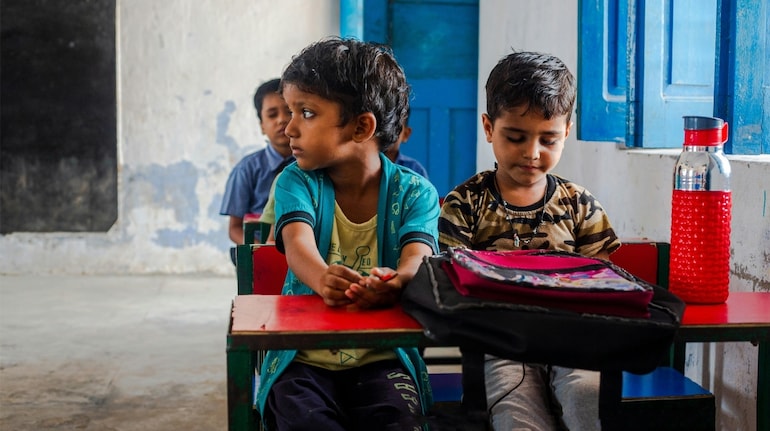

The sight of girls giggling and walking to school, their smiles widening with each step, is a familiar morning scene. And just a few paces behind, boys may appear more subdued; some reluctant, others restless. Study suggests that young children’s wellbeing at school differs majorly by gender.
A recent Norwegian study suggests that girls may be biologically more inclined to find happiness in school than boys. A team led by Hermundur Sigmundsson at the Norwegian University of Science and Technology studied more than 1,600 children aged six to nine. The children were asked about their friendships, how safe they felt, and whether they enjoyed school. The results show that girls reported higher levels of well-being than boys, and younger pupils generally felt happier than their older counterparts.
Researchers say it could be linked to dopamine, a chemical in the brain associated with pleasure and reward. Girls, the researchers argue, may receive more dopamine through social relationships, including friendships, group activities, and the sense of belonging that school can provide.
Also Read: 7 signs your child is emotionally prepared for their first day of school
Boys, on the other hand, may experience dopamine more through self-centred behaviours and physical activity, driven in part by higher levels of testosterone.
“Long school days, sitting still, does not suit boys,” Sigmundsson said in a statement, suggesting that the structure of modern schooling may simply be at odds with the way many boys are wired to learn and engage.
The study also found that happiness at school was closely tied to having friends. “Enjoying school and feeling safe at school are strongly connected,” he explained. It is a reminder that, for young children, emotional well-being and academic success are often intertwined.
Speaking about their performance, Sigmundsson revealed that girls reported higher achievement in reading and science, and believed they performed better in those subjects than boys did. Boys, meanwhile, were more confident about their ability in maths, even though there was no significant difference in how much either gender enjoyed the subject.
Physical education emerged as the favourite lesson for boys, but both boys and girls believed they performed similarly in PE.
Some of the findings may reflect Norway’s education system, and the researcher is cautious about applying them universally.
Also Read: 4 hidden signs of depression in children and teens that parents often miss
In the United States, for example, New York City data released in 2023 showed that girls often outperform boys academically but report lower levels of happiness at school. That suggests that the relationship between gender, achievement and well-being may be shaped as much by culture and school structure as by biology.
The study suggests adding more physical activity and passion projects to keep all children engaged, particularly boys who may struggle with long periods of sitting and passive learning.
Disclaimer: This article, including health and fitness advice, only provides generic information. Don’t treat it as a substitute for qualified medical opinion. Always consult a specialist for specific health diagnosis.
Discover the latest Business News, Sensex, and Nifty updates. Obtain Personal Finance insights, tax queries, and expert opinions on Moneycontrol or download the Moneycontrol App to stay updated!
Find the best of Al News in one place, specially curated for you every weekend.
Stay on top of the latest tech trends and biggest startup news.