






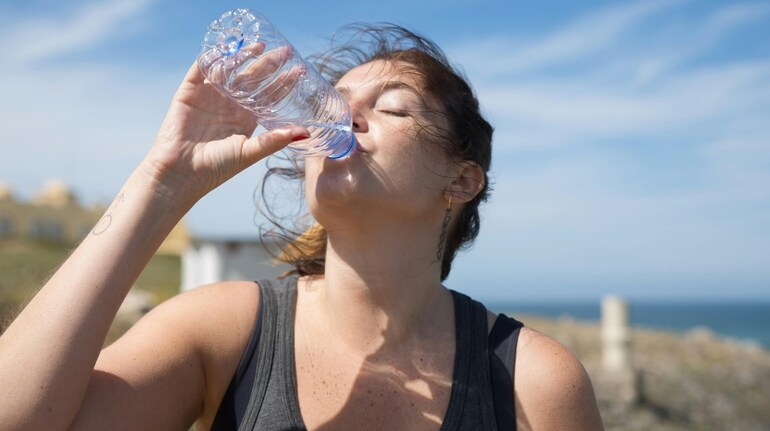

Staying hydrated while travelling often slips down the priority list. Between early-morning flights, long road journeys, packed sightseeing schedules, and cold winter weather, people tend to drink far less water than their bodies need. The result is not always obvious dehydration, but subtle signs like fatigue, headaches, bloating, muscle cramps, and low energy that can quietly ruin a trip.
The key is not drinking large amounts of water at once, but building simple, realistic habits throughout the day. Pawni Arora, Nutritionist at Fast&Up India, tells Moneycontrol, “Travel often disturbs daily routines, and hydration is usually the first habit to be ignored. Dehydration during travel show up quietly as tiredness, headaches, bloating, low energy, and frequent hunger. Long flights, road trips, and winter holidays increase this risk because of dry air, cold weather, long sitting hours, and irregular meals.”
Here are 5 easy, practical ways to stay hydrated while travelling: Whether you’re flying, driving, or heading for a winter break.
Also read | Health benefits of drinking water: Can drinking more water be healthy? Perhaps
Most adults need about 2.5 to 3 litres of fluids daily, depending on body size, climate, and activity levels. A useful strategy is to aim for at least 1.5 litres by noon, which makes hydration more manageable later in the day. Start your morning with two glasses of lukewarm water, sipped slowly after waking up.
This helps replenish fluids lost overnight and supports digestion. Drinking slowly matters, as steady sipping allows better absorption compared to gulping water quickly.
Relying on flight service or roadside stops often leads to long gaps between drinks. Carrying a refillable water bottle makes hydration more consistent and convenient. Take small, frequent sips instead of waiting until you feel very thirsty. This approach keeps hydration levels stable and prevents bloating that can happen when you drink too much water at once.
Hydration does not come only from water. Including water-rich foodscan significantly contribute to fluid intake, especially when travel routines are unpredictable. Add fruits like oranges, apples, berries, or papaya to breakfast or snacks.
Meals such as milk with oats or muesli provide both hydration and sustained energy. At lunch, thin dals and chaas are excellent options that naturally boost fluid intake. It’s also helpful to drink water about 30 minutes to one hour before meals and take small sips during meals to aid digestion and reduce bloating.
Also read | 5 natural ingredients you can add to your regular water to make it healthier and flavourful
Travelling often involves more physical activity than usual like walking, sightseeing, workouts, or outdoor sports. During such times, plain water may not be enough. Adding electrolytes helps maintain fluid balance and supports muscle and nerve function. Effervescent electrolyte formats are easy to carry, quick to prepare, and absorb well. During intense activity, aim for an additional litre of fluid per hour.
Thirst is often mistaken for hunger while travelling. If you experience sudden cravings, drink a glass of water first and wait a few minutes before eating. Muscle cramps during long journeys are another common sign of dehydration or electrolyte imbalance, often worsened by dry environments and long hours of sitting. Skipping water to avoid washroom breaks may seem convenient, but it compromises comfort, circulation, and overall wellbeing. Regular hydration supports muscle function and makes travel far more enjoyable.
1. How much water should I drink daily while traveling?
Most adults need about 2.5 to 3 litres of fluids daily, depending on body size, climate, and activity levels. Aim to drink at least 1.5 litres by noon to manage hydration better throughout the day.
2. Is it better to drink water in large amounts or small sips?
Drinking water slowly and in small sips allows better absorption and prevents bloating. Carry a refillable water bottle and sip regularly instead of waiting until you're very thirsty.
3. Can food help with hydration during travel?
Yes, incorporating water-rich foods like fruits (oranges, apples, berries, papaya) and meals such as milk with oats or muesli can significantly contribute to fluid intake. Thin dals and chaas are also excellent options for lunch.
4. When should I add electrolytes to my water?
During physical activities like walking, sightseeing, or outdoor sports, adding electrolytes helps maintain fluid balance and supports muscle and nerve function. Effervescent electrolyte formats are easy to carry and prepare.
5. What are the subtle signs of dehydration while traveling?
Signs include fatigue, headaches, bloating, muscle cramps, low energy, and frequent hunger. If you experience sudden cravings, drink a glass of water first and wait before eating. Regular hydration supports overall wellbeing.
Disclaimer: This article, including health and fitness advice, only provides generic information. Don’t treat it as a substitute for qualified medical opinion. Always consult a specialist for specific health diagnosis.
Discover the latest Business News, Sensex, and Nifty updates. Obtain Personal Finance insights, tax queries, and expert opinions on Moneycontrol or download the Moneycontrol App to stay updated!
Find the best of Al News in one place, specially curated for you every weekend.
Stay on top of the latest tech trends and biggest startup news.





