By - Sharmistha Gooptu
It was his iconic Veeru, pitted against the deadly dacoit Gabbar in Sholay, his background in bodybuilding, and his other immensely successful action roles in films like Yaadon ki Baaraat, which made Dharmendra’s fans spontaneously mouth the lines- ‘kutte kamine… chun chun ke marunga, chun chun ke…’ But Dharam paji, as he was fondly known, was immensely larger than the chiselled he-man and action star that he was emblazoned as in the popular psyche.
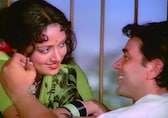
At the very start of his career he worked with maestro Bimal Roy, in the classic Bandini with actors of the stature of Ashok Kumar and Nutan, and still held his own as the jailor in love with a prison inmate. The first decade of his career was marked by romantic dramas, starring opposite the queen of tragedy in Hindi cinema, Meena Kumari, in films like Baharon ki Manzil, Phool Aur Patthar or Purnima. Dharmendra made a successful pairing with Meena Kumari before he went onto being paired with younger actresses like Rakhi and Hema Malini. In Guddi (1971), he played every girl’s crush- the suave, urbane, chic hero, the perfect gentleman and no other than the star that he was- Dharmendra himself.
He transitioned into being action hero with shades of dark and grey with a huge hit like Yaadon ki Baarat, and crescendoed them all with the immensely lovable and thuggish Veeru of Sholay. During the same era he was also doing a film like Hrishikesh Mukherjee’s romantic comedy Chupke Chupke, in which Amitabh Bachchan appeared as the young and confused professor of literature. In the era that followed, while Bachhan emerged as the force to reckon with, Dharmendra appeared in a bouquet of films that were fairly diverse, the romantic drama Dreamgirl opposite Hema Malini, Gulzar’s arty Kinara, while also replaying the Veeru-esque charm in Ram Balram, where he again paired up with Bachchan.
Towards the end of the 1970s and early 1980s, his graph dipped with a big budget failure like Shalimar, and into the early 1980s he focussed a lot of his energies into the launch of his elder son, Sunny. For the rest of the ‘80s he appeared in movies of the B genre- many of them multi -starrers.
When Dharmendra is appraised almost uni-dimensionally as the original action man of Hindi cinema, we miss out on his varied persona, his flare for comedy in films like Chupke Chupke, or his more sensitive and under-stated portrayals under masters like Gulzar or Bimal Roy. Possibly, given that the era of Bachhan and action cinema of the 1970s and ‘80s made a poster boy of the underdog, Dharmendra with his more diverse portrayals during the same period was often boxed as an action hero or an angry hero, often at the cost of a larger popular appraisal of his range.
His immaculate appearance- as one actor once put it- ‘He (Dharmendra) forever looked like he had just stepped out of a sauna’- might have not actually have worked for him at a time when Bachchan had emerged as the unkempt hero of the masses.
If we went back to the Guddi moment of the early ‘70s, and to before the advent of the underdog hero that Bachhan made his own, Dharmendra was poised to wear the top crown of the popular hero. He epitomised an earlier era of urbanity and respectability, who when he transitioned to action roles, did not quite leave his earlier persona completely behind.

Discover the latest Business News, Sensex, and Nifty updates. Obtain Personal Finance insights, tax queries, and expert opinions on Moneycontrol or download the Moneycontrol App to stay updated!
Find the best of Al News in one place, specially curated for you every weekend.
Stay on top of the latest tech trends and biggest startup news.