-
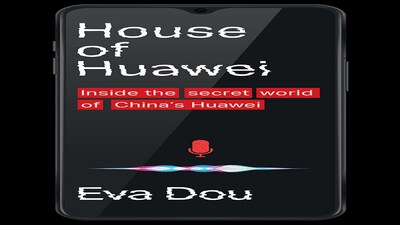
Book Extract: The House of Huawei by Eva Duo
Book Extract: The House of Huawei by Eva Duo. Meng Wanzhou’s father— Huawei’s reclusive founder, Ren Zhengfei— was a corporate legend in China.
-

Book Extract: Wild Fictions
From the significance of the commodification of the clove to the diversity of the mangrove forests in Bengal and the radical fluidity of multilingualism, Wild Fictions is a powerful refutation of imperial violence
-
Book Extract - The Art of Physics: Eight elegant ideas to make sense of almost everything
This book is about the hidden, surprising, and sometimes beautiful ways in which physics could help you make sense of a chaotic and unpredictable world.
-
Ikigai coauthor Francesc Miralles on how India made him a writer & 3 exercises to get in flow state for better productivity
The secret to a long and healthy life? It has 'a lot to do with serenity and activity. If you are not stressed and you have things to do and you have friends, you can have a lot of fuel to become 100 and even more,' says Ikigai coauthor.
-
Book Extract: Meditations by Marcus Aurelius
Over 1,800 years ago, Roman Emperor Marcus Aurelius wrestled with these same struggles, jotting down his thoughts in what became Meditations. Surprisingly, his reflections feel just as relevant today.
-
Book Extract – Tested: Big Decisions. Small Decisions. The remarkable power of resolve
Tested is a book of insight and hard-earned wisdom about how the power of resolve to make decisions, big and small, and see them through, is at the heart of all our stories.
-
What Dalits Eat: Why Shahu Patole wrote India’s first-ever book on Dalit food history
Marathi writer Shahu Patole & translator Bhaskar Korgaonkar talk about 'Dalit Kitchens of Marathwada', the English translation of the original 'Anna He Apoorna Brahma' & the little-known food practices of Maharashtra’s Dalit subcastes Mahar & Mang.
-
Book Extract |The Uncomfortable Truth About Money: How to live with uncertainty and think about yourself
This book takes those money lessons learned, really a series of frameworks, and makes them accessible for any reader who, like me years ago, has no clue how money works.
-
Book Extract | My Head for a Tree: The Extraordinary Story of the Bishnoi
My Head for a Tree offers a timely reflection on indigenous, community-based activism and how we might adjust our lives to fight for the natural world.
-
India Before the Ambanis review: How Indian business changed the course of history over 300-plus years
Business history: In 'India Before the Ambanis', historian Lakshmi Subramanian lays out the context in which Indian business influenced history for more than 300 years, from the time of the Mughals till the 1950s.
-
Book Extract-Dr. Aditi Nerurkar The 5 Resets: Rewire Your Brain and Body for Less Stress and More Resilience
-
Book extract- David McWilliams Money: A Story of Humanity
Over the past 5,000 years, money has profoundly altered humanity and our relationships with each other and with the rest of the planet.
-
What is massive gravity & how is it saving life on earth? Imperial College of London physics professor explains
Coolest thing about gravity that most people don't know, one sci-fi film that got the physics of gravity right, why blackholes are so interesting, how Harry Potter-style portkeys are theoretically possible & more questions answered by Imperial College London Professor Claudia de Rham.
-
Book Review: Flowers on a Kargil Cliff
Incorporating unpublished photographs of Point 5353 in Drass taken by Pakistani intrusive patrols in Oct 1998 during the Kargil build-up, Flowers on a Kargil Cliff establishes how 5353 and Bajrang Post were captured. Photos reveal Gen P. Musharraf and his entourage of generals across LoC in March '99.
-
Book Extract | The Gujaratis: A Portrait of a Community
Gujaratis are known for their entrepreneurial spirit, and their love of business and the profitable deal.
-
Book Review | Dharmanomics: Treasure trove of economic wisdom
Dharmanomics: An Indigenous and Sustainable Economic Model is already a bestseller in various categories.
-
Book review: First Global's Devina Mehra does not want you following investors Warren Buffett, Ray Dalio's example
Money, Myths and Mantras: The Ultimate Investment Guide by Devina Mehra is written simply, with lots of examples and cautionary tales to present her understanding of, and her company's practice around, what to do and what not to do when investing your money.
-
Myths & folktales from Arunachal Pradesh: Tara Douglas & Jatwang Wangsa's illustrated book is a valiant effort to preserve oral history
Book review: Incredibly visual and fantastical, the short stories in 'Myth, Memory & Folktale of the Wancho Tribe of Arunachal Pradesh' are just as entertaining as they are thought-provoking, not least because they aren't well-known to Indians outside the North-East.
-
Amitav Ghosh on why the original American model of wildlife conservation doesn't work, Donald Trump & end of Eurocentricity in the world
Amitav Ghosh's new book review: 'Wild Fictions' offers a glimpse into the mind of Amitav Ghosh, and on to the world through the lens of a well-read and widely travelled anthropologist-turned-writer.
-
How medieval India's wealth, power and influence grew under the Chola kings - and queens
Medieval Indian Chola kings gave the world many things: Nataraja bronzes, economic systems that persist today, words like cash...
-
Book Review | Fire Weather - A True Story from a Hotter World Sceptre by John Vaillant
Fire Weather is an astounding account of this century's most intense urban fire, and an urgent examination of humanity's future in an ever-hotter, more flammable world.
-
Book Review | The Tamils: A Portrait of a Community by Nirmala Lakshman
-
Why Amitabh Kant had to get involved when China wanted US visa guarantees for 2026 G20 Summit
Amitabh Kant on why he thinks the 'G20 is today a far more important body than the United Nation', why developed countries need to cough up trillions of dollars in climate finance instead of billions and how the Global South representing over 80 percent of the world population can increase its influence in international fora.
-
Book Review | The Journey of Leadership: How CEOs Learn to Lead from the Inside Out
McKinsey & Company’s prestigious two-day workshop Bower Forum is a unique platform for a small group of CEOs or Chairpersons to discuss goals, challenges, and role-specific issues, while counselling and learning from one another.
-
Book Review | 'How India scaled Mt G20: The Inside Story of The G20 Presidency' by Amitabh Kant
In How India Scaled Mt G20, Amitabh Kant, India’s G20 Sherpa, offers a rare, behind-the-scenes look at the intense negotiations, strategic manoeuvring, and backroom diplomacy that defined India’s presidency.
-
Book extract - Get Better at Anything: 12 Maxims for Mastery
Scott Young, bestselling author of Ultralearning, explores why it’s so difficult for people to learn new skills, arguing that three factors must be met to make advancement possible
-
Book extract - Unlocking Wealth: Secrets to Getting Rich at Any Age
A book for budding investors as well as High Net Worth Individuals (HNIs), Unlocking Wealth demystifies the process of wealth creation.
-
Isaac Asimov's 105th birth anniversary: what you need to know about the GOAT sci-fi writer
Born in Russia in 1902, Isaac Asimov first read a science fiction magazine in 1929. His experiments in writing began a couple years later. In June 1938, a publisher rejected his first story, but offered copious notes that Asimov said he found useful.
-
Who needs another book of chocolate recipes & how to make an eggless lamington cake for New Year 2025
Made for India: Bake with Shivesh creator Shivesh Bhatia's fifth and latest book has (mostly) eggless chocolate recipes that are on-trend for 2025. (Think chocolate pistachio thumbprint cookies.) What's missing is something to challenge the palate and really push chocolate as an ingredient in Indian kitchens.
-
Book Review: Friends | A realist view of India’s place in the global order
In an admirable academic manner, Chaulia looks at the many definitions and many examples of “middle power”, he rightly concludes that India does not fit into the slot of middle power, that is being a camp follower of the United States like Canada, Australia, Japan, South Korea.
-
Book Excerpt: The Only Constant
In The Only Constant, celebrated poet and educator Najwa Zebian guides her reader through the changes we must make (or those we need to endure) on the journey to our most authentic lives.
-
Book Extract – Amol Palekar's Viewfinder: A Memoir
Read Viewfinder. Acquaint yourself with historical transformations and their impact upon subsequent generations of artists. Amol Palekar is a gentleman artist who cannot be ignored and should not be too!
-
Casting the Buddha: A monumental history of Buddhism in India
The book “Casting the Buddha: A Monumental History of Buddhism in India” by Shashank Shekhar Sinha traces 2500 years of history of Buddha and Buddhism.
-
When Indian Air Force flew to the rescue just hours after 2004 Tsunami hit & more stories of skill and courage in the IAF
Wing Commander (Retd) Arijit Ghosh on how a team from the Indian Air Force rescued 58 people from the Andaman and Nicobar Islands on an aircraft made for just 25 in the aftermath of the 2004 tsunami, other stories of courage and skill from the Indian Air Force, and his book 'Air Warriors'.
-
Book Extract: Uptime
Laura Mae Martin coaches Google’s top executives on the best ways to manage their time and energy and sends out a weekly productivity newsletter that reaches over fifty thousand employees.
-
Book Extract: A Stitch in Time
A Stitch in Time is the story of a woman who was able to overcome her challenges when all odds were against her, through sheer perseverance and grit.
-
Why IIMA Professor Pankaj Setia offers Rs 5 crore to Rs 10 crore to students as a thought experiment
A world without jobs? Information Systems Prof. Pankaj Setia, who also runs the Centre for Digital Transformation at the Indian Institute of Management Ahmedabad (IIM-A), on revisiting human purpose and work in the age of artificial intelligence.
-
Why Samvidhan architect BR Ambedkar was an original thinker, despite borrowing freely from others
'A Part Apart: The Life and Thought of BR Ambedkar' author Ashok Gopal on why the world needed another biography of BR Ambedkar, why Babasaheb was unique among his contemporaries, and the flavour of Ambedkar's own writing in Marathi as well as English.
-
Book extract — Casting the Buddha: A Monumental History of Buddhism in India
-
Book extract - Vajpayee: The Ascent of the Hindu Right 1924-1977
-
Book Extract | Benjamin Graham & Jason Zweig, The Intelligent Investor: The Definitive Book on Value Investing (Third Edition)
The Intelligent Investor was first published in 1949. The goal of this commemorative 75th anniversary edition is to integrate Graham’s classic insights with today’s market realities.
-
Book Extract |Prakash Patra and Rasheed Kidwai The Scam That Shook a Nation: The Nagarwala Scandal
Prakash Patra and Rasheed Kidwai The Scam That Shook a Nation: The Nagarwala Scandal HarperCollins India, Gurgaon, 2024. Pb. Pp. 232. Rs. 399
-
Murty Classical Library's Ranjit Hoskote: It is not meaningful to complain bitterly that ‘people from elsewhere’ are translating ‘our classics’
10 years of Murty Classical Library of India: Editorial board member Ranjit Hoskote on how the spiritual and secular 'entwined, entangled, mapped over each other' in the world that Indian classical texts emerged from, who can translate these texts and how these stories survive in multiple formats.
-
Book extract: Be your own leadership coach
You lead yourself by choosing priorities and making choices that move you closer to the outcomes you want and away from outcomes you don’t.
-
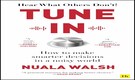
Book Extract: Tune In: How to make smarter decisions in a noisy world
It is the kind of book that one is constantly dipping in and out of. Every time, you visit a page, you learn something new, or manage to look at it with a fresh pair of eyes.
-
‘To call Tipu Sultan a freedom fighter and liberator of India is stretching it a bit much’: Vikram Sampath
Historian Vikram Sampath, with his latest book on the ‘Tiger of Mysore’ attempts to decode the Tipu Sultan riddle.
-
Even the greatest Sanskrit playwrights went to secular sources for their stories and not just to Hindu myths and epics: Arshia Sattar
Author Arshia Sattar on the role of universities in the translation ecosystem, her new book comprising retellings of Sanskrit plays by greats like Kalidasa and Bhasa, and why she finally decided against including 'Bhavabhuti’s magnificent Uttara Rama Charita'.
-
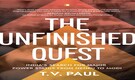
Book extract: The Unfinished Quest
Paul’s analysis of India’s quest for status also sheds important light on the current geo-strategic situation and serves as a new framework for understanding the China–India rivalry, as well as India’s relative position in the broader Indo-Pacific theater.
-
Economics Nobel laureate Abhijit Banerjee: 'In India, the act of eating and not eating is extraordinarily potent and political'
Economist Abhijit Banerjee on why he reads and writes cookbooks, his new book at the intersection of food and economics, democratizing the social sciences, and presenting new Indian flavour ideas to the world.
-
Book Extract - Sky High: The IndiGo Story