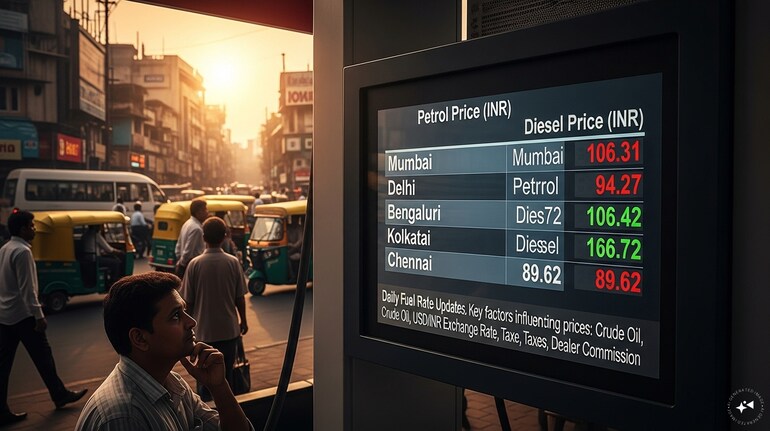

Petrol and diesel prices on March 17, 2026: Fuel rates across major Indian cities remained largely unchanged on Tuesday, extending the recent trend of stability in domestic petrol and diesel prices despite continued volatility in global crude oil markets.
The three major oil marketing companies (OMCs) in India, Indian Oil Corporation (IOC), Bharat Petroleum Corporation Limited (BPCL), and Hindustan Petroleum Corporation Limited (HPCL), revise prices every day to ensure rates align with international crude prices and currency exchange rate movements. However, recent fluctuations in global oil benchmarks have not yet resulted in any immediate changes in retail fuel prices.
International crude oil markets have remained volatile amid ongoing geopolitical tensions in West Asia and concerns over potential supply disruptions. Despite this, retail fuel rates across India have continued to hold steady.
In Delhi, petrol continues to be priced at Rs 94.77 per litre, while diesel stands at Rs 87.67 per litre. Prices remain higher in Mumbai, where petrol is retailing at Rs 103.49 per litre and diesel at around Rs 90.03 per litre.
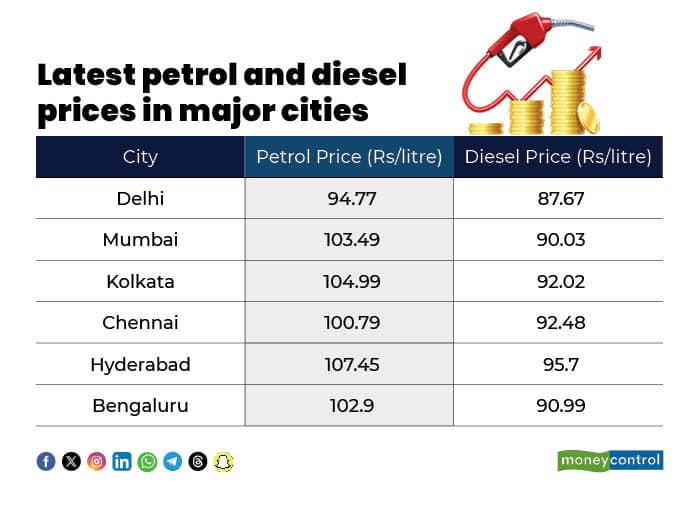
Among major metro cities, petrol prices remain above Rs 100 per litre in most locations, including Mumbai, Bengaluru, Hyderabad and Kolkata, while diesel prices continue to remain below the Rs 100 mark in these cities.
Fuel prices in India are revised daily based on movements in global crude oil prices and changes in foreign exchange rates.
Despite volatility in global crude oil markets, petrol and diesel prices in India have remained largely stable over the past few years. Retail fuel prices have seen limited movement since May 2022, when the central government and several states reduced excise duties and value-added taxes on fuel.
What affects petrol and diesel prices in India?
Retail fuel prices in the country are influenced by several factors. The most significant driver is the price of crude oil in international markets, since crude is the primary raw material used to produce petrol and diesel.
The rupee-dollar exchange rate also plays an important role because India imports a large portion of its crude oil requirement. A weaker rupee can increase the cost of imported crude, potentially pushing up fuel prices.
Taxes imposed by the central and state governments also form a major component of petrol and diesel prices, which is why fuel rates vary from state to state. Transportation costs and demand–supply dynamics also influence the final retail price paid by consumers.
Discover the latest Business News, Sensex, and Nifty updates. Obtain Personal Finance insights, tax queries, and expert opinions on Moneycontrol or download the Moneycontrol App to stay updated!





Find the best of Al News in one place, specially curated for you every weekend.
Stay on top of the latest tech trends and biggest startup news.