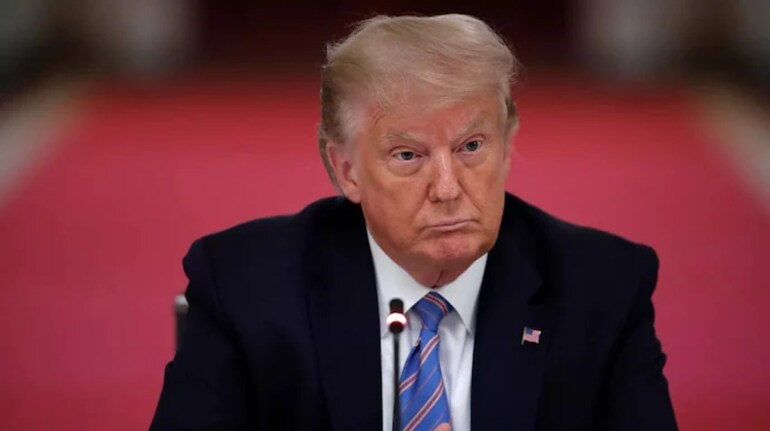
US President Donald Trump has signed an executive order banning the international law firm Perkins Coie from obtaining federal contracts or working with government-affiliated contractors. The move marks an escalation in Trump's campaign against firms that have represented his political adversaries, raising concerns about the politicisation of legal representation in the United States.
Targeting legal opposition
The executive order prohibits Perkins Coie from entering federal buildings, suspends its security clearances, and restricts any federal agency from hiring its services, except under limited circumstances. The firm, which previously represented Hillary Clinton’s 2016 presidential campaign and the Democratic National Committee, also played a role in commissioning the now-discredited Steele dossier on alleged ties between Trump and Russia.
A White House official justified the order, claiming that Perkins Coie had engaged in “illegal coordination” designed to undermine the president. “The president doesn’t believe they should have the privileges afforded to firms that operate with the federal government when they have demonstrated clear bias against him,” the official said.
Broader legal crackdown
Perkins Coie is the second major law firm targeted by Trump. Last week, he ordered the suspension of security clearances for attorneys at Covington & Burling, which has represented special counsel Jack Smith pro bono. Smith led the investigations into Trump’s handling of classified materials and his efforts to overturn the 2020 election.
The orders could discourage other firms from taking on legal cases against the Trump administration, raising concerns about access to representation in politically sensitive cases. “This sends a message to all lawyers: challenge this administration at your own peril,” said Mark Zaid, a national security lawyer.
Legal and ethical concerns
The American legal system is based on the principle that all individuals and entities have the right to legal representation. Experts warn that Trump’s actions could erode this foundation. “He doesn’t like judges who rule against him, prosecutors who investigate him, or lawyers who take cases against him,” said Thomas Carothers of the Carnegie Endowment for International Peace. “This is part of a broader attack on the rule of law.”
Perkins Coie has vowed to challenge the executive order, calling it “patently unlawful.” A White House legal advisor, Will Scharf, accused the firm of engaging in “unlawful DEI practices” and announced a broader review of major law firms for potential violations.
Chilling effect on legal challenges
Trump also signed a separate order that would require plaintiffs seeking injunctions against his administration to post bonds covering legal costs if they lose. This move could make it more difficult for legal challenges against federal policies to proceed.
Legal analysts caution that Trump’s actions may set a dangerous precedent. “There is no legal definition of excessive DEI practices, and no court has ruled these programs unlawful,” said Walter Olson, a senior fellow at the Cato Institute. “This is an extraordinary attempt to redefine legal norms.”
As Trump continues to target legal adversaries, concerns are mounting that his administration’s actions could reshape the legal landscape, limiting challenges to executive power and deterring law firms from taking on cases that oppose his agenda.
Discover the latest Business News, Sensex, and Nifty updates. Obtain Personal Finance insights, tax queries, and expert opinions on Moneycontrol or download the Moneycontrol App to stay updated!
Find the best of Al News in one place, specially curated for you every weekend.
Stay on top of the latest tech trends and biggest startup news.