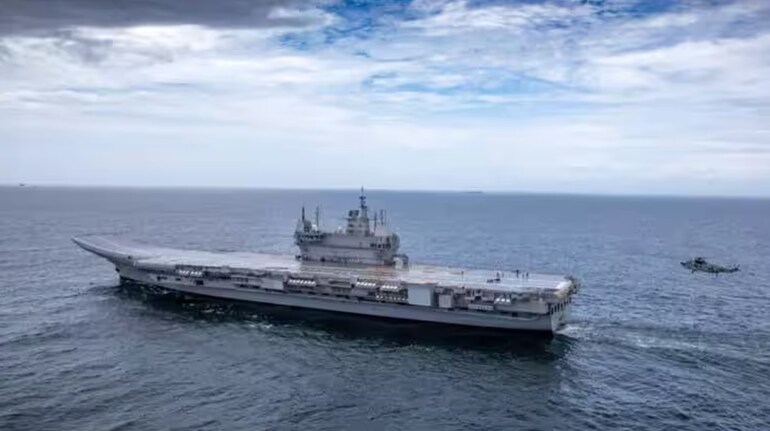
China’s military is ramping up readiness for a blockade of Taiwan, rehearsing tactics that could cut the self-ruled island off from the world, test US resolve, and trigger a major geopolitical crisis. Though an all-out invasion remains a steep challenge, Beijing is increasingly using military drills to simulate such a blockade, a strategy that could force Taiwan into submission without immediate combat, according to the Wall Street Journal.
A strategy short of invasion
Leader Xi Jinping has ordered the Chinese military to modernise by 2027, and experts see a blockade as one of China’s most potent tools short of an invasion. In simulated exercises, China has surrounded Taiwan with naval and air forces, testing scenarios that mimic how it might isolate the island.
Beijing claims Taiwan as its territory and refuses to rule out using force to assert control. A blockade would provoke a military response from Taiwan and likely require President Trump to decide whether the US military should intervene. The strategy is seen as a way to probe Taiwan’s defences, strain its economy, and pressure it politically, all while avoiding the uncertainties of a large-scale amphibious assault.
Blockade in action: air, sea, cyber
Chinese drills suggest a multi-pronged blockade plan: aerial assaults on key infrastructure, maritime cordons involving warships and aircraft carriers, cyberattacks, and the use of civilian maritime militia. China’s vast navy—now the world’s largest—and coast guard would ring the island while submarines mine Taiwan’s harbours and cargo ships block commercial access. In some scenarios, vessels drag anchors to sever Taiwan’s underwater internet cables, while cyberattacks paralyze its military and financial networks.
The Pentagon estimates China has around 1,900 jet fighters, 500 bombers, 3,000 missiles, and a growing fleet of more than 370 naval vessels. Recent Chinese drills, including a record-setting show of force with 125 military aircraft around Taiwan, reveal how close China may be to enacting such a strategy.
Taiwan’s vulnerabilities
Taiwan relies on imports for 96% of its energy and around 70% of its food. A prolonged blockade could plunge the island into crisis. While Taiwan holds energy reserves and is building up its defences, including acquiring US antiship missiles, its isolation would have severe consequences.
Taipei has acknowledged the risk. Military drills this month rehearsed immediate war scenarios, including one based on a Chinese invasion in 2027—the same year Xi has set as a deadline for full combat readiness.
Global stakes and American uncertainty
Any Chinese move would draw global scrutiny. A blockade could disrupt trade, especially semiconductor supply chains, and trigger coordinated sanctions from Europe and US allies. But Trump’s ambiguous stance on Taiwan has rattled officials. His recent suspension of aid to Ukraine strained US-European unity, and some fear a similar retreat over Taiwan could embolden Beijing.
Analysts believe a full blockade remains less likely in the immediate future, with a limited "quarantine" scenario more probable. In such a move, China could declare inspection zones around Taiwan and block key shipments under the guise of law enforcement, testing international response while stopping short of outright war.
As Xi modernises the military and expands China’s naval reach, Taiwan’s government and its global partners are bracing for a more assertive Beijing. The question is not just whether China is ready for a blockade—but how the world, especially the US under Trump, will respond.
Discover the latest Business News, Sensex, and Nifty updates. Obtain Personal Finance insights, tax queries, and expert opinions on Moneycontrol or download the Moneycontrol App to stay updated!
Find the best of Al News in one place, specially curated for you every weekend.
Stay on top of the latest tech trends and biggest startup news.