-
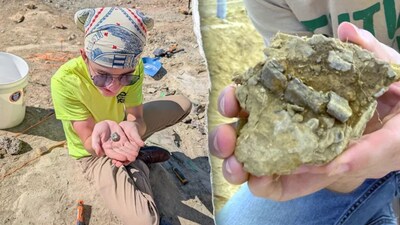
Teen unearths 150-million-year-old dinosaur fossil on first day of Montana dig
A teenager’s summer dig in Montana led to an unexpected scientific moment, offering a rare glimpse into ancient history and highlighting a student’s growing passion for discovery.
-

NASA wants to send your name around the Moon: Here's how to sign up for Artemis II Mission 2026
Submit your name to fly around the Moon with NASA’s Artemis II mission in 2026. Over 9 lakh people have already claimed their digital boarding passes. Learn how to register, meet the astronaut crew, and explore mission details.
-
Science behind how furry animals prepare for cold seasons?
Learn the science behind how furry animals survive winter through thick fur, fat layers, hibernation and behavioural strategies, revealing remarkable adaptations.
-
This newly discovered 'Fire Amoeba' survives extreme heat limits
A newly discovered fire amoeba survives temperatures up to 63°C, challenging biological limits and reshaping understanding of complex life in extreme environments.
-
Scientists discover first oxygen-free parasite living inside Salmon
A tiny salmon parasite has become the first animal proven to survive without oxygen, overturning long-held biology assumptions and reshaping how scientists define life.
-
Newts vs Salamanders: Spotting the hidden differences
Discover how newts and salamanders differ in appearance, habitat, skin texture and life cycle, revealing surprising traits behind these fascinating amphibian cousins.
-
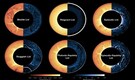
Earth’s ‘Episodic Squishy Lid’ could redefine habitable worlds, here is what study says
Scientists discovered Earth’s episodic squishy lid, showing intermittent tectonic activity, revealing new insights into planetary evolution, habitability and the search for life beyond Earth.
-
Astronomers reveal surprising shape of exploding star SN 2024ggi
Astronomers mapped supernova SN 2024ggi for the first time, revealing an elongated shockwave, challenging old stellar explosion models and reshaping astrophysics understanding globally.
-
14-year-old wins $25,000 STEM prize for origami structure that holds 10,000× its weight
A 14-year-old innovator designed a Miura-ori origami structure strong enough to support 10,000× its weight, earning him the top $25,000 STEM prize.
-
India’s first solar observatory, Aditya-l1 set to observe Sun’s maximum activity in 2026
India’s Aditya-L1 solar mission will observe the Sun’s peak activity in 2026, studying coronal mass ejections and protecting satellites from potential damage.
-
India’s first ISS astronaut Shubhanshu Shukla shares insights from his ISS mission
India’s first ISS resident Shubhanshu Shukla describes modular engineering brilliance, global crew cooperation, scientific breakthroughs and crucial insights guiding India’s upcoming orbital space station plans.
-
Scientists predict Africa’s Afar region could become Earth’s next ocean basin
The Afar region in northeastern Africa could split over millions of years, forming a new ocean. Scientists monitor rifts, magma and tectonic activity closely.
-
Neon-blue wild pigs highlight dangers of toxic rodent baits in California
Wild pigs in California turned neon blue after consuming rodenticide. Authorities warn hunters and public against eating affected meat due to serious health risks.
-
India–US NISAR mission enters crucial stage, enhancing global earth monitoring
The joint India–US NISAR satellite has entered its final science operations phase, promising unprecedented Earth data to improve climate research, resource monitoring and disaster response.
-
Scientists warn centre against accepting ‘Compromise Formula’ at Peru plant treaty meet
Scientists warn India against accepting a global plant treaty compromise that may weaken seed sovereignty, reduce farmer rights and expose vital genetic resources internationally.
-
A fish with lipstick? Meet the Red-Lipped Batfish
Discover the Red-Lipped Batfish, a strange ocean creature known for its bright lipstick-like lips, walking fins, unique hunting lure and remarkable deep-sea adaptations.
-
New study shows Africa’s rainforests now release more CO₂ than they absorb
A recent study finds Africa’s forests now emit more carbon than they absorb, signalling alarming consequences for climate change and global carbon balance.
-
NASA's Cassini detects fresh organic molecules from Saturn's Moon
Cassini detected fresh organic compounds in ice plumes from Enceladus’s subsurface ocean, strengthening the moon’s potential as a habitable environment beyond Earth.
-
Near-Earth asteroid Eros to pass close to Andromeda galaxy on 30th November
Near-Earth asteroid Eros will appear near the Andromeda Galaxy on 30 November, offering a rare sky alignment livestream for global astronomy enthusiasts.
-
Nasa’s Hubble captures image of a fiercely glowing Calabash Nebula
Hubble’s new image shows the Calabash Nebula’s dying star blasting gas at immense speeds, revealing dramatic lobes, shockwaves and crucial insights into stellar death stages.
-
Scientists revisit old theory: Are tiny ancient black holes passing through our bodies unseen?
A provocative theory is gaining new support today. Scientists suggest atom-sized black holes may move through Earth. These primordial black holes likely formed after the Big Bang.
-
From Titan to Europa: 8 most stunning Moons of the Solar System
Eight distant worlds hold secrets that still puzzle scientists and spark endless curiosity. Each moon offers a strange allure, inviting questions about what lies beneath, beyond, and waiting to be discovered.
-
Lightning detected on Mars for the first time by NASA’s Perseverance Rover; here’s what it is
The rover has explored Jezero Crater since 2021. Its SuperCam instrument recorded audio and electromagnetic signals. These signals revealed tiny electrical discharges on Mars.
-
World’s oldest little penguin, Lazzie, turns 25 at Cincinnati Zoo
Lazzie hatched at Cincinnati Zoo in 2000. She became the first little penguin born there. The zoo now holds North America’s largest colony.
-
ISRO satellite captures Cyclone Ditwah barrelling towards Sri Lanka in high-precision view from space
ISRO released clear images showing strong bands building. The satellite followed Ditwah as it moved northwest. Its sensors mapped rain clusters reaching nearby coasts.
-
World’s most expensive satellite Nisar sends first sharp look at India as science phase begins
Nisar’s S-Band radar captured the Godavari River Delta with striking detail, showing mangroves, fields, arecanut crops and aquaculture ponds.
-
From Birds-of-Paradise to Peacock Spiders: 10 best dancers of the animal kingdom
A stunning celebration of nature’s most captivating performers, showcasing remarkable courtship dances and dazzling displays from across the animal kingdom. These extraordinary moves highlight creativity, survival, and beauty in unexpected and unforgettable ways.
-
NASA’s Best: 10 mesmerising images of the day from November 2025
Explore 10 mesmerising NASA images captured in November 2025, showcasing dramatic cosmic vistas, planetary close-ups and rare celestial events that reveal the beauty, scale and mystery of our ever-changing universe.
-
Russian launch pad damaged during Soyuz liftoff to Space Station
Roscosmos confirmed damage at the Baikonur Cosmodrome after launch. The Soyuz MS 28 mission reached the International Space Station safely.
-
Kerala on Mars: Periyar, Thumba and Varkala claim new cosmic addresses on the Red Planet
Kerala now joins earlier Indian names found on Mars. Ganga and craters named after Devendra Lal remain important examples.
-
Earth on alert: 3I/Atlas raises big questions over interstellar object dangers
We have seen three interstellar objects in recent years. Oumuamua appeared first during 2017. The comet 2I/Borisov arrived during 2019. The interstellar comet 3I/Atlas is passing now. Many more may have crossed our skies before.
-
400-year-old Greenland shark spotted 4,000 miles from home
A 400-year-old Greenland shark, the world’s longest-living vertebrate, was spotted 4,000 miles from its Arctic home, offering new insights into deep-sea mysteries.
-
From Red to Violet: How our eyes spot every colour?
Do you know how our eyes and brain work together to see millions of colours? Well, here is all you need to know about colours and their role in our everyday life.
-
How do volcanoes erupt? Science explained for kids
Discover why volcanoes erupt, how magma and gases cause eruptions and why volcanoes are essential for life on Earth.
-
Mysterious dark-rayed crater spotted on Jupiter's Moon, Ganymede's icy surface
NASA’s Juno spacecraft captured a rare dark-rayed crater on Ganymede, offering fresh clues about the moon’s icy surface, impact history and future exploration prospects.
-
Moss spores survived nearly a year in harsh space conditions, scientists confirm
Scientists report moss spores stayed viable after nearly 1 year in space, showing remarkable resilience to radiation, temperature shifts and microgravity.
-
Tiger numbers climb in Odisha with 32 majestic cats logged in Similipal survey
Odisha confirmed increased tiger numbers in its latest assessment. The Forest Department recorded 32 individual tigers in Similipal.
-
Thirty-Metre Telescope: India and Japan search for extraterrestrial life
The Thirty Metre Telescope unites India and Japan in space exploration. Expected to be operational by mid-2030s, scientists will study about planets, galaxies and hunt for evidence of alien life beyond Earth.
-
PM Modi inaugurates Skyroot’s new infinity campus and Vikram-I Rocket
The newly constructed site spans nearly 200,000 square feet total. It supports designing, developing and testing several launch vehicles. The campus can produce one orbital rocket each month.
-
OPINION | India’s escalating 'superbug' crisis
India faces a rapidly worsening antimicrobial resistance crisis driven by multidrug-resistant bacteria, weak surveillance, and antibiotic misuse, demanding urgent action, stronger monitoring, new therapies, and public awareness
-
Global mammal count rises: The World gains 1,300 new species
The Mammal Diversity Database lists 1,579 additions since 2005. These include 805 new descriptions and 774 species splits.
-
Study reveals why Lemurs are vanishing day by day in Madagascar?
Researchers reveal lemurs are being eaten secretly across Madagascar, raising urgent conservation alarms for endangered species survival.
-
NASA’s Osiris-Apex flyby: Watch the spacecraft capture a stunning view of Earth
The probe flew 3,438 kilometres above Earth during its swing. It moved closer than several high-orbit satellites circling the planet.
-
This fruit on Earth looks 'blue' in colour without any pigment
Scientists have discovered a rare blue fruit that reflects light structurally, attracting birds while inspiring research into optics, evolution and nature’s survival strategies
-
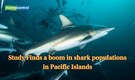
New study maps highest shark population in Eastern Pacific Islands
A new gamma-ray analysis from the Milky Way’s centre may offer the most promising hint yet of dark matter, though scientists urge caution.
-
Scientists report possible first glimpse of dark matter, the most elusive ingredient of the universe
Researchers now believe dark matter forms 85% of all matter. This makes it heavier than stars, planets and humans combined.
-
This Fluffy American Curly Horse Looks Like a Poodle
This fluffy American Curly horse is going viral for its poodle-like curls, adorable appearance, gentle personality and uniquely photogenic charm that captivates everyone instantly.
-
Inside the satellite: X-Rays uncover hidden stories inside a satellite back from space
X-rays allowed a safe internal view without harm. Researchers saw cracks across some composite struts. They also found fractures inside sensitive instruments.
-
Purple Princess Crab: Meet one of the rarest and most stunning crustaceans
The Purple Princess Crab is one of the ocean’s rarest and most breathtaking crustaceans, admired for its vibrant purple shell, elusive nature and captivating beauty.
-
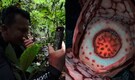
After 13 years of searching, biologist finds super rare “corpse flower” bloom right before his eyes; gets emotional
After 13 years of searching, a biologist finally witnessed the ultra-rare “corpse flower” (Rafflesia hasseltii) bloom in Sumatra’s tiger-patrolled rainforests. A once-in-a-lifetime moment captured in the wild.